



 Sustainability Scoop
What to Dress Your Kids in This Fourth of July (And What to Do With It After)
Sustainable, stylish kids’ Fourth of July outfit ideas — plus a smarter system for what happens when the fireworks are over.
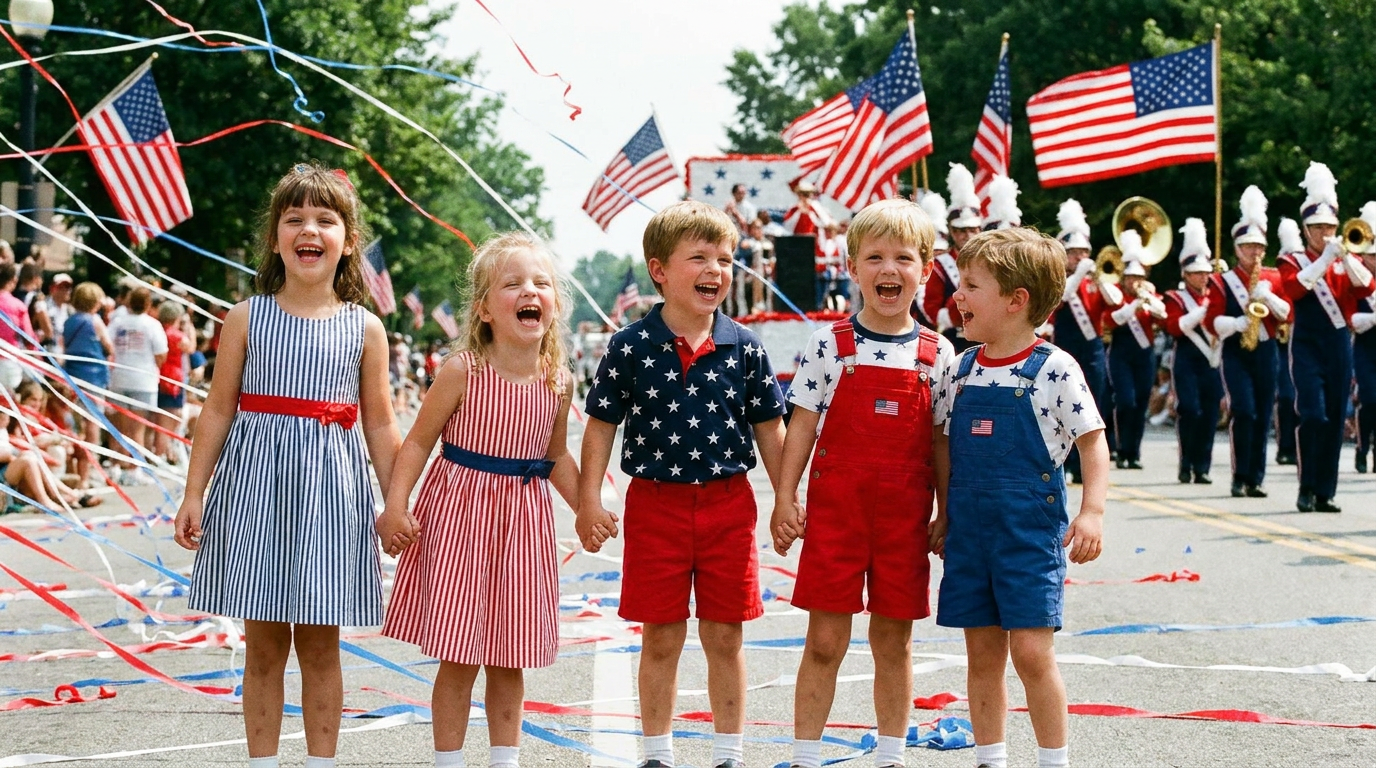
The parade is tomorrow morning. The kids are already buzzing — someone spotted a neighbor stringing lights, someone else heard there will be a bouncy castle. You’re standing in front of a wall of red, white, and blue options: a plastic-feel graphic tee with an eagle on it, a novelty onesie printed with tiny fireworks, a romper that says “Little Firecracker” in a font that was probably designed in 2009. And you’re thinking: is any of this actually going to survive past July 5th?
Here’s the honest answer: probably not. And this year, that question hits differently.
Because 2026 isn’t just another Fourth of July. This is America’s 250th birthday — the Semiquincentennial, a once-in-a-generation milestone that the entire country is celebrating in spectacular fashion. From the Capitol Fourth concert on the West Lawn to NASA’s Artemis 2 lunar fly-around, from Philadelphia’s historic Wawa Welcome America festival to San Antonio’s first downtown fireworks in 15 years — this is a celebration that will live in family photos for decades. The outfit your kid wears to this one matters. It deserves more than a polyester novelty piece that ends up in a donation bag before August.
This post is here to help you on both fronts. First, the fun part: what to actually dress your kids in — real outfit ideas with real wearability, rooted in 2026’s elevated Americana aesthetic and built around pieces that photograph beautifully and keep working long after the sparklers burn out. Second, the part every parent quietly wonders about: what to do with the holiday outfit when it’s outgrown — because there’s a smarter system for that now, and it’s a lot more satisfying than a bag in the trunk of your car.
Let’s start with why this particular Fourth deserves a more intentional approach than most.
There’s a term you’ve probably been hearing more and more as July approaches: Semiquincentennial. It’s the official designation for America’s 250th birthday, and it is, by any measure, a massive moment. The U.S. Semiquincentennial Commission was established by Congress nearly a decade ago to plan this celebration — that’s how significant this milestone is. Cities across the country have been preparing commemorative events for months. Families are traveling across state lines to celebrate together. Children who are four years old right now will someday tell their own kids that they were there — dressed in something, in some photo — on the day America turned 250.
That last point is worth sitting with for a moment. The photos from this summer aren’t going anywhere. They’ll be in family albums, on phone screens, in the holiday recap slideshow your family watches every year. And if the outfit your kid wore to America’s 250th birthday celebration is a faded graphic tee with a cartoon firecracker on it — one that went into the donation pile three months later because it didn’t fit anymore and couldn’t be re-worn anyway — that’s a bit of a missed opportunity. Not in a dramatic way. Just in the quiet, practical way that most parenting misses happen: you didn’t have a better option in front of you at the time.
This year, the fashion world has caught up to the moment. The dominant aesthetic for Fourth of July 2026 isn’t the novelty graphic. It’s elevated Americana — and it’s everywhere. Think quality cotton stripes. Think chambray and linen in classic navy, red, and natural tones. Think smocked dresses and jon jons and seersucker shortalls that look like they belong in a Ralph Lauren campaign but feel like they were made for running through sprinklers. The cultural shift is real: parents searching for “America 250” and “kids Fourth of July outfits” in 2026 are landing on results that look dramatically different from five years ago. The novelty tee isn’t gone, but it’s no longer the default.
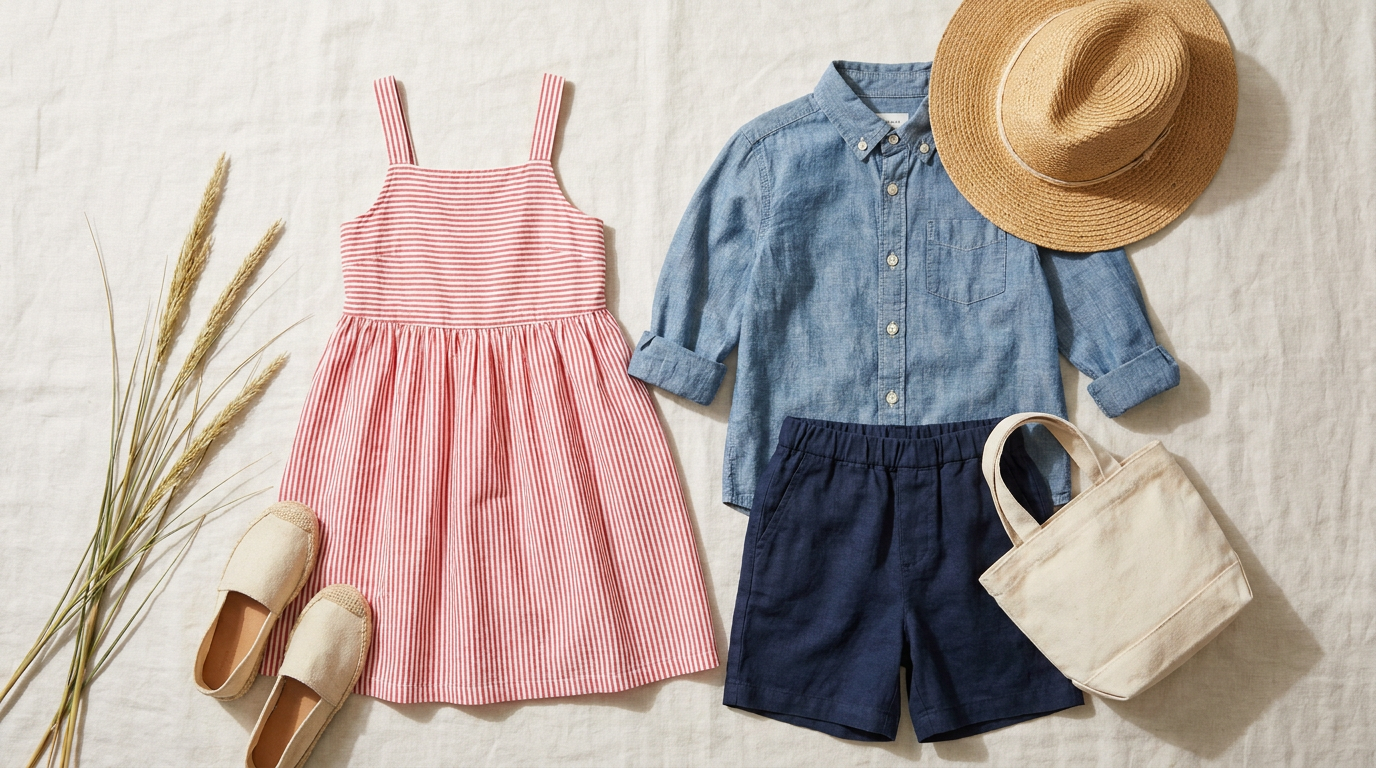
And here’s what makes this moment even more worth leaning into: the pieces that define elevated Americana also happen to be exactly the pieces that work far beyond the Fourth of July. A red smocked dress. A navy stripe linen button-down. A chambray shortall. These aren’t holiday costumes — they’re summer wardrobe anchors that happen to be perfect for the celebration. Wear them to the parade on July 4th. Wear them to a birthday party in August. Pack them for the beach weekend in September. The holiday is the debut, not the finale.
There’s also a meaningful sustainability dimension here. Summer 2026’s biggest kids’ trends are rooted in natural fabrics, considered palettes, and pieces with genuine longevity — all of which can be found preloved, at a fraction of the retail cost, in exactly the quality brands that make elevated Americana look effortless. More on that shortly.
“This Fourth is a once-in-a-generation moment. The outfit your kid wears deserves to outlast the sparklers.”
For the parent who cares about both style and substance — and who is tired of buying things that work for exactly one day — this is the year to be intentional. Because those photos will last forever, and the clothes don’t have to disappear when August arrives.
Understanding why this moment calls for something more considered is step one. But before we get to the actual outfit ideas, it’s worth naming the problem a little more directly — because the “one-wear holiday outfit” phenomenon is bigger than it feels, and you’re not alone in experiencing it.
Let’s be honest about something most parents already know, somewhere in the back of their minds, but rarely say out loud: the holiday outfit cycle is one of the most quietly frustrating parts of dressing kids. You buy the thing. It’s cute. Your kid wears it for approximately six hours. It gets washed. And then it just… sits there. Too themed to wear again. Too small by October. Too nice to throw away. Not nice enough — or recognizable enough — to re-sell easily. So it goes into a bag. The bag goes into the basement, or the trunk, or the corner of the closet. Weeks pass. Months. Eventually the bag makes it to a donation drop-off, and you try not to think about how much you spent on what amounted to a single photograph.
This isn’t a personal failing. It’s a systems problem. And it’s happening at massive scale.
The fashion industry produces 92 million tonnes of textile waste every year. That number is almost incomprehensible, but children’s clothing is one of the most significant contributors to it — and for a very specific reason: children outgrow clothing every three to six months on average, with toddlers sometimes cycling through sizes even faster than that. When you layer a three-to-six-month growth window on top of a themed holiday garment that’s already nearly impossible to re-wear seasonally, you get a piece of clothing with an effective useful life measured in weeks. The novelty Fourth of July romper isn’t just a style choice — it’s a category of garment almost engineered for single use.
“The bag of outgrown holiday clothes sitting in your trunk isn’t a parenting failure. It’s a systems failure. And systems can be fixed.”
There’s also an invisible labor cost that rarely shows up in any conversation about children’s clothing but is absolutely real for every parent managing a household. You spend mental energy choosing the outfit. You spend time ordering it, or going to the store to find it. You launder it, fold it, put it away. And then you spend more time and energy figuring out what to do with it afterward — the sorting, the bagging, the dropping off, the wondering if it’s good enough to donate or if it’s too worn. That mental overhead is significant, and it accumulates across every holiday, every season, every size change. The mental load around children’s clothing is one of the most underacknowledged dimensions of parenting — and the one-wear holiday outfit is one of its most reliable triggers.
The fix isn’t to skip the celebration. No one is suggesting your kid shows up to America’s 250th birthday in whatever was clean. The fix is to choose differently — and to have a system for what happens after. Rethinking the “new outfit” mentality for kids doesn’t mean less joy or less style. It means more of both, with less waste and less mental overhead attached to the aftermath.
The good news is that choosing differently for the Fourth of July is surprisingly easy once you know what you’re looking for. The palette and the aesthetic do all the work. You just need to know which pieces to reach for.
Which brings us to the good part.
Here’s the principle that makes everything else in this section work: choose pieces in the palette, not in the theme. Red, white, navy, chambray, natural linen — all of these read as patriotic by feel, by association, by the warmth of the day they’re worn. None of them are printed with fireworks that expire on July 5th. A red linen dress is festive on the Fourth and perfectly at home at a birthday dinner in August. A navy stripe tee works for the parade and for the first week of school. The holiday is the occasion; the piece is the wardrobe.
With that principle as the foundation, here’s what actually looks great — and what will keep working long after the celebration is over.
For Babies and Toddlers
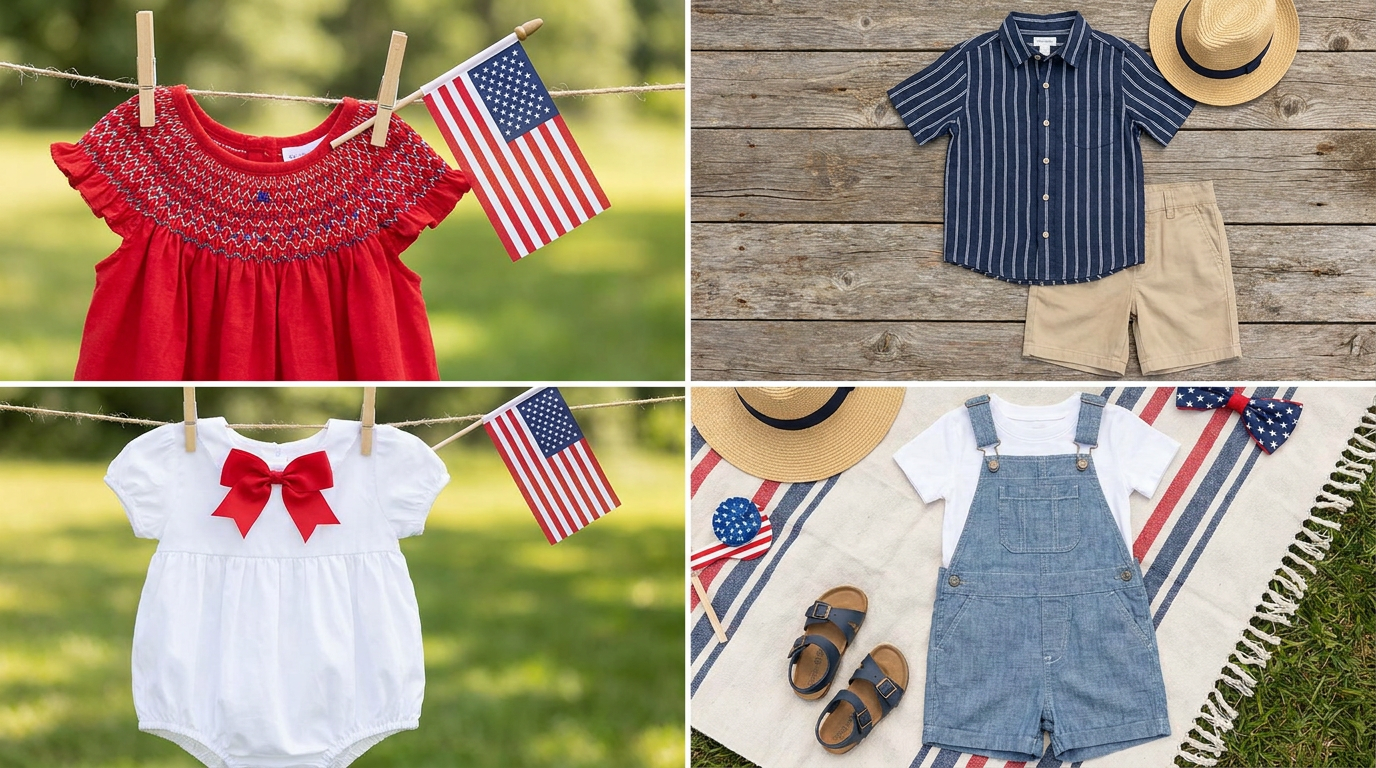
Babies and toddlers are in the most rapid growth phase of their lives, which makes the case for versatile, re-wearable pieces even stronger. A white cotton bubble romper — especially one with a smocked chest or a simple red bow detail — is the gold standard: holiday-appropriate, photograph-worthy, and wearable for every warm-weather occasion between now and the moment it’s outgrown. A chambray or seersucker shortall hits the same notes with a slightly more casual, country-fair feel. For little boys, a classic navy or red jon jon is timeless Americana without veering anywhere near costumey — it reads as a dressed-up, considered choice, which is exactly what it is.
For Girls, Toddler Through Big Kid
The red or navy smocked dress is, without question, the single most versatile piece a girl can wear to a Fourth of July celebration. It photographs like something out of a children’s magazine, it reads as festive without screaming “themed,” and it goes directly from the parade to a birthday party to a family dinner without skipping a beat. A white broderie anglaise dress with a red sash or red sandal hits the patriotic moment more subtly — the white does all the work, and the color comes through in the accessories. For older girls who prefer something more relaxed, a stripe t-shirt and navy shorts combination is effortlessly cool, comfortable for an all-day outdoor celebration, and stylish enough to hold up in photos twenty years from now.
For Boys, Toddler Through Big Kid
A classic red or white polo with navy shorts is clean, summer-appropriate, and holiday-ready without any effort. It’s the kind of look that photographs well in both bright afternoon light and the softer golden hour that hits right before the fireworks. For something with a little more personality, a stripe linen button-down with the sleeves rolled up, paired with khaki or navy shorts, delivers elevated Americana in a way that feels relaxed rather than formal — exactly the right register for a long outdoor day. For older boys who want a more casual option, a graphic tee featuring vintage Americana motifs (think stars, retro typography, Americana art) over denim shorts hits the mark without tipping into novelty territory. The difference between a re-wearable Americana graphic and a disposable novelty tee is almost entirely about the quality of the artwork and the fabric it’s printed on.
Accessories That Elevate Any Look
The right accessories can take a simple, versatile outfit from nice to genuinely memorable. A knotted headband in red or navy adds a finishing touch to any girls’ look without adding complexity. Espadrilles or leather sandals in tan or white feel premium and photograph beautifully. And a straw hat — beyond being incredibly practical for a long outdoor day in the July sun — is one of the most stylish things you can put on a child in summer. It reads as intentional and editorial in a way that makes a simple white romper look like a full look.
The Preloved Angle
Here’s the thing about all of these pieces: every single one of them exists, right now, at Prelove You — in quality brands like Mini Boden, Ralph Lauren, Soor Ploom, Old Navy, and Cat & Jack, at a fraction of their original retail price. Shop the Spring/Summer kids’ collection and you’ll find exactly these styles — stripe linen button-downs, smocked red dresses, chambray shortalls — already in circulation, already with a story, ready to begin their next chapter. For babies specifically, the baby Spring/Summer section is stocked with exactly the kind of quality pieces that photograph beautifully and survive multiple wears before being passed on again.
Sourcing preloved for the Fourth isn’t a compromise. It’s actually the more considered choice — better quality, more story, less environmental cost, and often more style than what you’d find at retail on a holiday-themed rack in late June. The summer capsule concept applies here exactly: the pieces every kid actually needs for summer — including their Fourth of July look — already exist. You don’t have to buy them new.
Great style for the holiday is the first half of the equation. The second half — the part that makes the whole system feel genuinely satisfying — is giving your child a real stake in the decision.
There’s a piece of parenting wisdom that sounds simple but changes the entire dynamic of getting dressed: kids who have a say in what they wear are more likely to actually wear it. Not just more likely to put it on without a fight (though that’s genuinely useful on a busy holiday morning), but more likely to wear it with confidence and enthusiasm. More likely to feel like themselves in it. More likely to wear it again.
The Fourth of July is a natural teaching moment for this kind of agency. It’s a day about identity, about belonging, about what it means to be part of something larger than yourself — and there’s no better way to introduce a child to those ideas than by asking them, genuinely, how they want to show up. What colors do you love? How do you want to feel at the fireworks tonight — brave, sparkly, or comfy-cool? Let’s find the thing that makes you feel like all three.
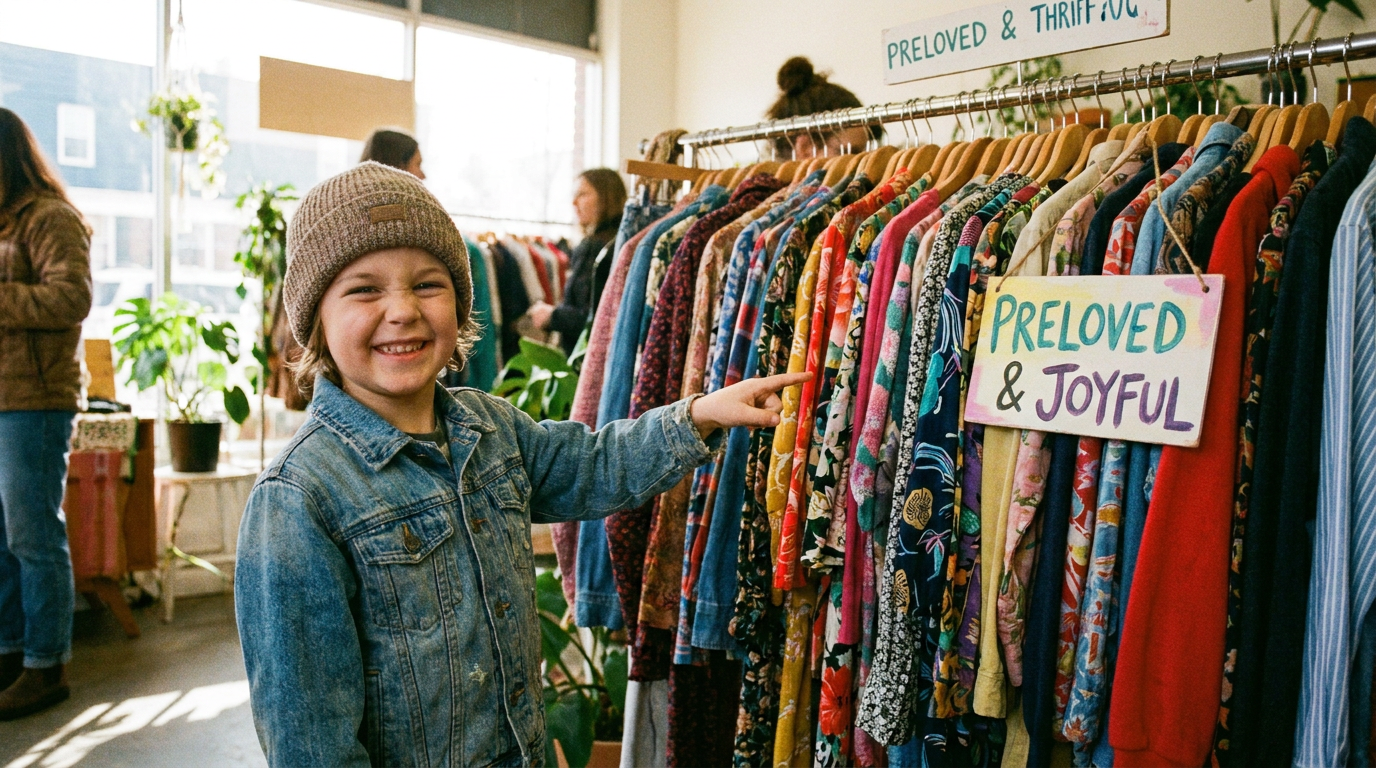
The key is calibrating the level of involvement to the child’s age. For toddlers between two and four, the most effective approach is the two-option offer: you pre-select two outfits that both work, and your child chooses between them. “The red dress or the stripe romper?” That’s a real choice, with real agency, and a guaranteed outcome for you. For kids between five and eight, you can open it up a little more — let them pick the anchor piece, or choose the palette, and build the look around their instinct. An eight-year-old who chose the navy shirt themselves will wear that shirt with a completely different energy than one that was just put on them. For older kids nine and up, the full outfit decision can be theirs, including accessories and how they want to wear their hair. An eleven-year-old with genuine ownership over their Fourth of July look is going to take better care of it, and feel better in it, than one who was dressed by committee.
Prelove You’s age-by-age guide to wardrobe choices breaks this down with specific, practical guidance for every developmental stage — it’s worth a read if you’re thinking about how to structure this conversation with your own kids.
Let Your Kid Own the Moment
“What do you want to feel like at the fireworks tonight — brave, sparkly, or comfy-cool? Let’s find the thing that makes you feel all three.”
There’s also a deeper connection here to the PLY credit system. One of Prelove You’s most distinctive features is that children can earn credits by sending in their outgrown clothing — and then use those credits to shop for what comes next. When a child earns credits from last season’s pieces and then uses those credits to choose their own Fourth of July outfit, that’s not just a transaction. That’s values in action: resourcefulness, taste-building, and a felt understanding of the circular fashion system that’s doing all of this work quietly in the background. The credit system and why it changes everything is one of Prelove You’s most powerful differentiators — and it’s one that lands most powerfully when kids are actually participating in it, not just benefiting from it passively.
The holiday outfit your child helped choose becomes something more than clothes. It becomes a memory they were part of making — and that meaning translates directly into how carefully it’s treated, and how likely it is to be worn again.
Once the fireworks have faded and the holiday is behind you, there’s one more question that needs a good answer. You’ve got a great outfit, worn with joy, photographed beautifully. Now what?
Every parent knows the feeling. The holiday is over, the outfit is washed, and it’s sitting in a small pile on the dresser looking — at least in the short term — too small or too recently worn to do anything with immediately. It’ll join the Halloween costumes and the Christmas sweaters in the unofficial holding zone of holiday garments: too seasonal to re-wear casually, too meaningful to discard, not quite ready to deal with yet. And then the bag gathers. And sits. And eventually needs to be dealt with in a rush.
The Fourth of July outfit doesn’t have to follow that arc. Here’s what to actually do with it.
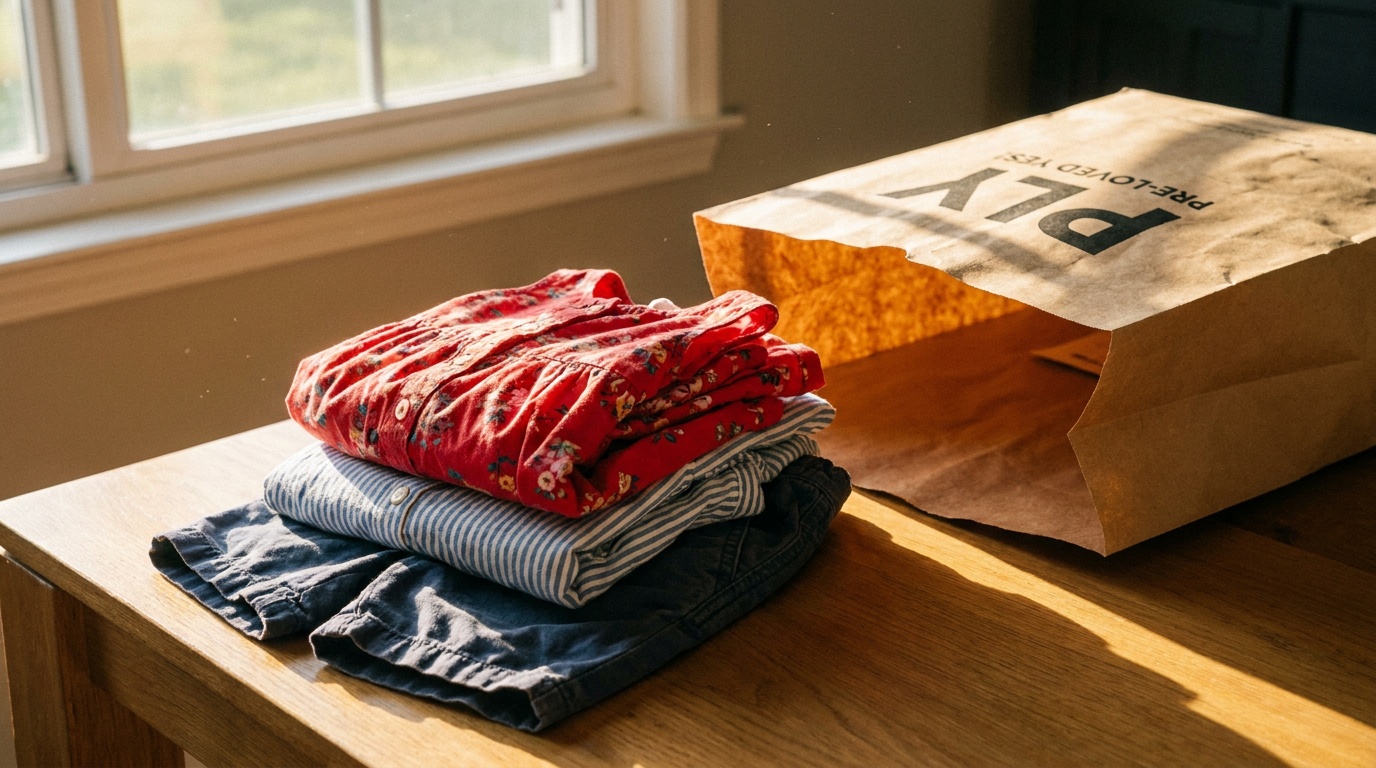
Option 1: Re-wear it — immediately.
If you followed the advice in Section 3 and chose a piece in the palette rather than the theme, this is straightforward. A red smocked dress is just a red dress. It has no expiration date. A navy stripe tee is a summer staple. A chambray shortall works for every warm-weather occasion between now and September. The July 4th holiday was the debut. Now let it keep working. The best thing you can do for the outfit you just bought — preloved or otherwise — is to keep reaching for it. The more worn a piece is before it’s outgrown, the more value it has generated, and the less guilt there is in moving it along when the time comes.
Option 2: Pass it through PLY when it’s outgrown.
Whether your child outgrows the outfit in three months or nine, the PLY system is the natural next step. Members send in outgrown pieces, earn credits for each item, and use those credits to shop for whatever comes next — the next season’s clothes, the next holiday outfit, the everyday staples. The cycle is continuous. There’s no sorting into “good enough to donate” and “not good enough.” There’s no listing, no negotiating, no waiting for a buyer. You send the bag in, the credits land, and you shop. The household clothing cycle is one that tends to break at exactly the points where decision-making is most fatiguing — and PLY is specifically designed to eliminate those friction points. How PLY works is simple by design.
Option 3: Send it in even if it’s stained or worn.
This is the option most parents don’t know about, and it matters. That white bubble romper that caught a blueberry ice pop at minute forty-five of the celebration? Still worth sending in. A holiday garment that got some wear, some joy, and maybe a small stain in the process is still an item that earns 1 credit and gets responsibly routed through Prelove You’s textile recycling partners. The decision fatigue about “is this good enough to send in?” is eliminated entirely. Everything goes somewhere. Nothing is wasted. What to do with children’s outgrown clothes covers this comprehensively — but the short version is: when in doubt, send it in. According to the EPA’s textile waste data, Americans discard approximately 11.3 million tons of textile waste annually — and the vast majority of it could have been diverted through exactly this kind of circular system.
There’s also an emotional dimension to this that’s worth naming. Sending the Fourth of July outfit through PLY isn’t discarding a memory. It’s giving it a next chapter. The red romper your baby wore to their first fireworks show can earn credits that buy the dress they wear to their first day of kindergarten. That romper will go to another baby, in another family, who will love it just as much on their own Fourth of July. The story doesn’t end in a trash bag. It continues — and that continuation is something worth feeling good about.
The system is: send in → earn credits → shop for what’s next. That’s circular fashion for kids at its most practical and most human. And it starts with choosing the right outfit in the first place.
Step back for a moment and consider what this holiday actually is. Not just a day off, not just a fireworks display — though those things are wonderful. This is the day that marks 250 years of American identity, community, and story. Cities across the country planned for this moment for years. Families planned trips and reunions. And somewhere in the middle of all of it, you dressed your child in something, took a photo, and handed them a sparkler. That photograph — that specific child, in that specific outfit, on that specific once-in-a-generation day — is a timestamp on a life.
Children’s clothes mark time in a way almost nothing else does. The red romper from the 2026 Fourth. The stripe dress from America’s 250th birthday. These aren’t just garments. They’re anchors for memory, for growth, for the story of how a child moved through the world during a particular summer. Parents who have been through multiple stages of childhood know this viscerally — you find a tiny pair of shorts in a box and you’re immediately transported back to the afternoon they were worn, the child who wore them, the version of yourself that dressed them.
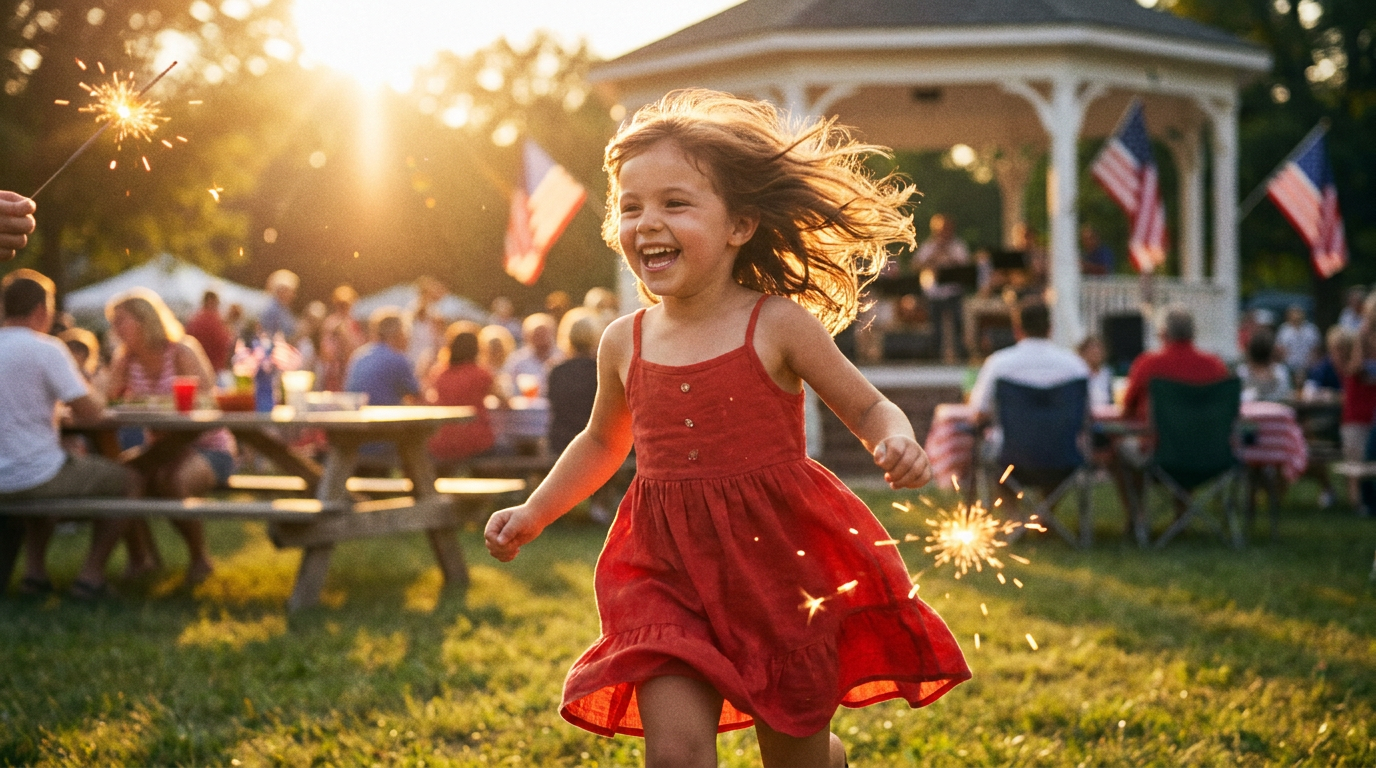
The Prelove You philosophy is built on exactly this understanding. Clothing is the common thread — it holds memory, milestone, and story. A garment that lives its full life — worn with joy, passed on with intention, worn again by another child — is a garment that has done everything it was ever meant to do. A one-wear holiday piece that ends in a trash bag has had its thread cut before it barely began.
There’s a concept in the PLY system that feels almost like a library book card for clothing: you can know where a piece has been and where it’s going next. The idea that the dress your daughter wore to America’s 250th birthday celebration will one day be worn by another little girl to another celebration — that’s not a sad thought. That’s a beautiful one. A love letter to the clothes that grew with them captures this feeling more eloquently than any system description can. Some things really are more than their material form.
The forward momentum matters too. Next year’s Fourth of July is already coming. Next season is already on its way. The system you build now — intentional choices in, credits earned, new pieces found — is the household infrastructure that means you never face the bag-in-the-trunk problem again. Building a smarter children’s wardrobe that repeats season after season is a solvable problem, and the Fourth of July is as good a starting point as any. This year’s celebration, with all its once-in-a-generation weight, is a natural inflection point — the moment you shift from reactive to intentional. And if you want to go deeper on the Independence Day angle, Prelove Lab’s Independence Day Edition is the place to start.
The outfit your kid wears to this Fourth isn’t a costume and it isn’t a prop. It’s a chapter in a longer story — one that deserves to be written with care.
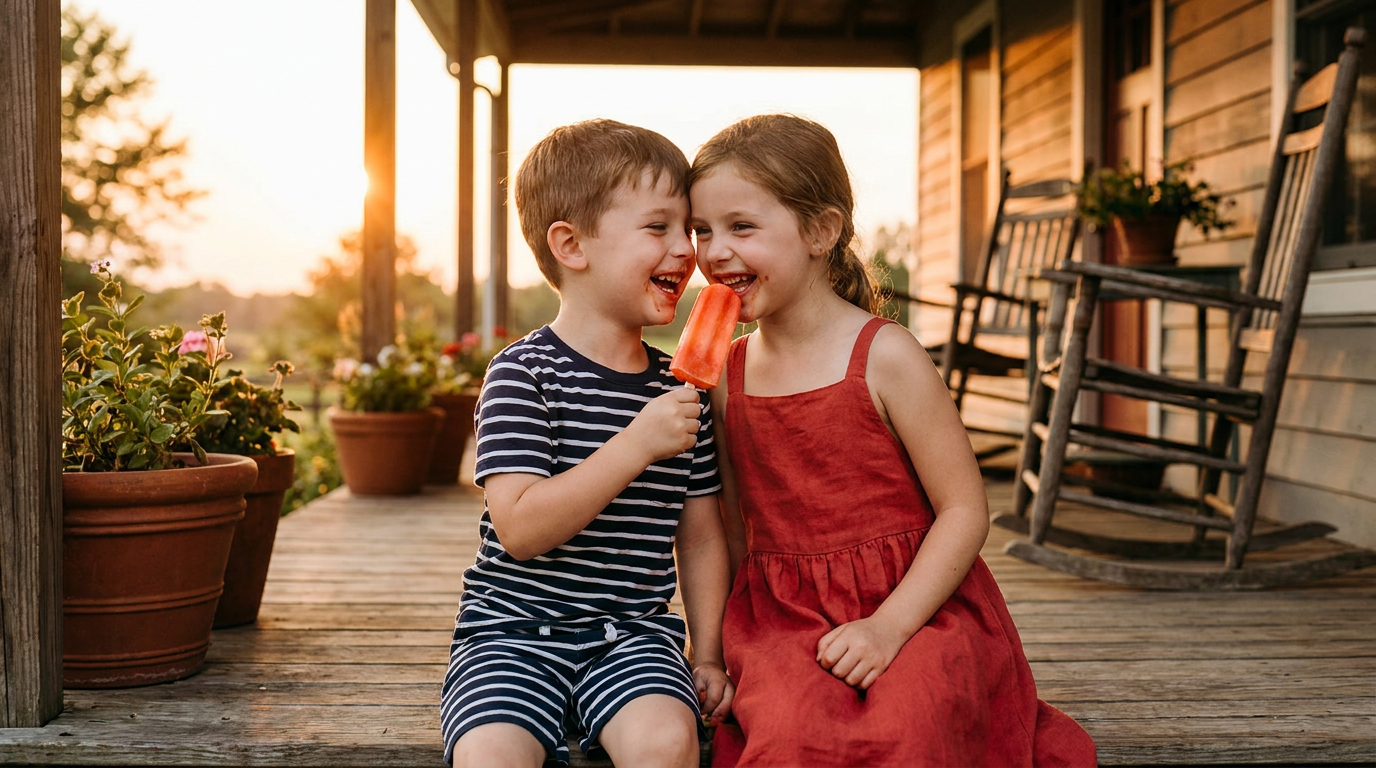
Dressing your kids for the Fourth should feel like what it is: a joyful, creative, genuinely fun part of celebrating one of the biggest days America has had in a very long time. This year, with 250 candles on the birthday cake, it’s even more worth getting right.
You now have two things you didn’t have before you started reading. A clear sense of what to dress your kids in — pieces in the patriotic palette that look extraordinary in photos and keep working through the rest of the summer. And a clear sense of what to do with those pieces after — a system that gives every outgrown garment somewhere meaningful to go, and gives your household a rhythm that makes the whole clothing cycle easier.
The outfit your kid wears to this once-in-a-generation Fourth doesn’t have to disappear when August arrives. Choose well. Involve your kid. Send it on when the time comes. Follow the thread.
Every outgrown piece — holiday or otherwise — belongs in a system that gives it somewhere to go. Prelove You is that system: send in what no longer fits, earn credits, and shop for what comes next. Simple, circular, and genuinely satisfying.

