



 Sustainability Scoop
How to Build a Smarter Children’s Wardrobe That Repeats Season After Season
The repeatable, guilt-free system modern families actually need — and how to make it work every season, not just once.
There is a bag somewhere in your home right now. Maybe it is stuffed behind the mudroom bench. Maybe it has been riding in the boot of your car since last autumn. Maybe it is crammed into the corner of a wardrobe, behind the shoes no one wears, underneath the coat that hasn’t been touched since February. Inside it: a season’s worth of outgrown clothing. Trousers that no longer close at the waist. A favourite hoodie that suddenly hits mid-arm. A jacket that was perfect for two winters and is now just… done.
You meant to deal with it. You genuinely did. But between school runs and dinner and the hundred other decisions that fill a weekday, the bag just sat there, accumulating quiet guilt.
This post is not about judgment. It is not a minimalism lecture or a tidying manifesto or a guide to photographing and listing items on five different resale platforms. It is something far more useful: a practical, repeatable system for managing children’s clothing that doesn’t fall apart after one season, doesn’t require a free weekend to implement, and doesn’t assume you have time to spare that you simply don’t have.
Building a sustainable kids wardrobe isn’t about owning less. It’s about managing the flow with intention — so the chaos stops before it starts. We’ve been writing about the emotional and cultural weight of children’s clothing for a while now, and if you’ve ever found yourself nodding along to what a year of kids’ clothing taught one family, then you already understand why this matters. Now it’s time to build the structure that makes it work.
Here is what we’re going to cover: what makes most children’s wardrobes structurally broken in the first place, what a smarter system actually looks like, and then a step-by-step guide to building it and maintaining it — season after season, without starting from scratch every time.
Let’s start where most families find themselves: somewhere between “I know this is out of hand” and “I have absolutely no idea where to begin.” The clothing pile on the floor. The drawer that requires a body weight behind it to close. The bin bag of outgrown things that nobody has touched in three months because dealing with it means making decisions, and making decisions requires energy that ran out somewhere around Tuesday.
The first thing to understand is that this is not a character flaw. It is a structural problem. And the structure, as most families are living it, is fundamentally broken.
Here is why. Children outgrow clothing faster than virtually any other category of household item. In the early years, sizes can shift two to three times in a single year. A system that works in October is obsolete by January. Any wardrobe approach built around static organisation — a beautiful set of wooden hangers, a tidy drawer system, a lovingly labelled bin — will eventually be overwhelmed by the sheer speed of growth. No organising product has ever solved a pace problem.
Then there is the scale of what we’re working against. The fashion industry is one of the most polluting on the planet. According to the UN Secretary-General, speaking at the 2025 International Day of Zero Waste, the equivalent of one garbage truck’s worth of clothing is either incinerated or sent to landfill every single second. The industry is responsible for up to eight per cent of global greenhouse gas emissions. We are swimming in a current of production and disposal that is almost impossible to comprehend at a household level — and yet, at a household level is exactly where it must be addressed. For a deeper look at the numbers, the European Parliament’s analysis of textile production and waste is sobering: only 1% of used clothes are recycled into new clothes. The rest ends up somewhere else. Usually somewhere worse.
But perhaps the most overlooked dimension of the problem is the human one. Children’s clothing management is invisible labour. It sits inside the enormous category of domestic cognitive work that researchers have only recently begun to quantify. A 2024 study from the University of Bath and the University of Melbourne, published in the Journal of Marriage and Family and reported by ScienceDaily, found that mothers take on 71% of all household mental load tasks — the thinking, planning, scheduling, and organising work that keeps a family running. Clothing management — sizing, seasonal transitions, deciding what goes and what stays, sourcing replacements — sits squarely in that invisible category. It is not a small thing. And it is not evenly shared.
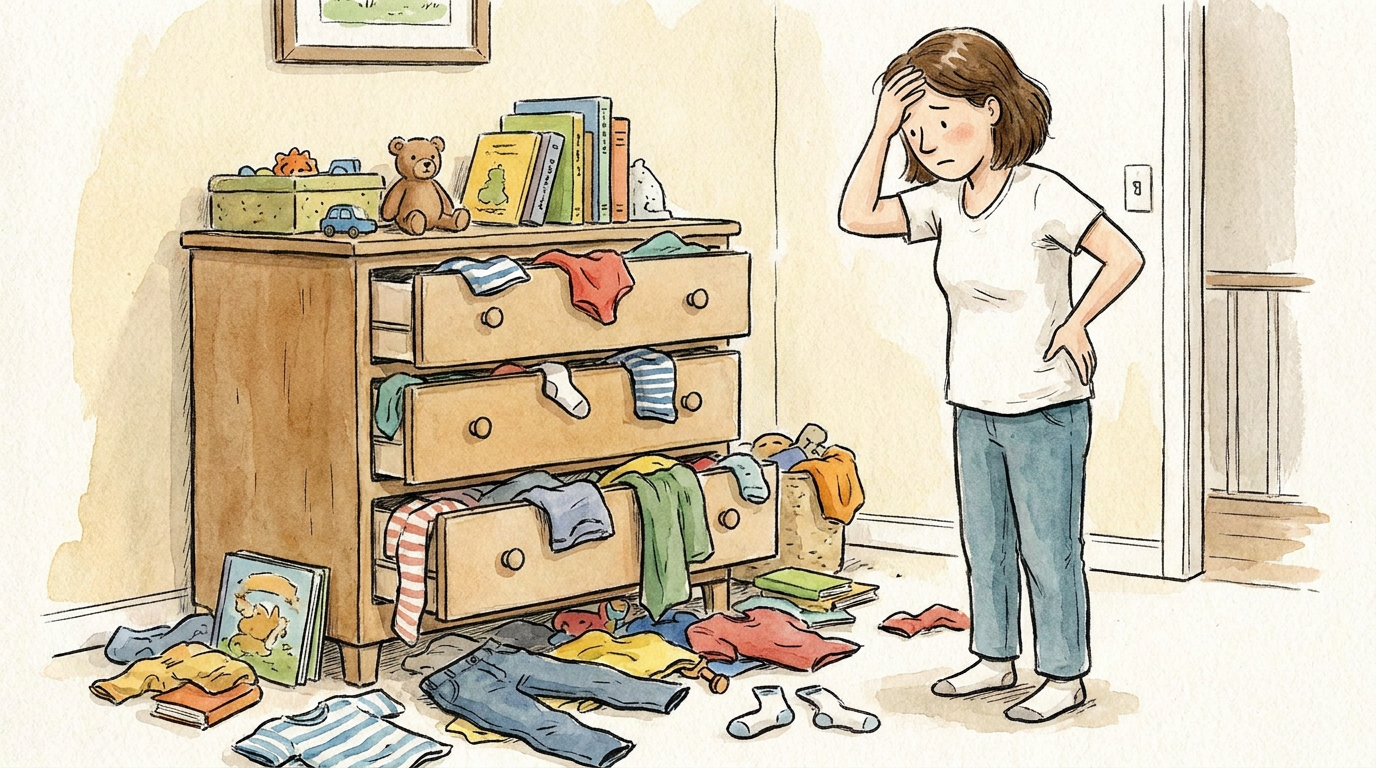
Most wardrobe systems fail for one of three reasons. First: no clear exit path. Outgrown items have nowhere obvious to go, so they accumulate in whatever vessel is nearest — a bag, a basket, a bin. Second: no intentional entry point. New items come in because of a gap, a growth spurt, a sale, a birthday, a moment of weakness at the school fair. They arrive without anything leaving. Third: no rhythm. There is no regular, predictable moment when the wardrobe gets reviewed, reset, and recalibrated. It is always reactive, never planned.
This is not a minimalism problem. You do not need to own fewer things. You need a system with an exit, an entry, and a rhythm — and right now, if you’re like most families, you have none of the three. That’s not a criticism. That’s just the reality of managing a children’s wardrobe without proper infrastructure. And if you want to change the way you think about what your kids are wearing in the first place, our piece on rethinking the ‘new outfit’ mentality is a good place to start.
The good news is that all three of those missing elements are entirely buildable. They don’t require a renovation, a weekend off, or a complete personality overhaul. They require a framework. And the framework starts with understanding what a smarter children’s wardrobe system actually looks like.
The word “system” puts some people off. It sounds clinical, complicated, or like something that only works for other families — the kind who have a chore wheel and actually stick to it. But a children’s wardrobe system, at its simplest, is just a household rhythm. It is the difference between clothing chaos happening to you and clothing flow happening through you, on a schedule you control.
Let’s be clear about something first: a circular children’s wardrobe system is not the same as a capsule wardrobe. These terms often get used interchangeably, but they describe different things. A capsule wardrobe is an aesthetic philosophy — a finite number of interchangeable pieces that form a cohesive, considered collection. It is beautiful in theory and genuinely useful for adults with stable sizing and settled tastes. For children, it is largely irrelevant. Children grow. Their tastes shift. Their lives — sport, school uniform, weekends at grandparents’, the phase where they will only wear dinosaur print — create clothing demands that no tidy collection of neutrals can fully accommodate.
A circular wardrobe system, by contrast, is a behaviour. It is a flow. It asks not “how many items should my child own?” but “how do items move through our household?” The answer, in a well-designed system, is: cleanly, intentionally, and on a cadence that is predictable enough to actually follow.
The three principles that underpin any repeatable children’s wardrobe system are these:
This system accommodates real life. It is not precious. It makes room for the stained item, the loved-to-destruction jumper, the pair of jeans that lasted three months before blowing out at the knee. It does not require everything to be in pristine condition or laundered to perfection before it can exit. It simply requires a path — and the willingness to use it.
The environmental case for this kind of circularity is not abstract. According to the European Parliament, doubling the lifespan of clothing could reduce greenhouse gas emissions from the fashion sector by 44%. A circular household system is, at scale, one of the most meaningful things a family can do. And platforms like Prelove You exist precisely to make that circularity practical rather than aspirational — the infrastructure behind the intention.
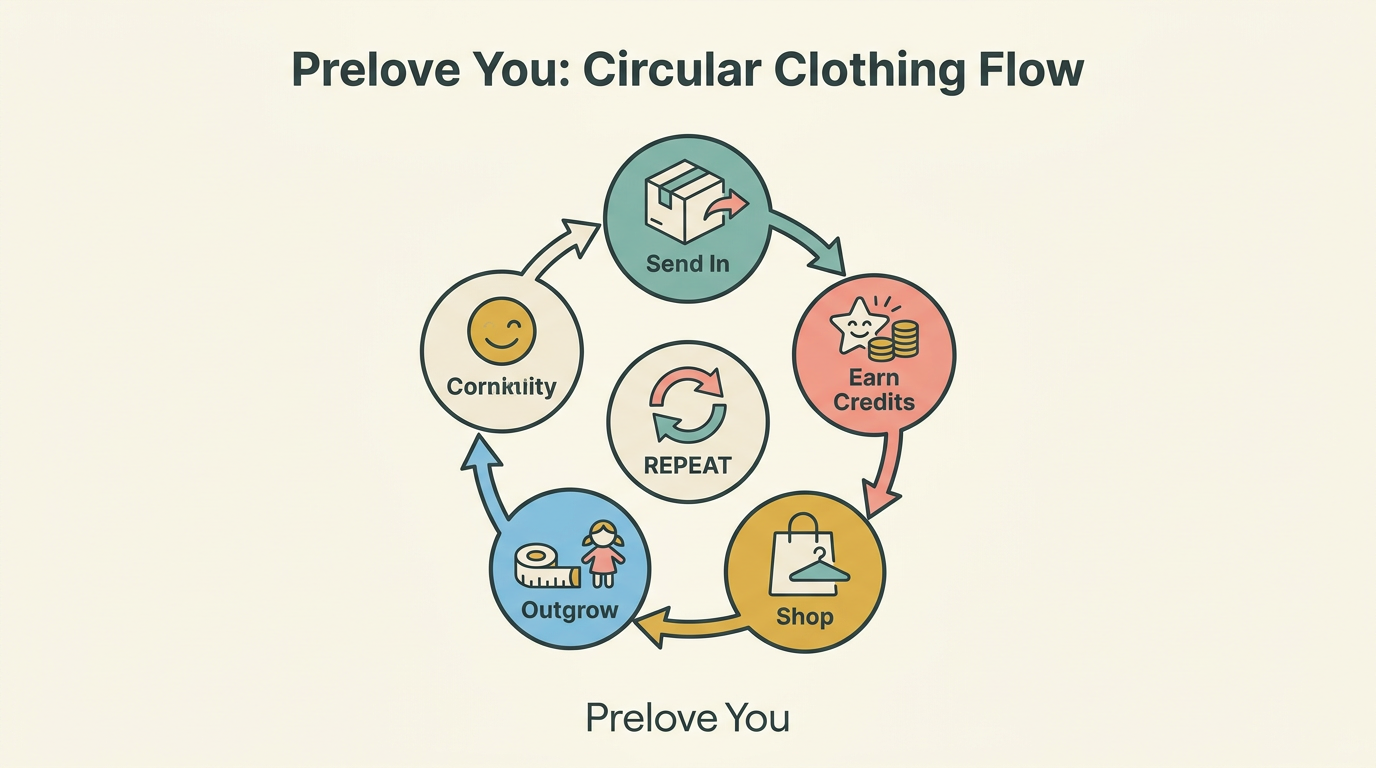
A circular children’s wardrobe is not a closet project. It is a household behavior shift. And like any behavior shift, it starts with one concrete first action. In this case, that action is an audit.
Here is a truth that almost every parent will recognise: your child wears roughly the same five to eight items on rotation, regardless of how many things are technically in their wardrobe. The rest — the backup options, the special-occasion pieces, the things that were on sale or handed down or bought because they were cute in the shop — largely go untouched. The wardrobe feels full. The laundry pile tells a different story.
The seasonal audit is the act of making that reality visible. It takes less than ninety minutes per child when done twice a year. It takes considerably longer when avoided for two or three seasons. Like most household tasks, it compounds the longer it is left. Do it now, do it in March before the summer transition, do it again in August before the autumn term, and it will never feel like a project again.
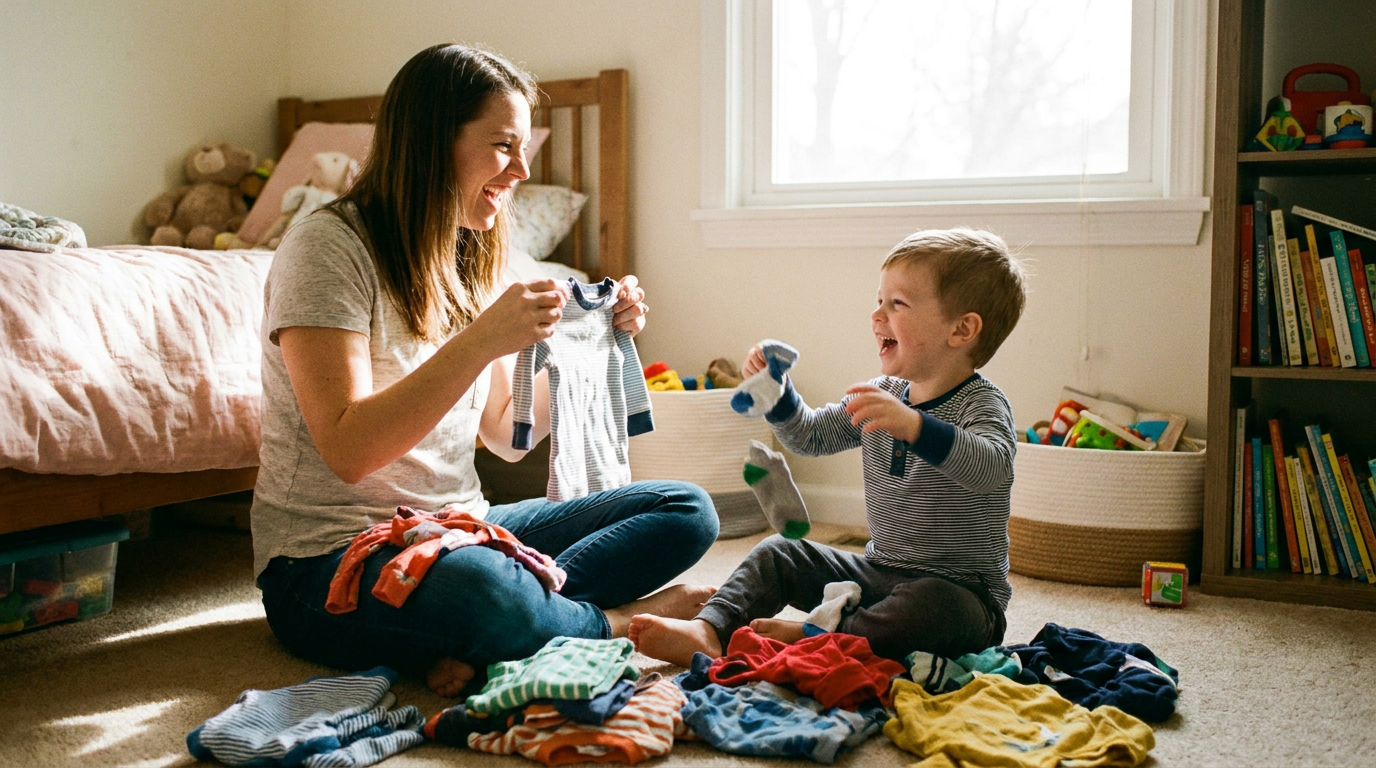
When to do it: Set a twice-yearly rhythm. The spring-to-summer transition (late March or April) and the summer-to-autumn transition (August or early September) are the natural hinge points of the children’s clothing year. Block an hour in your calendar the way you would any other household task. Give it a name if that helps — “the sort”, “the switchover”, whatever makes it feel like a regular event rather than an exceptional undertaking.
The four-step audit process:
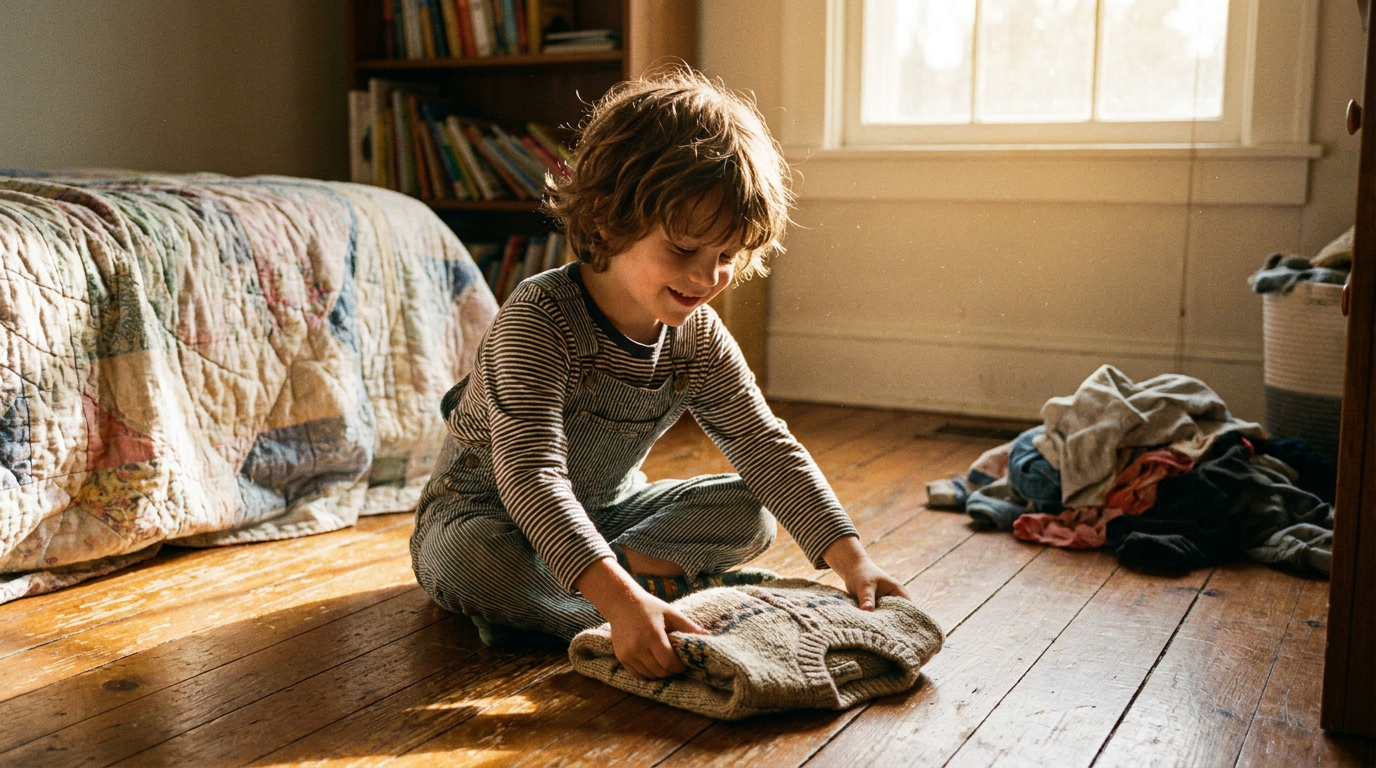
The child-involvement angle here is not performative. Research consistently shows that autonomy in decision-making — even small, practical decisions — builds confidence and a sense of agency in children. Involve them from age three upward. They can tell you what fits. They can tell you what they love. They can understand, at any age, the concept that something they have outgrown can be someone else’s favourite thing.
The Audit Conversation With Your Kid
“Let’s look at everything in your closet and find the pieces you love most. The ones that make you feel like yourself. Those stay. Everything else? It’s ready for the next chapter.”
For a deeper look at how to involve your kids in clothing decisions meaningfully — beyond the audit, into actual shopping and choice — The Confidence Cart is worth reading alongside this guide.
The audit gives you clarity. It gives you a Move On pile. And that pile is where most systems stall — because suddenly you are standing in front of a bag of outgrown children’s clothing and you have absolutely no idea what to do with it. That is where the next step matters most.
The bag is packed. The Move On pile is real, sitting on the floor in a way that cannot be ignored. And yet, somehow, it doesn’t leave. It migrates. From the bedroom floor to the landing. From the landing to the boot of the car. From the car to the garage, where it will spend the next eight months in distinguished company alongside the paddling pool and the broken exercise bike.
This is not laziness. This is the absence of a clear exit.
The guilt embedded in outgrown children’s clothing is specific and peculiar. It is partly the guilt of waste — the sense that good money was spent, that perfectly wearable items should go somewhere useful rather than just… disappear. It is partly the guilt of sentiment — these are not just trousers, they are the trousers he wore on the camping trip, or to the first day of nursery, or through the winter she learned to ride without stabilisers. And it is partly the guilt of logistics — the imagined labour of photographing, listing, packaging, posting, chasing payments, arguing about condition, and repeating this for every single item in the bag.
That imagined labour is real enough to be paralysing. And it is the single biggest reason children’s clothing sits in bags in car boots across the country rather than circulating to the families who need it.
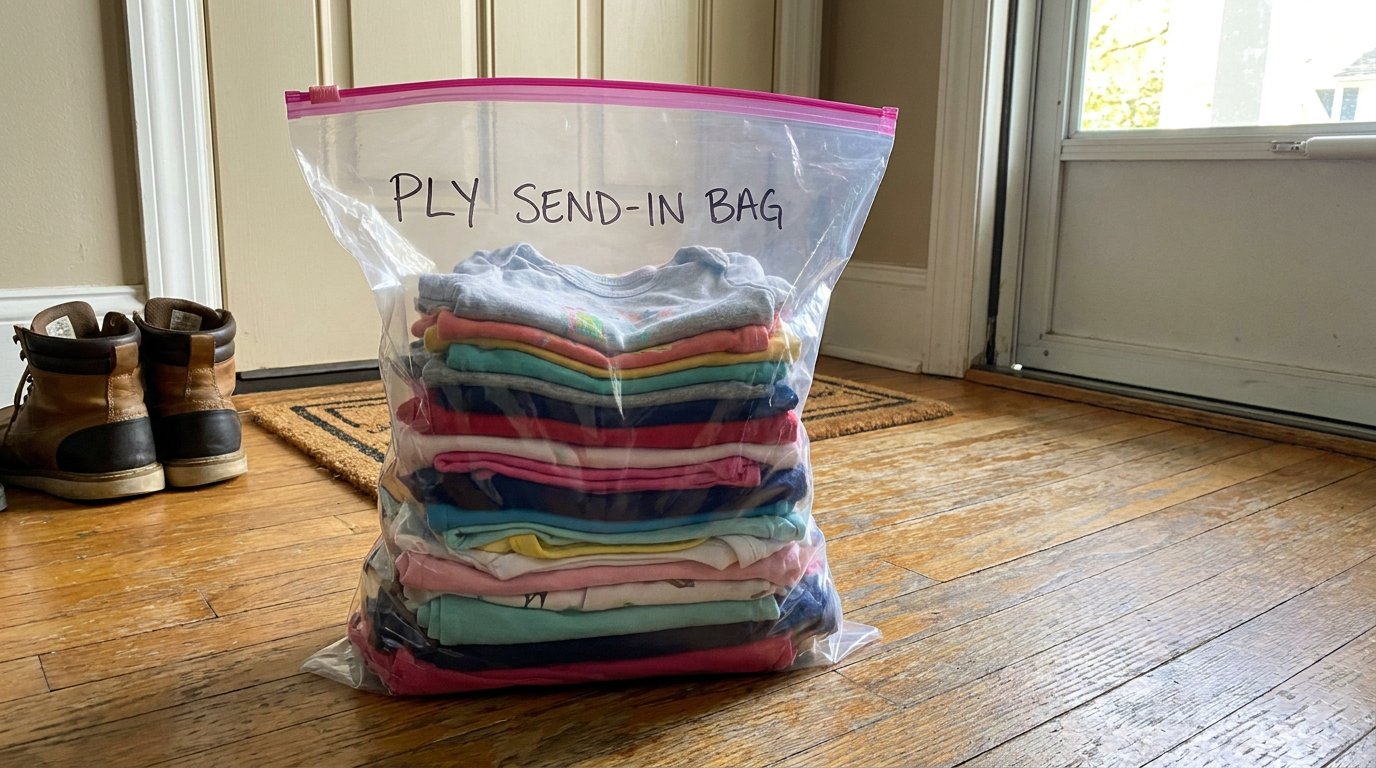
The solution is not to manage the exit more efficiently. It is to remove the decision-making from the exit entirely. Here is how to think about the three categories of outgrown clothing — and what to do with each:
Prelove You accepts end-of-life items. All of them. Rather than asking parents to pre-sort, pre-judge, or decide which items are “good enough,” the platform routes end-of-life pieces through responsible upcycling and recycling channels, so nothing ends up in landfill by default. Members earn one credit per item regardless of condition. The decision fatigue is removed. The bag goes out, the whole bag, without apology or sorting.
This matters more than it might sound. The reason clothing piles up is almost never that parents don’t care. It is that the exit requires more from them than they have available at the moment the decision needs to be made. Removing that friction — making the exit path genuinely easy, condition-blind, guilt-free — is the difference between a system that works and a system that sits in the boot of a car until spring.
For more on shrinking the footprint of children’s clothing without the weight of eco-guilt, 5 Ways to Shrink Your Kids’ Clothing Footprint covers the broader picture. And to see exactly what happens when items are sent in and how credits are earned, the Earn Credits page makes the mechanics concrete.
Letting go is not losing. The jacket your daughter wore every single day last winter is not disappearing — it is passing its thread to another child who will love it just as fiercely. That is not sentiment. That is the point. Once the exit is clear, the incoming side of the system becomes something genuinely exciting rather than something to dread.
The audit is done. The Move On pile has left the building. The wardrobe has a little space in it — not a lot, but enough to breathe. This is the moment most parents reach for their phone and start browsing, because suddenly there is room and possibility and the school term is approaching and the child has approximately four pairs of acceptable trousers.
Stop. Take a breath. The restock is where the system either holds or collapses.
The cardinal rule of intentional restocking is this: nothing new comes in unless something went out. The audit and exit must happen first — not simultaneously, not approximately, but first. The restock is a response to the audit, not an event that runs alongside it. When those two things are linked by design rather than coincidence, the wardrobe becomes self-regulating rather than endlessly expanding.
Build around anchors, not trends. The five to eight items your child actually wears are your anchors. Start there. Identify the gaps — what wore out, what was outgrown, what the next season demands that the current wardrobe doesn’t have. Then fill those gaps specifically, not generally. A restock is not a shopping trip. It is a precision exercise.
A practical seasonal restock guide:
That list is not a minimum. It is a working total for most children across most seasons. It accommodates the reality that kids wear things out, that uniforms cover many daytime hours, and that the pieces they truly love tend to get worn more often, not less, when there are fewer alternatives competing for their attention.
Choose quality over volume. A smaller number of pieces that hold up through an active childhood — the climbing, the rolling, the muddy shortcut home — will always outperform a larger number that pill, fade, or split at the seams within a term. This is where pre-loved clothing has a genuine, often overlooked advantage: it has already survived. An item that arrives on the Prelove You platform has been worn, washed, and returned to circulation because it is still genuinely good. That is a quality signal that no amount of fast-fashion marketing can replicate.
Plan for growth, but don’t overbuy. In categories where fit matters most — footwear, fitted tops, structured jeans — stay close to the current size. In categories with more flexibility — outerwear, pyjamas, looser knitwear — sizing slightly up is reasonable and economical. The temptation to buy ahead “to get more wear out of it” is understandable, but it frequently results in items sitting unused while the child grows past them before ever properly fitting into them.
Shop with credits, not impulse. When the restock is driven by what came out in the audit, and funded by the credits earned from sending outgrown items in, something quietly remarkable happens: the wardrobe cycle becomes self-sustaining. Each season’s exit funds the next season’s entry. The system pays for itself — in credits, in time, in the absence of decision fatigue. Browse New Arrivals on Prelove You to see what the restock actually looks like in practice, or explore membership options to understand how the credit model works across different tiers.
The three steps — audit, exit, restock — form a complete loop. And a loop, once established, doesn’t need rebuilding every season. It just needs running. The question is what makes it run smoothly, without requiring a parent to manage every moving part manually. That is where the infrastructure comes in.
Most parents who find themselves in the clothing cycle — the bags, the guilt, the chaotic seasonal switchover — are not missing motivation. They are missing infrastructure. The will to do better is almost always there. What is rarely there is a system that makes “better” as easy as the current way, which is to say: easy enough to actually happen.
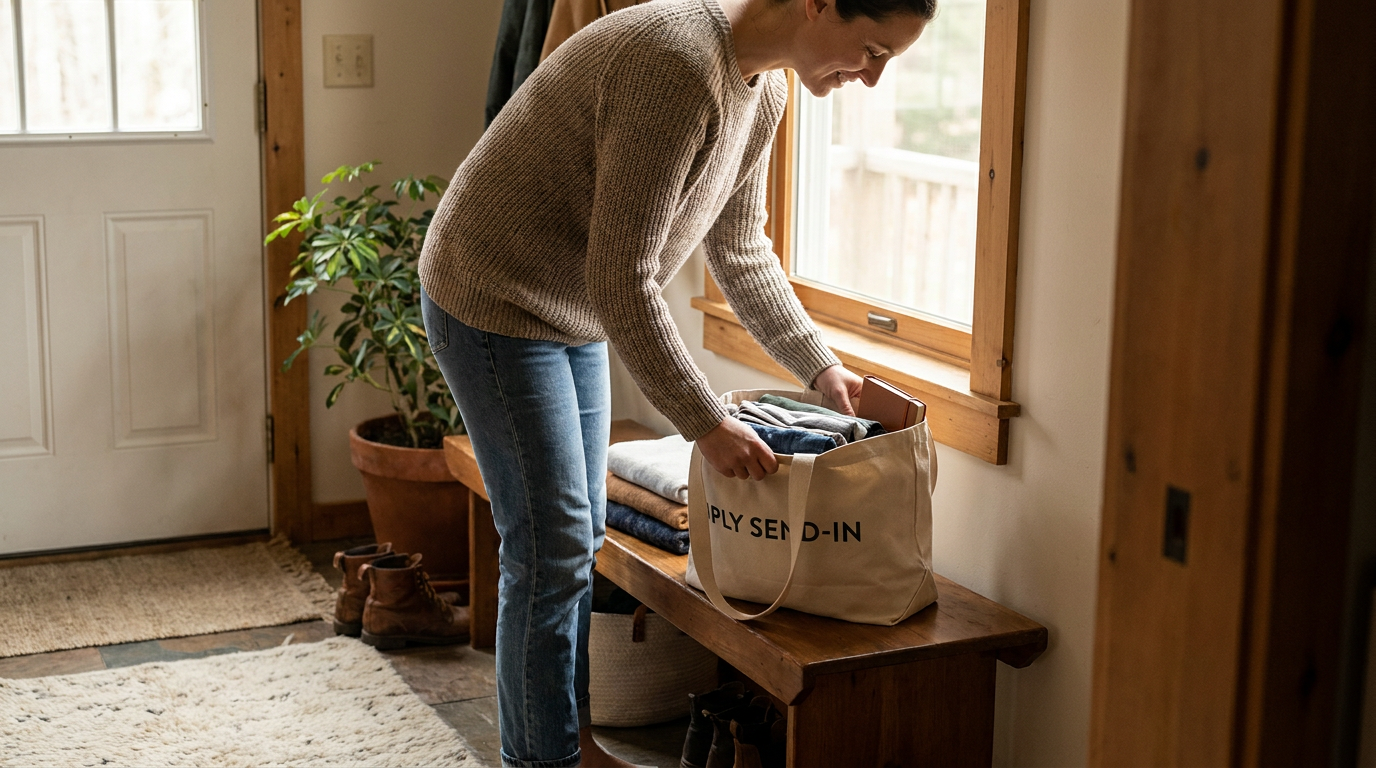
Prelove You is not a resale platform. It is not a donation service. It is a membership-based circular ecosystem — the household infrastructure that makes the repeatable wardrobe system described above operational, without requiring parents to become part-time second-hand clothing administrators.
Membership tiers reflect how actively a family uses the system:
The credit system matters not just financially but psychologically. It makes the exit and entry points of the wardrobe cycle tangible and rewarding rather than abstract and exhausting. Sending outgrown clothing is no longer an act of guilt management — it becomes an act of household intelligence, one that directly and immediately generates the means to restock with intention.
Prelove You is also building toward a digital tracking system — a kind of “library card” model where parents and children can follow the journey of pieces they’ve loved, so nothing feels anonymous or discarded. The thread continues. The clothing has a story that doesn’t end with your child.
Membership also makes a values-aligned gift for families — whether a birthday, a baby shower, or a Christmas present from grandparents who want to give something that genuinely helps. For families who want more detail before committing, the FAQ page covers the mechanics clearly and completely.
But there is one dimension of this system that no platform feature fully captures — and it is, in many ways, the most important one.
Everything described so far — the audit, the exit, the restock, the credit cycle — is practical. It is operational. It will make your seasonal wardrobe transitions quieter and your household more intentional. All of that is real and worth having.
But the part that makes this system genuinely worth building? That is what it does for your child.
Children are not passive recipients of clothing decisions. They are small people with preferences, identities, and an emerging understanding of what things are worth. When we exclude them from the clothing cycle — when clothes simply appear and disappear without explanation or involvement — we lose an extraordinary opportunity to teach something that no classroom curriculum adequately covers: that things have value, that choices have consequences, and that letting go can be an act of generosity rather than loss.
Children as young as three can participate in the seasonal audit. Not in a full, cognitive sense — but at three, a child can tell you whether a jumper fits. At four, they can tell you whether they love it. At six, they can understand that sending it to another child means another child gets to love it too. At nine, they can engage with the credit system — earning credits from outgrown items, choosing what to put toward next. At twelve, they are managing something that most adults have never been taught: a values-driven relationship with material things.
What the credit system builds in children, concretely and over time:
On Letting Go
“The jacket you wore every single day last winter? It’s ready to be someone else’s favourite. And the credits you earn from sending it in? That’s yours to pick what’s next. That’s how the thread keeps going.”
For more on how to build this kind of agency into the shopping experience specifically — the confidence to make real choices, to know what you like, to walk away from what you don’t — The Confidence Cart is the companion piece to everything in this section. And to get your child involved in the credit cycle immediately, the Earn Credits page is the place to start.
This is the part the bag in the boot of your car has never been able to offer. Not just an exit path, but a reason. Not just a system, but a thread your child can follow — season after season, year after year, into a relationship with clothing and with things that is intelligent, intentional, and genuinely their own.
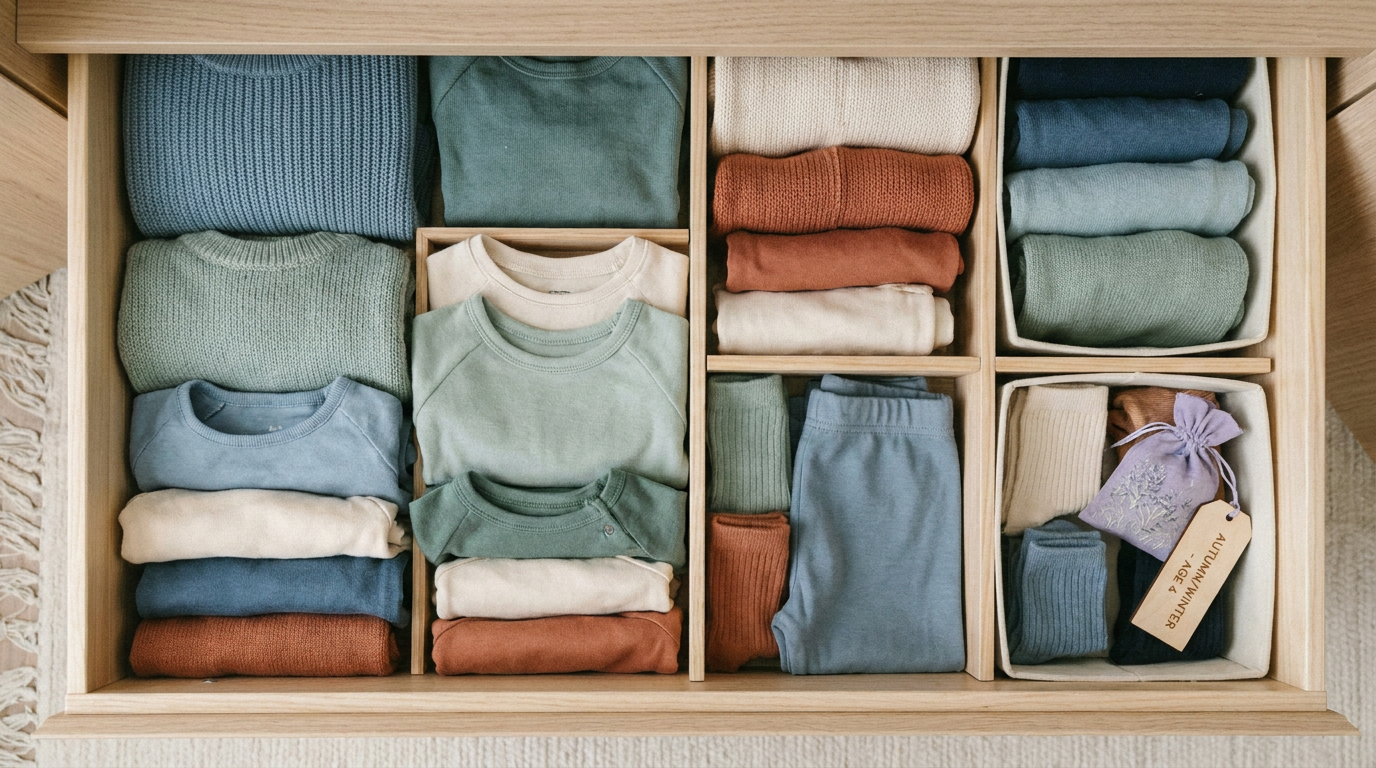
Step back for a moment and look at the full shape of what we’ve built here. An audit, twice a year, that tells you exactly what your child actually wears and what is ready to move on. An exit path that is friction-free, condition-blind, and guilt-free — one that converts outgrown clothing into credits rather than clutter. A restock built around anchors, funded by the exit, chosen with intention rather than impulse. And a child who is part of the whole thing — not managed around it, but genuinely involved in it.
That is a sustainable kids wardrobe system. Not an aesthetic. Not a minimalism experiment. A system that runs season after season, compounds rather than collapses, and quietly teaches your child something about value, choice, and the circular nature of things well before they have words for any of it.
The clothing chaos that most families live with is not a discipline problem. It is not a space problem or a time problem or a personality problem. It is the absence of a system. When the system exists, the chaos stops happening by default. The bag in the boot disappears — not because someone finally dealt with it, but because it never got the chance to accumulate in the first place.
When the children’s wardrobe system works, the closet stops being a source of dread. It becomes something quieter and better: a reflection of who your child is right now, and a record of who they’ve been. Clothing is the common thread. Following it — intentionally, seasonally, as a family — is how the cycle becomes something worth keeping.
Q: What is the best system for managing children’s outgrown clothing?
A: The most effective system combines a twice-yearly seasonal audit, a clear exit path for outgrown items — including end-of-life pieces that most donation routes won’t accept — and an intentional restocking process tied directly to what went out. Membership platforms like Prelove You automate the exit and restock cycle through a credit-based system, removing the friction that causes clothing to accumulate in bags, cars, and spare rooms indefinitely. The system works because it removes decision-making from the exit point: you send what you have, in whatever condition, and the platform handles the rest.
Q: How do I do a seasonal wardrobe transition for kids?
A: Start by pulling everything out and sorting by current fit — not what might fit in six weeks, but what fits right now, today. Apply the most-worn test: if your child hasn’t reached for it this season, they won’t. Sort into three piles: Keep (current fit, genuinely worn), Move On (outgrown, unworn, or end-of-life), and Memory (one or two sentimental pieces you’re keeping deliberately). Send the Move On pile out through a circular platform like Prelove You to earn credits toward the next season’s restock. Done seasonally, this takes less than ninety minutes per child.
Q: How many clothes does a child actually need per season?
A: Most children comfortably wear five to eight core items per season, regardless of how full their wardrobe is. A well-built seasonal wardrobe includes 3–5 tops, 2–3 bottoms, 1–2 layers, one outerwear piece, one everyday shoe, and three sets of pyjamas. Quality and versatility matter significantly more than volume. Pre-loved clothing that has already proven its durability through one or more seasons of wear will almost always outperform a larger quantity of lower-quality fast-fashion alternatives.
Q: What do I do with stained or worn-out kids’ clothing?
A: Prelove You accepts end-of-life items — stained, worn, or beyond wearable condition — and routes them through responsible upcycling and recycling channels rather than landfill. Members earn one credit per item regardless of condition, which removes the decision fatigue of sorting before sending. You do not need to decide what is “good enough.” Send it all. The platform makes the distinction and takes the action.
Q: How do I involve my kids in managing their wardrobe?
A: From age three, children can participate in the seasonal audit by identifying what fits and what they love. Older children can engage with the credit system directly — earning credits from outgrown items and choosing what comes in next. This builds real confidence and self-knowledge around personal taste, a practical understanding of value and exchange, and an emotional ease with letting go that serves them well beyond the wardrobe. Involvement should feel natural, not educational. Let them lead where they can.
The system exists. You just need the infrastructure.
Prelove You is the membership that turns the seasonal clothing cycle into something that actually works — for your household, your kids, and the planet.
Lite from $35/month · Luxe from $65/month · Limitless from $95/month
Not sure which membership is right for your family? See how PLY works → or browse the FAQ → before you commit.

