



 Sustainability Scoop
Color Blocking, Botanicals & Retro Prints: Summer 2026’s Biggest Kids Trends, Found Preloved
Why chase fast fashion when the best pieces already exist — at better quality, for less?
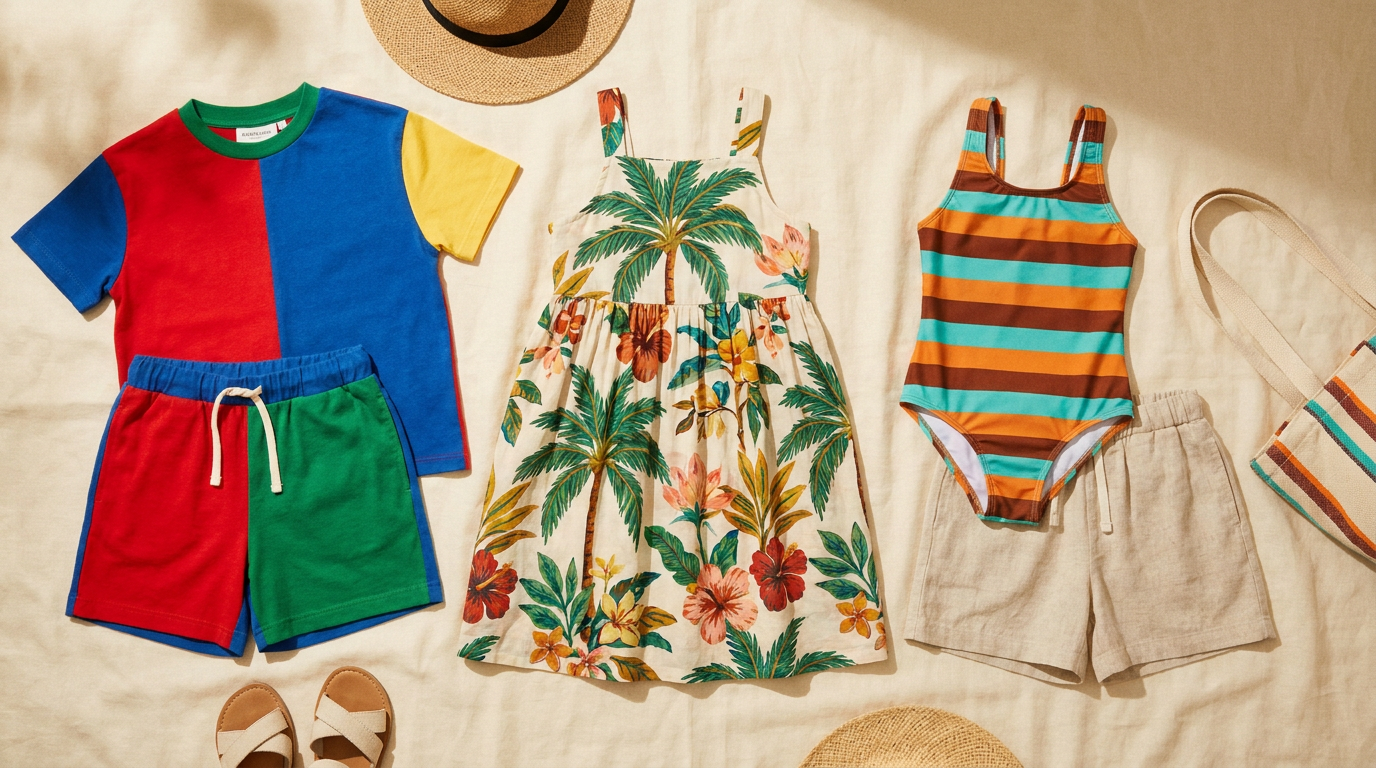
It’s that time of year. The mood boards are saturated with color. The runway edits are in. The kids’ fashion campaigns are rolling out — and if you’ve been paying attention, the direction is unmistakable. Summer 2026 kids fashion is bold, nature-forward, deeply nostalgic, and unapologetically joyful. It is a season built around four clear trend pillars: color blocking, botanical and tropical prints, earthy tones, and retro and vintage-inspired silhouettes. And every single one of them is beautiful.
Here’s the thing, though. None of these trends are actually new.
Color blocking has been a recurring statement in quality kidswear for over a decade. Botanical prints have lived in the DNA of the best premium children’s labels since their founding. Earthy palettes have anchored capsule wardrobes in Scandinavian and artisanal children’s fashion for years. Retro silhouettes — smocked bodices, ruffle trims, high-waisted cuts — have been in circulation long enough to be genuinely vintage in some cases. The best expressions of Summer 2026’s defining aesthetic moments already exist. They were made well. They were worn once, maybe twice. A child outgrew them — not because the piece was done, but because children grow at a pace that fabric simply cannot keep up with.
That’s the Prelove You argument, and it’s not a compromise. It’s the smarter play.
Prelove You is not a resale platform you dig through hoping to get lucky. It’s a curated, graded, credit-based circular system built specifically for families who want the best of what’s already out there — without the friction of traditional secondhand shopping. Every piece that enters the system is sorted and graded. Every purchase is an intentional one. And this summer, the inventory tells exactly the trend story that the mood boards are predicting.
What follows is a trend-by-trend breakdown of Summer 2026’s biggest kids fashion moments — and the practical, beautiful case for finding every single one of them preloved.
Summer 2026 kids fashion has a clear point of view. It is not a season of ambiguity or safe neutrals leading the conversation. It is a season of statements — graphic, nature-inspired, nostalgic, and textural. Four trends are defining the summer, and they are distinct enough to have their own aesthetic identities while sharing a common thread: a bias toward quality, character, and pieces that feel considered rather than disposable.
Color blocking is the season’s loudest statement. Bold, high-contrast pairings of solid color panels — cobalt blue and white, coral and navy, sage green and cream, hot pink and lime green, sunshine yellow against cobalt — are appearing across everything from linen sets to swimwear to everyday separates. The look is graphic and architectural. It reads as intentional at every age, which is part of what makes it so compelling for children’s fashion specifically: kids already gravitate toward bold, saturated color. Color blocking just gives that instinct a sharper edit.
Botanical and tropical prints are the season’s nature-forward counterpart. Palm leaves, hibiscus flowers, exotic birds — these motifs are dominating dresses, swimwear, and matching sets with a sun-soaked, almost editorial quality. When executed on quality fabric — cotton lawn, linen, jersey — the dye saturation in botanical prints has a richness that fast fashion simply cannot replicate. These are pieces that photograph beautifully, hold their colour through a summer’s worth of washing, and feel genuinely special on a child.
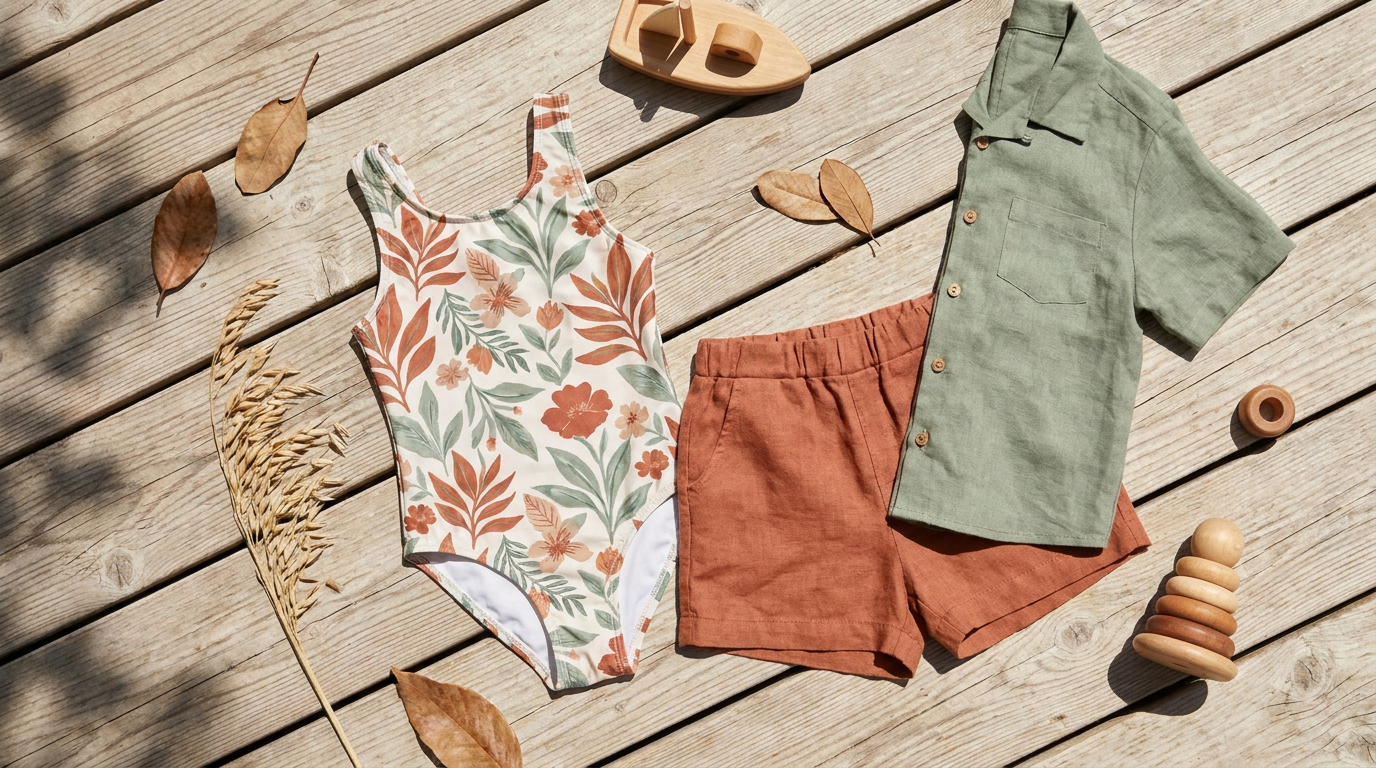
Earthy tones provide the quieter, more considered counterpoint to the brighter statements of the season. Terracotta, warm sand, dusty rose, sage green — this palette is dominating linen sets, casual daywear, and beach cover-ups. The appeal is partly aesthetic, partly practical: earthy tones mix and layer naturally, making them the backbone of a considered summer capsule. One terracotta linen set can anchor an entire wardrobe’s worth of summer dressing when paired with the right pieces.
Retro and vintage-inspired silhouettes complete the season’s aesthetic picture. Summer 2026 is drawing heavily from the 1970s and 1980s — smocked bodices, ruffle-trimmed hems, high-waisted shorts, vintage swimwear cuts, tie-dye, polka dots, and stripes with an archival quality. The references are specific enough to feel intentional rather than costume-like, and filtered through modern fit and comfort standards. Nostalgia, but wearable.
Running beneath all four trends is a shared textural language: linen, natural cotton, breathable jersey. The pieces that do these trends best are invariably higher-quality garments — they’re constructed with care, they hold their shape, and they exist in the preloved ecosystem in abundance. Children outgrow quality clothing before it shows meaningful wear. That’s not a coincidence. It’s the structural reality that makes Prelove You’s Spring/Summer collection one of the most compelling places to shop this summer.
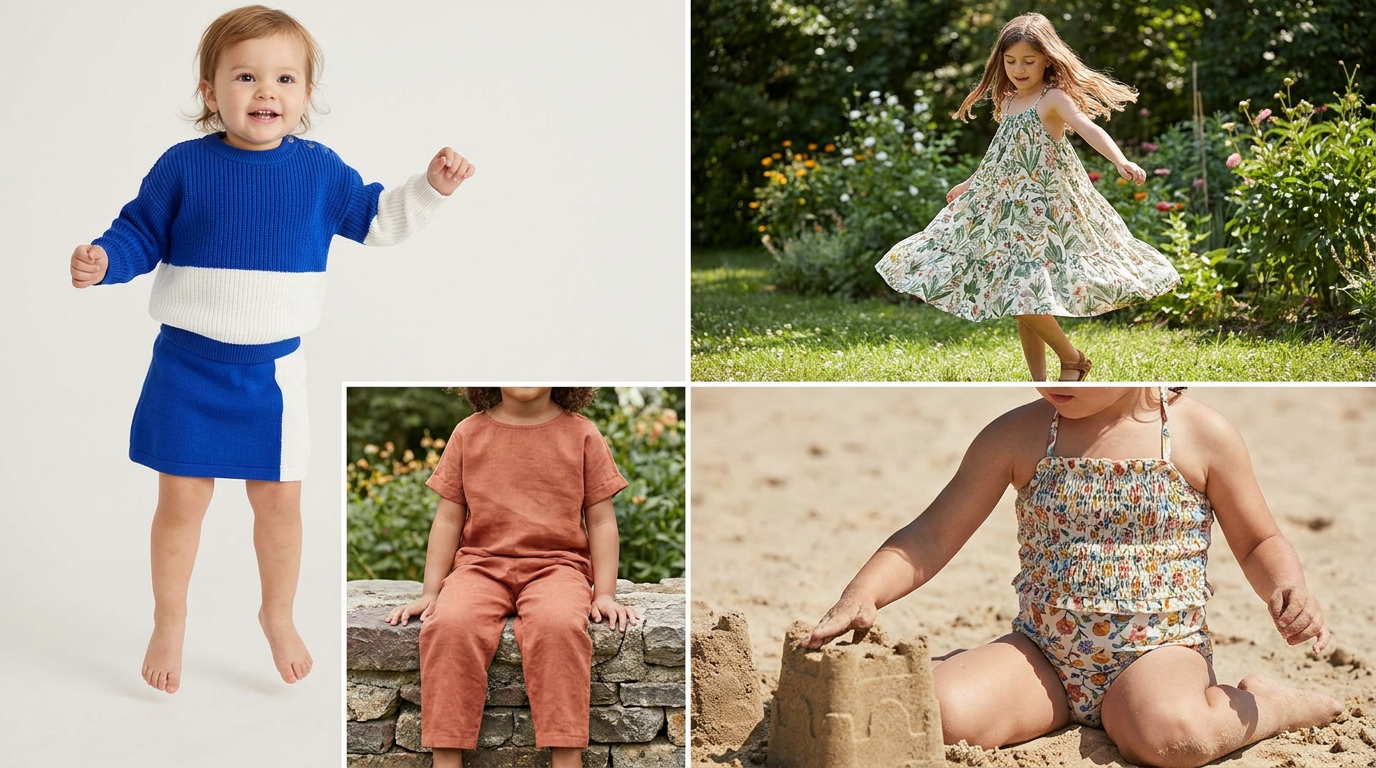
If you’re looking for the newest arrivals as inventory refreshes through the season, that’s where to start. But first — let’s go deeper into each trend, starting with the one that makes the biggest statement from the farthest distance.
Color blocking is not subtle. That’s precisely the point.
As a design philosophy, color blocking is the art of placing contrasting solid-color panels together — in a single garment, or across a coordinated outfit — to create something that reads as graphic and intentional. It’s a look borrowed from modernist art movements and filtered through decades of fashion history, and it lands particularly well in children’s clothing because it works with, rather than against, the natural energy of a child in motion. A kid in a cobalt-and-white linen set is a statement. A kid in a coral-and-navy two-piece on the beach is an editorial moment. The combination of bold color and clear structure makes color blocking one of those trends that looks as good in real life as it does on a mood board.
Summer 2026’s dominant color-blocking pairings are specific and worth knowing. Cobalt blue and white is the season’s most graphic expression — clean, architectural, impossible to ignore. Coral and navy reads as nautical without being costume-like. Sage green and cream is the softer, earthier take on color blocking — sophisticated enough to work across a wider age range. Hot pink and lime green is the season’s most joyful combination, the one that leans hardest into childhood’s natural relationship with color. Sunshine yellow and cobalt blue is a summer mainstay that the current season has elevated to statement status.
Here is where the preloved argument becomes particularly sharp: color blocking rewards quality fabric and construction in a way that few trends do. A well-made cobalt blue piece from a premium brand holds its color through a season’s worth of washes. The dye doesn’t fade, the seams don’t pull, and the color panels don’t lose their crispness. A fast fashion equivalent fades after the third wash, and the graphic impact of the trend collapses with it. Which means that the preloved market — specifically the curated, graded inventory at Prelove You — overdelivers on this trend in a way that the fast fashion market structurally cannot.
The brands that do color blocking best are well-represented in the Prelove You ecosystem. Mini Boden has built its entire brand identity around bold, well-constructed color — their collection on Prelove You is a natural starting point for any color-blocking summer capsule. Bobo Choses brings an artistic sensibility to color play that makes their pieces feel considered rather than commercial — their Prelove You inventory is consistently strong on bold, graphic pieces. Stella McCartney Kids brings a designer’s precision to color use that shows up clearly in the quality of the finished garment.
The styling reality for color blocking is more forgiving than it might seem. You don’t need a full color-blocked outfit to participate in the trend. A single color-blocked tee, paired with a neutral short, is a complete summer look. A color-blocked swimsuit needs nothing added. The trend does the work; the rest of the outfit steps back. Browsing preloved kids’ t-shirts is a natural entry point — one well-made color-blocked top is enough to bring the summer 2026 moment home.
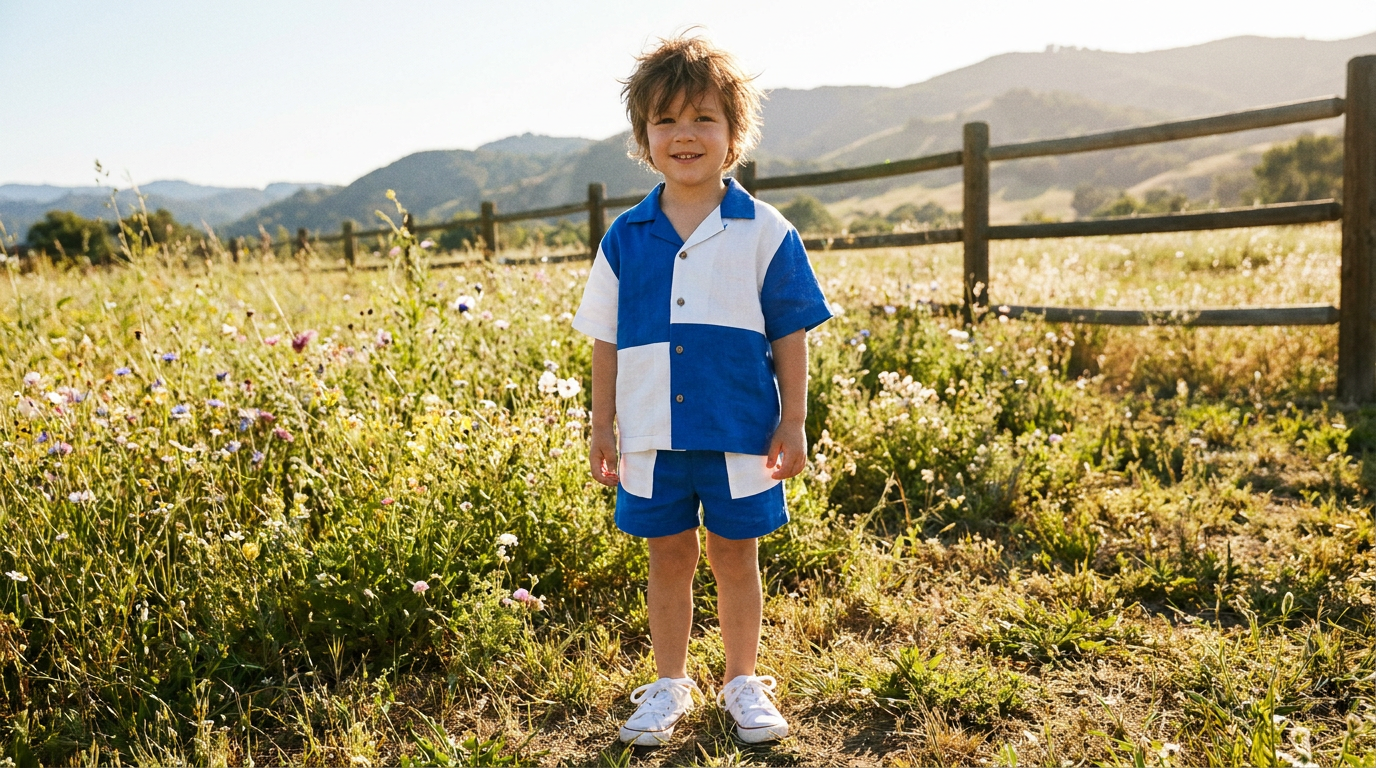
There’s also a child-agency angle worth noting here. Color blocking is a trend that children can genuinely participate in understanding — because it’s about intentional color choice, and kids have opinions about color that adults often underestimate.
How to Talk About Color With Your Kid
“That shirt has two colors that weren’t supposed to go together — but they do. That’s called color blocking. When you know the rules, you get to break them. What color would you add?”
The graphic clarity of color blocking is Summer 2026’s loudest statement. But the season’s nature-forward trends — botanical prints and earthy tones — tell an equally compelling story, with a quieter and perhaps more lasting kind of beauty.
There is a particular kind of beauty in a well-made botanical print. The way a palm leaf motif sits on quality cotton lawn. The depth of colour in a hibiscus-print jersey. The way an exotic bird illustration catches light on a linen blend. These are not prints that read the same way across every fabric and every construction — they are prints that reward quality, and that reveal their full character only on garments made with genuine care.
Summer 2026’s botanical and tropical print moment is rooted in exactly this quality bias. The trend is dominating children’s dresses, swimwear, and matching sets with a sun-soaked, vacation-editorial quality that feels genuinely joyful without tipping into novelty. Lush palm leaves. Oversized hibiscus. Colourful exotic birds. These motifs are appearing on pieces that feel considered — not licensed character prints on polyester, but botanical illustration on natural fabric. The difference is visible. It’s also the difference between a piece that lasts a single season in one family’s wardrobe, and a piece that passes through the Prelove You system in near-perfect condition, ready for another child’s summer.
Earthy tones occupy a related but distinct aesthetic space — and together, these two trends form what might be thought of as the season’s nature-inspired category. Where botanical prints bring lushness and pattern, earthy tones bring groundedness and versatility. Terracotta, warm sand, dusty rose, sage green — these are the colours of a slower, more considered summer. They appear most beautifully in linen sets, beach cover-ups, and casual daywear where the texture of the fabric is as important as the colour itself.
The earthy palette is a capsule wardrobe’s best friend. Everything in this family of colours coordinates naturally — a terracotta linen short can pair with a sage green top, a dusty rose dress layers over warm sand knit with complete ease. For parents building a summer wardrobe that needs to work hard across different occasions — beach days, family lunches, playdates, holidays — the earthy palette does the heavy lifting without requiring careful planning.
The preloved case for both botanical prints and earthy tones is among the strongest in the entire Summer 2026 trend landscape. These aesthetics have deep, sustained roots in the premium kidswear labels that Prelove You carries. Soor Ploom is almost synonymous with the botanical-earthy aesthetic in quality children’s fashion — their Prelove You collection is one of the richest sources for pieces that embody exactly this seasonal mood. Misha & Puff brings natural textures and considered colour palettes that age beautifully through use and washing. Bobo Choses consistently produces botanical and nature-inspired prints with an artistic quality that holds. Stella McCartney Kids approaches nature-forward aesthetics from a sustainability-conscious, high-design perspective that makes their pieces genuinely lasting.
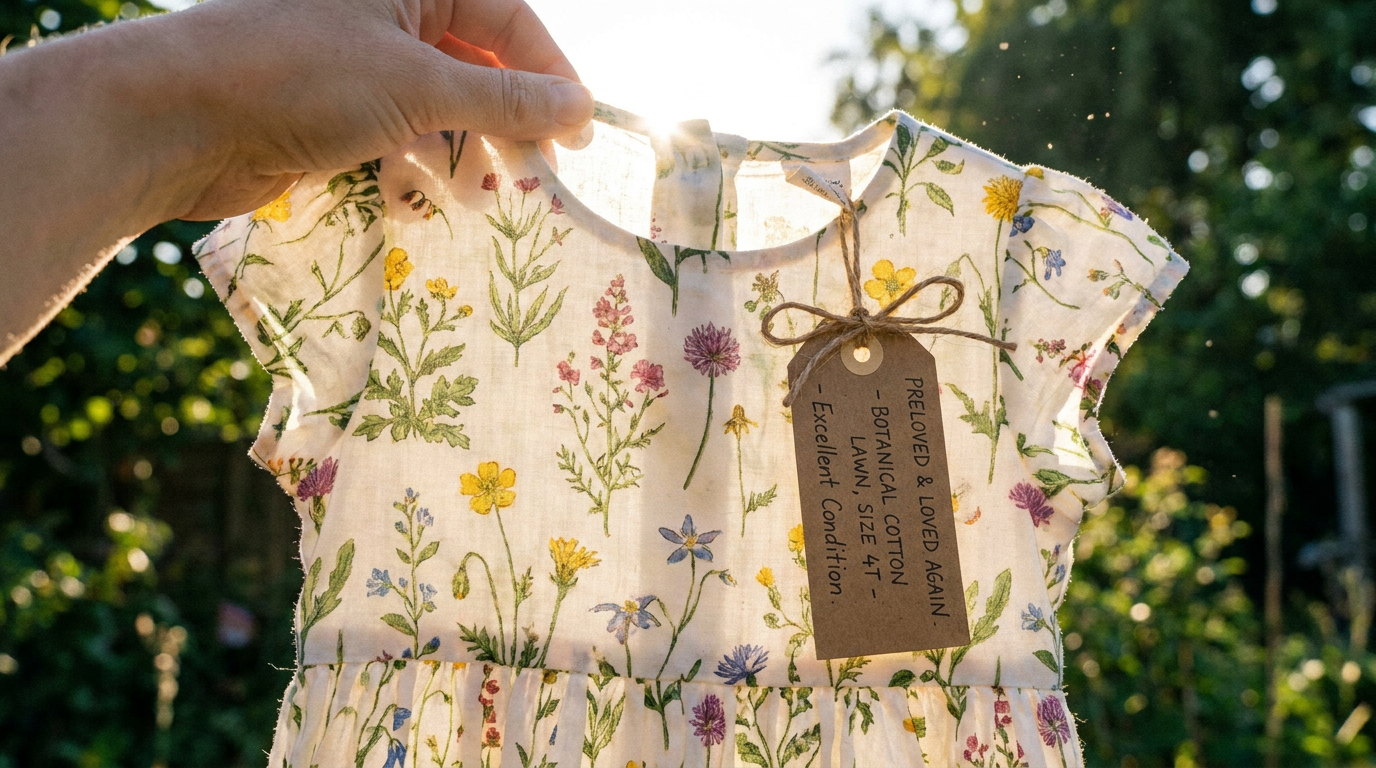
The swimwear angle deserves specific attention. Botanical-print swimwear and rash guard sets are one of Summer 2026’s most specific and coveted micro-trends — and they are a perfect preloved sweet spot. Swimwear is typically worn through one season before a child outgrows it. The fabric, particularly in quality pieces, has barely begun to show wear. Prelove You’s swimwear category is a natural destination for exactly this kind of find: a botanical-print swimsuit or rash guard set in excellent condition, from a premium label, at a credits-based price that reflects its second life rather than its original retail point.
The dresses category on Prelove You is the other obvious entry point for botanical prints — sundresses in particular are where this trend lives most fully, and where the quality differential between premium preloved and fast fashion new is most immediately visible. A botanical-print dress on quality cotton lawn, passed through the Prelove You system after one summer with one family, is simply a better garment than a comparable piece bought new from a fast fashion retailer this season. The fabric holds its drape. The print retains its saturation. The dress is, in every meaningful sense, better.
From the warmth and lushness of the natural world, we turn now to the trend that is perhaps the most inherently circular of all — one where the preloved argument doesn’t just hold up, it becomes almost self-evident.
Some trends arrive in the market as genuinely new ideas. Others are revivals — references to an earlier moment, filtered through contemporary fit and current sensibility. And then there are trends like Summer 2026’s retro and vintage-inspired silhouettes, which belong to a third and more interesting category: trends that are, at their core, a market’s way of telling you that the old things were better.
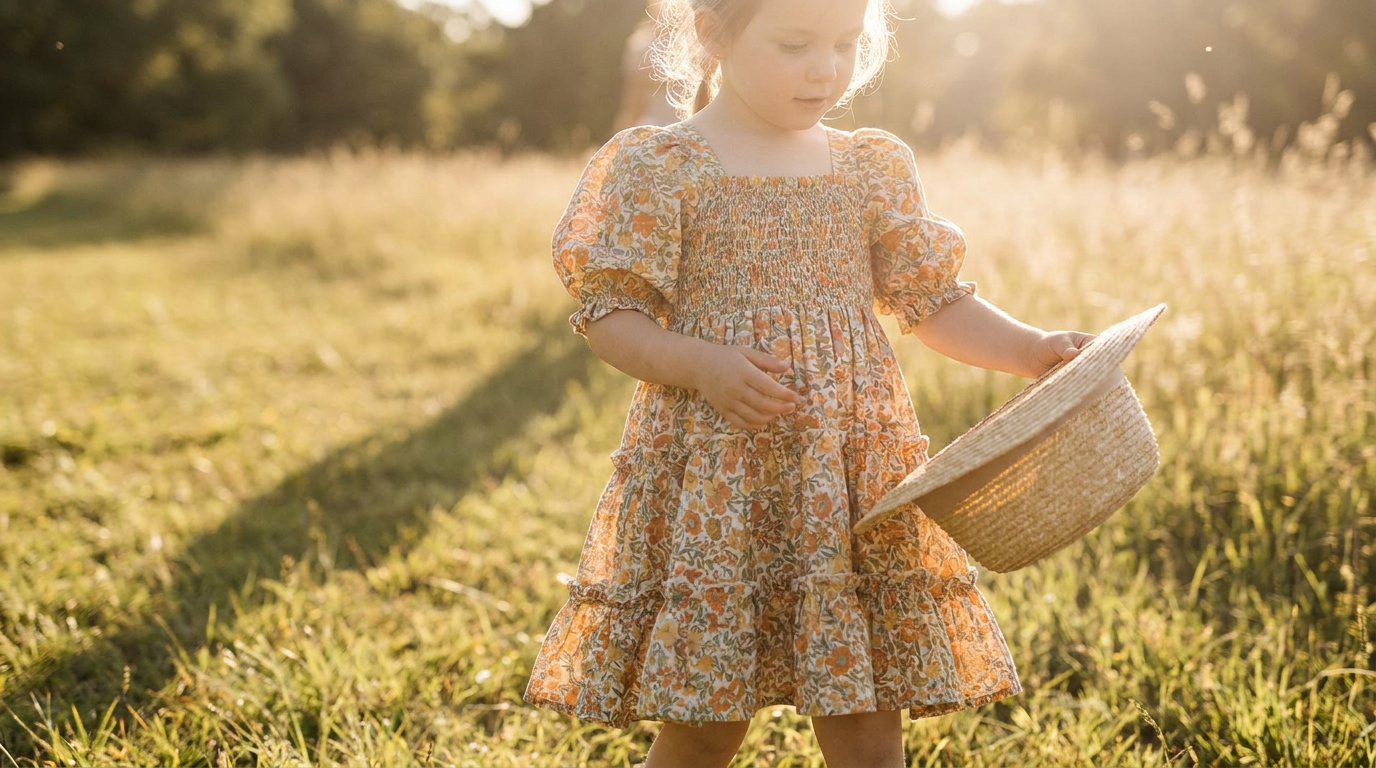
Summer 2026 is drawing heavily from the 1970s and 1980s in children’s fashion. The references are specific and consistent: smocked bodices, ruffle-trimmed hems and sleeves, high-waisted shorts, vintage swimwear silhouettes, tie-dye, polka dots, and stripes rendered with an archival quality that signals deliberate nostalgia rather than casual pattern choice. These are not vague historical gestures — they are precise aesthetic decisions, and they make for genuinely beautiful children’s clothing when executed with the quality and craftsmanship the references deserve.
Here is the trend’s defining irony: across the high street and in fast fashion specifically, retailers are charging premium prices for pieces described as “vintage-inspired.” New garments, made to evoke an older aesthetic, often constructed from synthetic blends that will not survive the season. Meanwhile, the preloved market has the actual thing. Pieces from five, seven, or ten years ago — from premium labels that were making garments with genuine quality and construction at that time — are available through Prelove You’s vintage category at credits-based pricing that reflects their circular value. The irony isn’t subtle: the “vintage-inspired” new piece costs more and delivers less than the actual vintage or near-vintage equivalent found preloved.
This is not an abstract argument. The quality of children’s garments from premium labels a decade ago was, in many cases, higher than their contemporary equivalents — before cost pressures encouraged the industry-wide shift toward cheaper fabrications and construction shortcuts that has accelerated through the 2020s. A smocked dress from a quality brand that entered the Prelove You system after two seasons of occasional wear is not a compromise. It is a genuinely superior garment to a fast fashion “smocked-inspired” dress from the current season. The construction is more careful. The fabric is more substantial. The smocking holds its shape. The piece has history, and the history shows in the quality.
The styling logic for retro pieces is also beautifully simple. Vintage silhouettes work best when they’re allowed to be the story — styled simply, without competition. A vintage-silhouette swimsuit paired with a linen cover-up and sandals is a complete summer look. A smocked floral dress with plain canvas shoes and a simple hairband needs nothing added. The piece carries the moment. The styling steps back.
Children respond to this in ways that are worth paying attention to. Retro and vintage pieces tend to have a specificity and character that mass-produced contemporary garments lack — they stand out, they feel particular, they aren’t everywhere. That feeling of specialness is something children register and respond to, sometimes more strongly than adults do. It builds the kind of genuine attachment to a piece of clothing that Prelove You’s entire philosophy is grounded in: the belief that clothing worth loving is clothing worth keeping in circulation.
The shorts and skirts category on Prelove You is one of the richest areas for retro finds — high-waisted shorts, ruffled skirts, and vintage-silhouette separates appear here with genuine regularity. And for parents who are rethinking the automatic “new outfit” reflex, this piece from the Prelove You blog puts the argument plainly and well.
How to Talk About Retro Style With Your Kid
“This piece has history. Someone loved it before you. Now it’s yours — and one day, it might belong to someone else who loves it just as much. That’s the whole point.”
With the case made for each of Summer 2026’s four defining trends, the next question is the one that sits underneath all of it: why is preloved the smarter way to shop any trend — not just these ones?
Let’s be direct.
According to the GoodBuy Gear 2026 Baby & Kid Resale Report, 67% of parents purchased secondhand items in 2025 as a direct response to rising prices. That figure is not a niche statistic — it represents the majority of parents, making a rational economic decision in the face of a retail environment that is increasingly difficult to navigate. Children’s clothing is expensive. Children grow out of it at a pace that makes the cost-per-wear calculation of buying new, for every season, for every trend, genuinely irrational.
But the economic argument, as compelling as it is, is only part of the story.
The quality argument for preloved is, if anything, stronger. The premium kidswear brands that Prelove You curates — Bobo Choses, Soor Ploom, Stella McCartney Kids, Mini Boden, Misha & Puff, Bonpoint — are built to a construction and fabric standard that outlasts any single child’s relationship with a garment. These are brands that invest in natural fabrics, careful construction, and considered design. When a child outgrows a piece from one of these labels after one season — as children routinely do — the garment is not worn out. It is, in most cases, in near-perfect condition. The fabric has barely been broken in. The preloved market doesn’t just offer affordability; it offers access to a quality tier that the original retail price point put out of reach for many families. The curated, graded inventory on Prelove You makes that quality tier accessible through a system, not a lucky find.
The same GoodBuy Gear report found that 89% of parents bought baby and kid gear secondhand in the past year — and that in 2025 alone, resale activity diverted 1.94 million pounds of children’s items from landfills. These are not marginal figures. This is a mainstream shift in how families approach children’s consumption, driven by economics, environmental awareness, and the simple recognition that buying new every season is neither necessary nor particularly sensible.
The fast fashion counter-argument is worth stating plainly. The fashion industry generates approximately 92 million metric tons of textile waste globally each year, with roughly 80% of discarded clothing ending up landfilled or incinerated rather than reused or recycled, according to research from BCG. Children’s clothing turns over even faster than adult fashion — the combination of rapid physical growth and trend-driven purchasing means that the “buy new for each season” model is not just expensive for individual families, it is a participation in a broader system of waste that doesn’t serve anyone well. The average garment in a fast fashion context is worn fewer than ten times before it’s discarded. For children’s clothing, that number is often lower.
What Prelove You offers is not just an alternative shopping channel — it is a different system altogether. The platform is curated and graded, which means parents don’t have to hunt through unvetted inventory to find quality. The credit-based membership model means that the clothing a child outgrows feeds directly back into the credits that fund their next wardrobe update. End-of-life items — pieces that can’t continue as sellable inventory — are routed to upcycling and recycling partners rather than landfill. The system is designed to close the loop, not just delay the disposal. Understanding how Prelove You works is the first step toward understanding why it’s a fundamentally different proposition from both fast fashion and traditional secondhand shopping.
For trend-driven seasons specifically, the preloved logic is particularly crisp. A Summer 2026 trend — color blocking, botanical prints, earthy tones, retro silhouettes — will evolve by autumn. The piece you find on Prelove You this summer will, when your child outgrows it in six or twelve months, pass back through the system and give another child their summer moment. The quality of the piece makes that second circulation possible. The system makes it easy. The alternative — buying fast fashion new for a trend that will have moved on by the time the piece has been washed five times — is the compromise, not the other way around.
For parents who are ready to make that shift, becoming a member is the entry point. And for those who want to go deeper on the environmental side of the conversation, this piece from the Prelove You blog offers five practical starting points without any of the guilt-driven framing that makes sustainability conversations so easy to disengage from.
With the case made, the final question is the practical one: how do you actually build a summer 2026 wardrobe for your child using the Prelove You system?
Start with one anchor trend.
Not all four. Not a complete wardrobe overhaul. One trend — the one that most resonates with your child’s existing wardrobe, their personality, the kind of summer you’re planning. One strong color-blocked piece, or one botanical-print dress, or one earthy linen set, or one retro-silhouette swimsuit. That single piece is enough to define the season’s direction. Everything else builds from it.
This is the systems-thinking approach to a summer capsule, and it works particularly well within the Prelove You platform because of how the inventory is organised. The Spring/Summer collection filter is the natural starting point — it surfaces seasonally relevant inventory across categories and designers without requiring parents to manually filter for summer suitability. From there, the designer filters allow browsing by brand rather than hunting by chance, which is where the quality argument for preloved becomes immediately tangible. Browsing Mini Boden for color-blocked pieces, Soor Ploom for botanical and earthy finds, Bobo Choses for artistic prints across all four trend categories — these are curated brand filters, not thrift-store luck.
The category filters tell you where the Summer 2026 trends are most concentrated. Dresses are the richest category for botanical prints and retro smocked silhouettes — the pieces that define the season’s most editorial moments. Swimwear is where the botanical-print and retro-silhouette trends converge most specifically — and where the preloved value proposition is sharpest, given how rarely children wear out swimwear before outgrowing it. Shorts and skirts carry the season’s retro high-waisted and ruffle-trim moments, along with earthy-toned linen separates that anchor a capsule wardrobe with genuine versatility. And the vintage category is exactly what it says — the real thing, not the “inspired by.”
The designer inventory available at preloved pricing represents a quality tier that changes the conversation entirely. Bonpoint and Stella McCartney Kids at credits-based pricing. Soor Ploom dresses that retail at prices that put them out of reach for everyday purchasing, available because a child grew two sizes between spring and summer. This is not the consolation prize of secondhand shopping — it is the whole point of a curated circular system.
Involve your child in the process. The Prelove You credit system is a practical tool for building genuine kid agency around clothing — and that agency is worth cultivating. When a child understands that their credits came from clothing they outgrew, that now lives with another family, the act of choosing something new with those credits carries a different weight. They’re not passive recipients of a parent’s purchasing decision. They’re participants in a system that makes sense to them. For parents who want to deepen that conversation, this piece on shopping with your kid is a practical and emotionally intelligent starting point.
Summer is also the moment to run the send-in cycle. Before you shop for summer, send in what no longer fits — outgrown pieces from spring, from last summer, from last winter’s wardrobe clear-out. Earn credits on those pieces through the earn credits portal. Then shop with those credits. The system is designed to repeat, season after season, without requiring a net spend each time. That’s the circular model in action — not as an abstract concept, but as a household practice.
How to Talk About the Credit System With Your Kid
“Those shorts you loved last summer? They’re going to a new kid who’s going to run around in them just like you did. And the credits you earned? They’re yours to use on something that fits you right now. That’s how this works.”
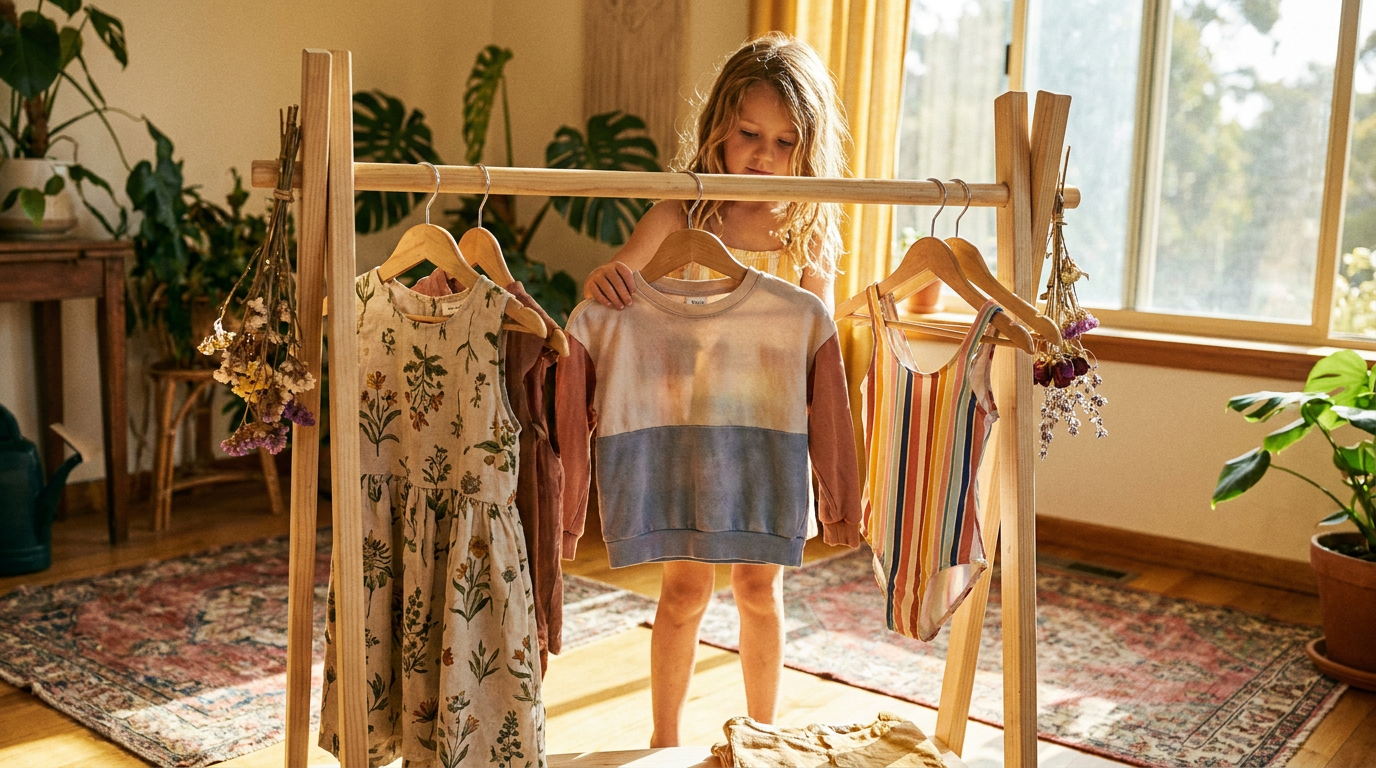
The build is simple. One anchor trend, one strong category, one designer filter, one send-in before you shop. That’s a summer capsule — intentional, quality-led, and built on a system that makes sense well beyond this season.
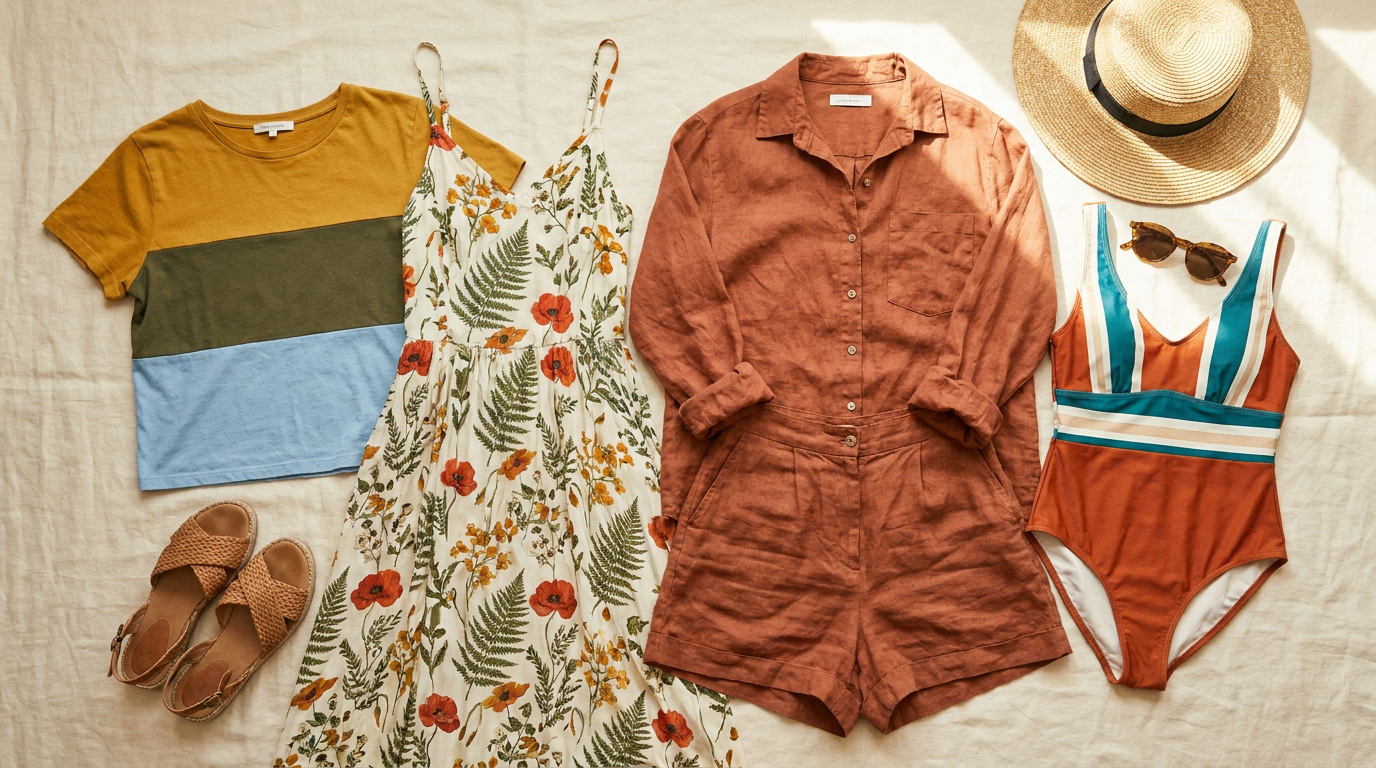
Summer 2026 kids fashion has said its piece. The trends are clear, the colour stories are vivid, and the mood boards don’t leave much room for ambiguity: this is a season of bold graphic statements, nature-inspired prints, earthy considered palettes, and nostalgic silhouettes that borrow from the past with genuine affection.
What’s equally clear — and what this blog has tried to make tangible, section by section — is that none of these trends require a trip to a fast fashion retailer to find. They exist, right now, in the preloved ecosystem. In premium fabric. In excellent condition. At credits-based pricing that reflects the reality of how children grow: quickly, constantly, and without particular regard for how much the outfit cost.
The pieces that define Summer 2026 were made well, purchased with care, and outgrown before they were worn out. They entered the Prelove You system because a family before you understood that quality clothing deserves a second life. They’ll leave it — heading to your child — because you understand the same thing.
Prelove You isn’t just where you shop for summer. It’s the system that makes summer work. Season after season, with less waste, less friction, and more intention.
The best pieces don’t end. They travel. This summer, they can land with your child.
Browse preloved summer styles now:
Not yet a member?
Already a member? Start with a send-in:

