


 Sustainability Scoop
Why Plastic Free July Should Start in Your Kids’ Closet
The biggest source of plastic in your home isn’t under the sink. It’s folded in the dresser.
And yet, tucked neatly into your child’s dresser, piled in their laundry basket, hanging in their closet, is some of the most significant plastic in your home. It’s just been hiding in plain sight, disguised as clothing.
This is not a guilt trip. It’s a reframe — the kind that, once it lands, you can’t unsee. Because plastic free july kids fashion is not a contradiction in terms. It’s actually one of the most powerful places a family can start. The clothes your child wears every single day — the stretchy leggings, the cozy fleece hoodie, the jersey tee they’d wear seven days a week if you let them — are overwhelmingly made from plastic-based synthetic fibers. They shed microplastics into the washing machine. They won’t biodegrade in a landfill. And they cycle through your home at a rate that no other plastic category in your life can match, because your child is growing whether or not you’ve had your coffee.
The good news? The solution isn’t more sacrifice. It’s a smarter system. One that fits into family life, involves the kids, and actually gets easier over time. But first — let’s properly understand what we’re dealing with.
Plastic Free July is one of the most quietly radical ideas in modern environmentalism. Founded in 2011 by Rebecca Prince-Ruiz in Western Australia, the campaign started as a simple invitation: what if you tried to avoid single-use plastic for one month? That invitation has since grown into something extraordinary. In 2024, 174 million people across 190 countries participated — roughly 16% of global consumers — making it the world’s largest plastic waste avoidance movement.
The numbers behind that participation are staggering. Participants collectively reduced their household waste by an average of 16 kilograms per person per year, contributing to 1.7 million tonnes of landfill waste avoided, 1.2 million tonnes of recyclable waste diverted, and 390,000 tonnes of plastic consumption reduced in a single year. The movement’s core insight has always been a democratic one: small changes, made by millions of people in parallel, create change at a scale that no individual act of virtue could achieve alone.
And yet, for all its ambition, Plastic Free July has a blind spot — and it’s a significant one.
The conventional focus of the campaign is the visible, tangible, single-use plastic in our daily lives: the coffee cup lid, the produce bag, the shrink wrap on the cucumber. These are legitimate targets, and the movement has made real progress on all of them. But plastic doesn’t only show up in packaging. It shows up in your wardrobe. According to the United Nations Environment Programme, 11% of plastic waste comes from clothing and textiles — a category that most people have never once associated with plastic pollution.
Eleven percent. That’s more than the plastic waste generated by packaging in many categories. And unlike a plastic straw, which might touch your lips for thirty seconds before being tossed, a piece of synthetic clothing sits against your child’s skin for hours every day, gets washed dozens of times, and eventually ends up in a landfill where it will persist for centuries.
The movement asks us to look at our habits differently. And if we’re serious about that — if we’re genuinely committed to following plastic wherever it hides — then the wardrobe is the next frontier.
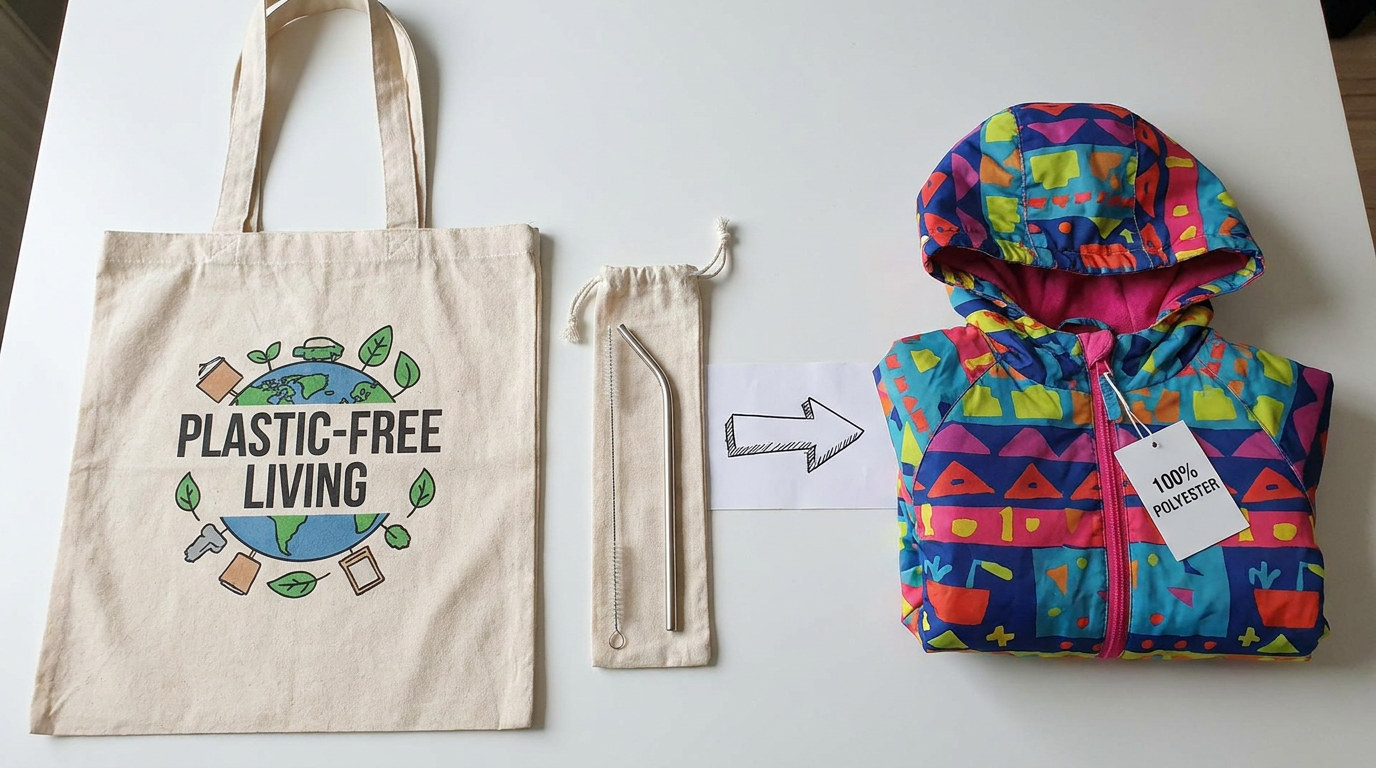
The pivot from packaging to textiles isn’t a departure from the Plastic Free July ethos. It’s the logical next step. With the textile-plastic link now visible, the question becomes more specific: what’s actually inside your child’s dresser?
Here is the information that most clothing brands would prefer you didn’t look for: approximately 60–70% of all textiles produced today are made from synthetic, plastic-based fibers. Polyester. Nylon. Rayon. Acrylic. Spandex. These are not novel industrial materials or manufacturing anomalies — they are the dominant fabrics in the global apparel industry, and they are derived entirely from fossil fuels.
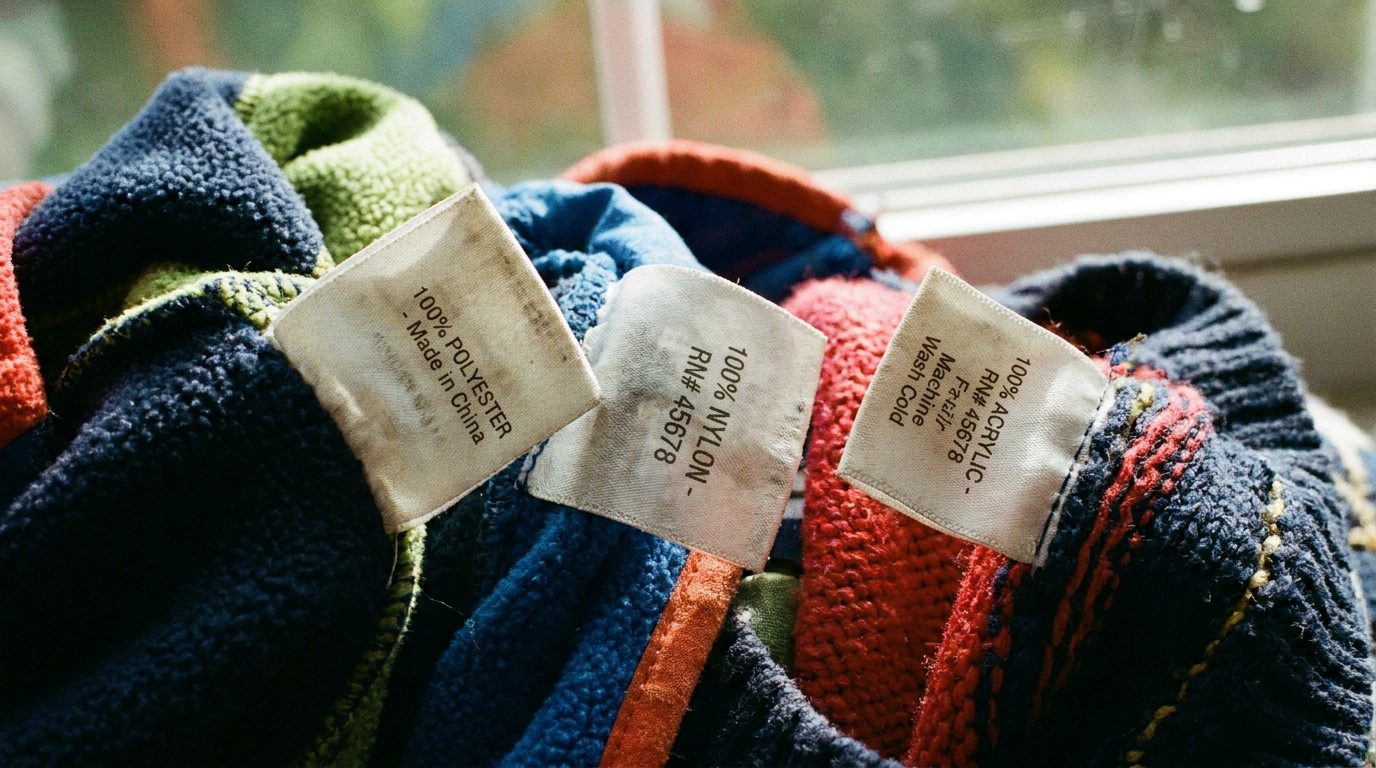
Polyester, the most widely produced fiber in the world, is essentially the same material used to manufacture single-use plastic bottles — polyethylene terephthalate, or PET — just processed differently and spun into thread. That jersey tee. That cozy fleece. That swimsuit cover-up. If the tag says polyester, you are wrapping your child in a fabric that, at its molecular core, is not so different from the plastic packaging you’ve spent July refusing.
That fleece hoodie? Plastic. Those stretchy leggings? Plastic. The jersey tee they wear every Tuesday? Plastic.
These fibers don’t biodegrade. When a synthetic garment eventually ends its life in landfill — and most of them do, because globally, the apparel industry generated 18 million tons of plastic waste in 2019 alone — it simply breaks down into smaller and smaller fragments over decades and centuries, without ever truly disappearing.
But the environmental impact of synthetic clothing doesn’t begin at the end of its life. It begins in your laundry room.
Every time a synthetic garment is washed, it sheds an estimated 500,000 to 700,000 microplastic fibers into the wastewater — tiny fragments so small they pass straight through most water treatment systems and enter rivers, oceans, and the broader ecosystem. A single wash cycle. Half a million plastic fibers. Released into the world. And if your household includes a child in synthetic clothing, you are very likely running multiple wash cycles a week.
The next time you’re folding laundry, try this: flip the collar of whatever’s in your hand and read the tag. Count how many garments in your child’s rotation list polyester, nylon, acrylic, or spandex as primary components. For most families, the answer is the majority — not because parents are making careless choices, but because synthetic fibers have quietly become the industry default.
Understanding what’s in the clothes is the first step. But it’s the unique nature of children’s clothing — the speed at which it’s consumed, the volume in which it cycles through a home — that makes this category especially urgent. That’s where the story gets both more serious and more actionable.
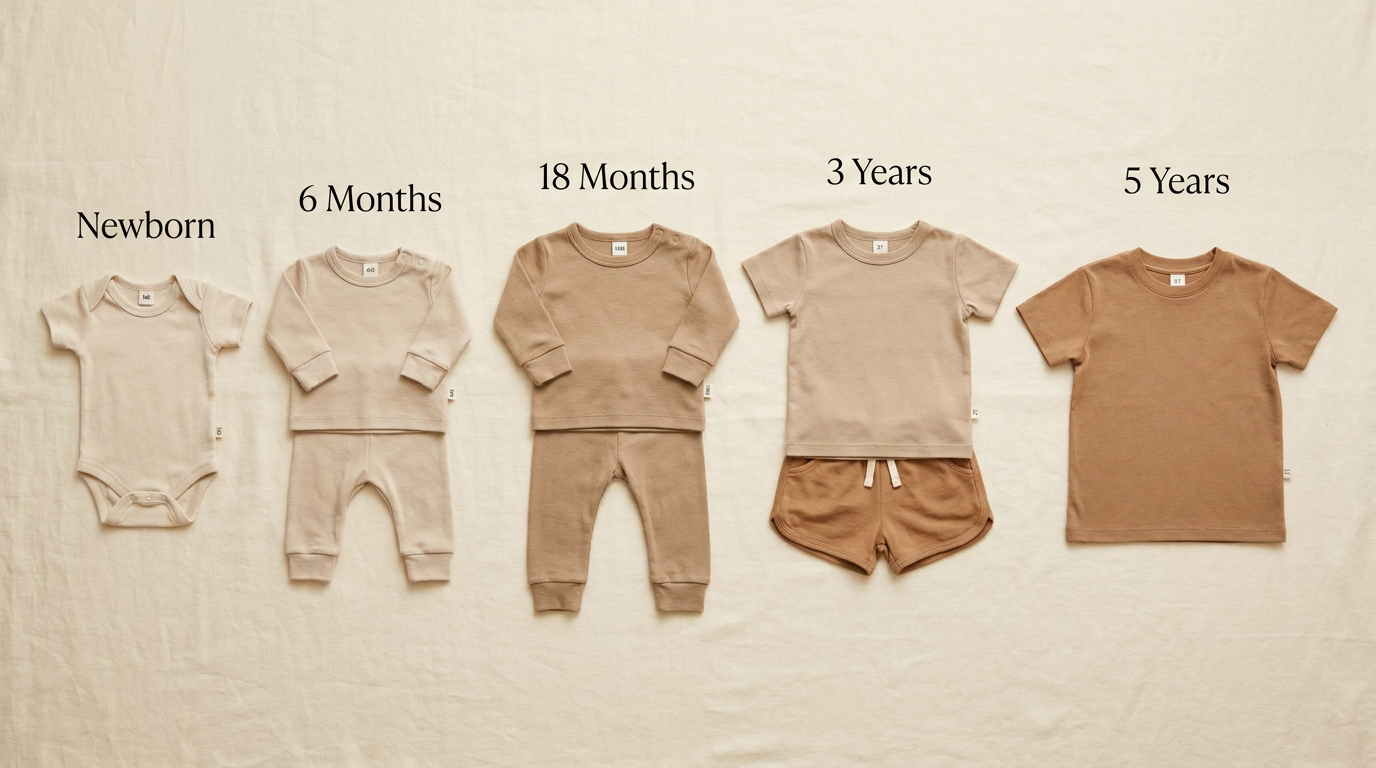
Every category of plastic waste has a churn rate — how quickly it moves from purchase to landfill. Plastic straws: minutes. Plastic packaging: days. But children’s clothing has a churn rate that no other household item can match, because children themselves are the variable. They grow. Constantly. Relentlessly. Without regard for how recently you replaced their entire wardrobe.
Infants need new clothing sizes every two to three months. Toddlers, every three to four months. Over the course of a single childhood, kids can cycle through anywhere from two to seven clothing sizes per year. That is not a slow-moving problem. That is a plastic conveyor belt running continuously through every family home with children in it.
The result is a volume of idle, outgrown, and discarded children’s clothing that strains comprehension. A staggering 31.4% of kids’ and baby items in US households are currently unused or no longer being used, representing an estimated 272.6 million items worth $13 billion sitting idle in American homes right now. These are garments that were purchased, worn briefly or not at all, outgrown, and then parked in a bag or a bin — waiting for a decision that keeps getting deferred.
$13 billion worth of children’s clothing. Sitting in bags and bins in American homes. Not on a child’s back. Not in circulation. Just waiting.
Fast fashion has accelerated this problem significantly. The business model of cheap, synthetic, disposable children’s clothing isn’t accidental — it’s engineered. Low price points encourage volume purchasing. Synthetic fibers keep manufacturing costs down. And when a garment is cheap enough to be considered disposable, it tends to be disposed of. The cycle repeats. The plastic accumulates.
What happens to all of it? The data is sobering. Globally, only 12% of discarded clothing is reused or recycled in any meaningful way. Less than 1% is recycled into new textile fibers. The vast majority — including those bags of children’s clothing that every parent knows, the ones in the trunk of the car or the corner of the basement — ends up in landfill. Where the polyester and nylon content begins its centuries-long process of not disappearing.
This is what shrinking your kids’ clothing footprint actually means in practice — it’s not about buying less (though that matters), it’s about understanding the pipeline. Every synthetic garment that enters a child’s wardrobe is plastic that will eventually need to go somewhere. The faster it cycles through, the more plastic enters the system. Children’s clothing, by virtue of the growth rate at its center, is the fastest-moving plastic stream in most family homes.
The environmental stakes are significant enough on their own. But there is another dimension to this conversation — one that is considerably more personal.
The discussion around synthetic fibers and microplastics is often framed in terms of the ocean — the photographs of plastic-saturated water, the statistics about marine ecosystems. That framing is accurate, and the environmental consequences are genuinely serious. But it tends to place the issue at a comfortable distance. What is less comfortable to sit with is the fact that microplastics in children’s clothing don’t only pollute the environment at the end of a garment’s life. They’re present throughout it — including while your child is wearing the clothes right now.
Synthetic clothing sheds microplastic fibers continuously: during production, during wear, during washing, and during disposal. These fibers are small enough to become airborne, to settle in dust, to be inhaled and ingested. Humans ingest approximately 100,000 microplastic specks a day from the air, water, salt, and food around us. Clothing is a significant contributor to that load.
Children are disproportionately exposed. Because of their size, their metabolic rate, and their developmental behaviors — putting things in their mouths, spending time on floors where microplastic-laden dust collects — children eat, drink, and breathe twelve times more relative to their body weight than adults do. The microplastic exposure per kilogram of body weight is significantly higher for a toddler than for the parent doing the laundry.
“Children breathe, eat, and drink at a rate that exposes them to far more of what’s in their environment than adults. What they wear is part of that environment.”
The health implications are an active area of research, and the picture that’s emerging is one that warrants serious attention. According to the 2023 CalSPEC report cited in Fibershed’s research on children’s clothing, ingesting microplastics has been linked to low infant birth weight, negative impacts on growth, hormonal level changes, impacts on ovarian follicles, and sperm and testicular damage. Exposure to high levels of microplastics can harm the respiratory, immune, and gastrointestinal systems.
Then there are PFAS — per- and polyfluoroalkyl substances, more commonly known as “forever chemicals.” PFAS are used to create the stain-resistant and water-resistant coatings found on an enormous range of children’s items: bibs, raincoats, bed sheets, swimwear, outdoor gear. They do not break down in the human body. Instead, they accumulate — and children are regularly exposed through direct contact with treated fabrics, through floors and carpets coated with the same chemistry, and through breast milk from mothers who have themselves been exposed. According to the EPA’s assessment of PFAS exposure, the documented health effects include decreased fertility, increased blood pressure in pregnant women, developmental delays in children, low birth weight, accelerated puberty, and behavioral changes.
This is not information meant to frighten. It is information meant to inform. The difference between fear and agency is knowing what the choices are — and that’s exactly what this conversation is about. Understanding what’s in the clothes means families can make smarter choices going forward, without catastrophizing about what’s already in the drawer.
Because the next thing worth understanding is why knowing all of this hasn’t necessarily translated into action — and why that’s not a personal failing.
Every parent reading this has a bag somewhere. Maybe it’s in the trunk of the car. Maybe it’s wedged in the corner of the hallway closet. Maybe it’s a large bin in the basement that has been accumulating for eighteen months while the decision about what to do with it keeps getting pushed to next weekend. It is full of outgrown children’s clothing, and it is one of the most reliable sources of low-grade parental guilt in the modern household.
The invisible labor involved in resolving that bag is real and rarely acknowledged. To properly dispose of or donate outgrown children’s clothing through conventional channels, you need to photograph each item, list it on a resale platform, respond to buyer messages, arrange handoffs or shipping, figure out what’s “good enough” to donate versus too worn, find a drop-off location that’s actually open when you’re free, sort out what’s stained or damaged, and repeat this process across dozens — sometimes hundreds — of items, while also managing the rest of the life that generated the clothing pile in the first place.
It keeps falling to the bottom of the list because it’s exhausting. Not because parents don’t care. Because caring doesn’t automatically come with a system.
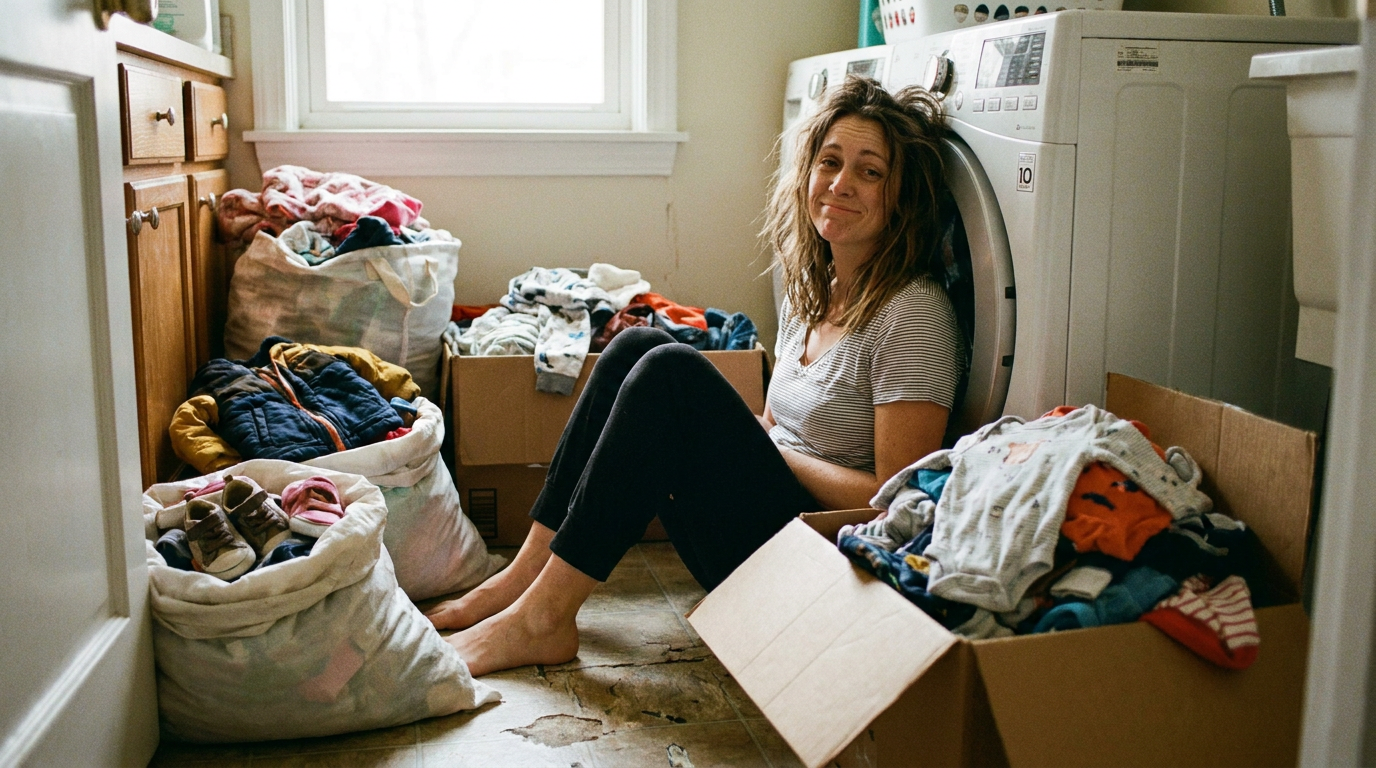
The conventional environmental narrative around children’s clothing waste places the burden almost entirely on the individual family. Sort it right. Donate it correctly. Find the right resale channels. Research which charities actually redistribute rather than landfill. It is a narrative built on guilt as a motivational tool — and guilt, it turns out, is a remarkably poor engine for habit change. It adds weight without adding direction.
What actually creates lasting sustainable behavior isn’t guilt — it’s infrastructure. It’s a system that is easier to use than not to use, beautiful enough to feel like it fits your life, and emotionally intelligent enough to meet families where they actually are.
That’s why there is something deeply familiar and deeply valid about the emotional attachment to children’s clothing, too — the impossibility of letting go of the first-day-of-school outfit, the tiny shoes that feel like they hold a whole chapter. The clothing pile isn’t just practical overwhelm. It’s memory. It’s the physical record of a childhood in motion. And any system that doesn’t honor that is going to fail, no matter how environmentally sound its intentions.
And if the thought of negotiating with a child about what goes and what stays is giving you flashbacks — you’re not alone there either. Children have opinions about their clothes, especially as they get older, and any practical approach to circular clothing has to account for that reality.
Making the Smarter Choice the Easier One
“You don’t need to feel guilty about what’s been sitting in that bag. You just need a system that works — one that handles the sorting, the grading, and the routing, so you don’t have to. Send it in. All of it. We’ll take it from there.”
The antidote to the guilt trap isn’t a better guilt trip — it’s a better system. And that’s exactly what comes next.
Here is the single most impactful action available to a family who wants to reduce their household plastic from clothing: extend the life of each garment. Every time a piece of children’s clothing is worn by another child — rather than manufactured new, worn briefly, and landfilled — one new synthetic garment doesn’t get made. The resources that would have gone into producing it stay in the ground. The microplastics that would have been shed in its manufacture and washing don’t enter the water supply. The plastic that would have ended up in landfill doesn’t go there.
This is the circular clothing logic, and it’s more powerful than it sounds — because it operates at scale. When thousands of families participate in circular clothing systems, the impact compounds. The pipeline of new synthetic garments into children’s wardrobes narrows. The useful life of existing garments stretches. And the volume of plastic waste flowing from children’s dressers to landfill slows.
The practical shape of this system, in a real family home, looks like this:
Note that buying preloved in any fiber is still meaningfully better than buying new synthetic. The best fiber choice is the one that’s already been made — the garment that already exists, already worn, ready for another child.
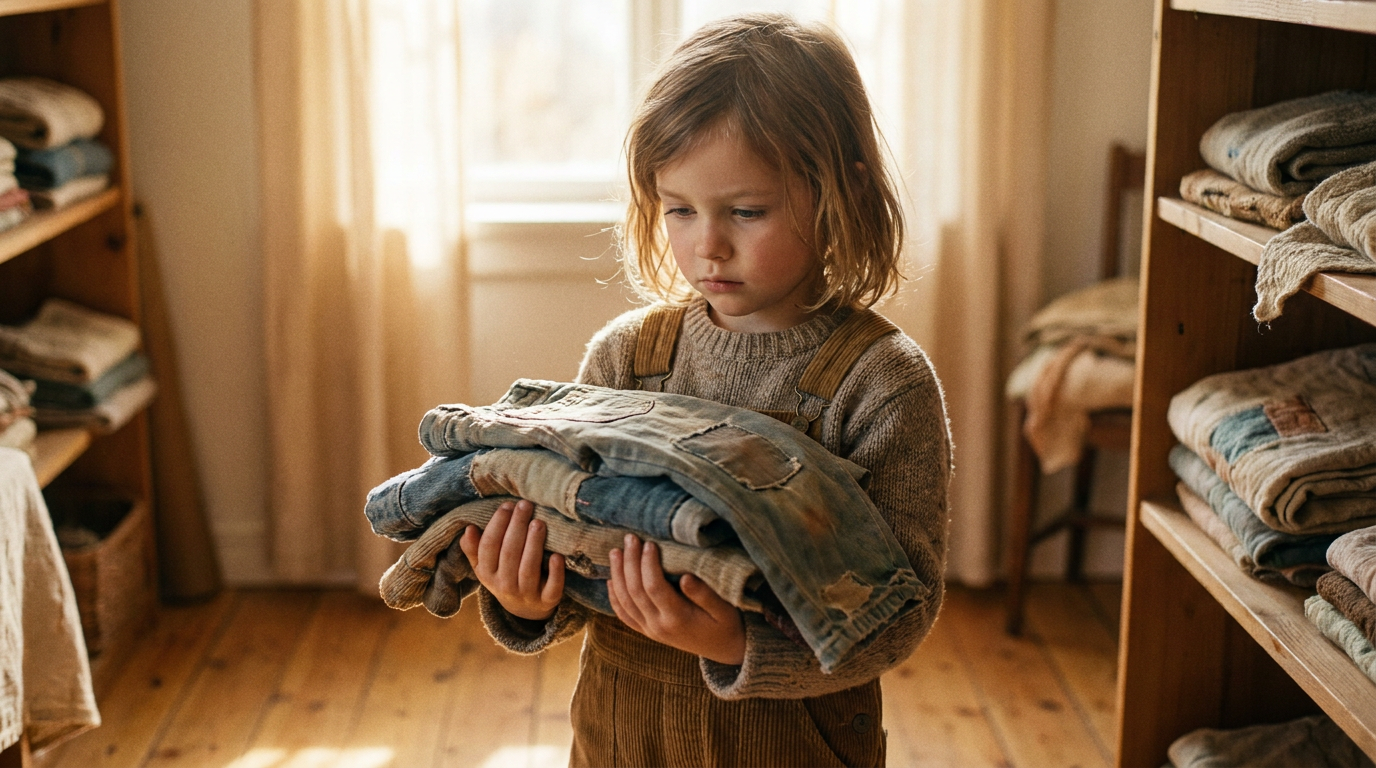
There’s a dimension of this that goes beyond practicality, though. The credit system — where children send in what they’ve outgrown and earn credits toward what comes next — gives kids actual agency in a process that usually happens entirely above their heads. They participate. They understand that the hoodie they’ve outgrown doesn’t just disappear — it goes somewhere, and something comes back. They learn, in a concrete and age-appropriate way, that objects have lifecycles, and that those lifecycles are something they can influence.
Children who grow up participating in circular clothing systems learn something that most adults were never taught: that the story of an object doesn’t end when you’re done with it. That’s not a small thing. According to EPA data on textile recycling, the current recycling rate for textiles is around 14.7% — which means the overwhelming majority of discarded clothing goes to landfill, not because families want it to, but because the infrastructure for anything else barely exists. Circular systems like Prelove You’s are part of what changes that infrastructure — not through policy or large-scale industrial intervention, but through thousands of families making a slightly different choice, with a slightly better system behind them.
The environmental case, the health case, and the practical case all point in the same direction. The question is just how to start.
This is not a project. It is a 20-minute exercise with a clear outcome. You do not need to do it all at once. You do not need to have answers to every question before you begin. You just need to start.
Step 1: Pull open the dresser and read the tags.
Pick up the first thing you touch. Look at the fabric content label. Notice whether you’re holding polyester, nylon, acrylic, or spandex — or cotton, wool, linen. Don’t throw anything away yet. Just count. Just notice. Awareness is the foundation; action follows from it.
Step 2: Gather the outgrown pile.
Every family has one. The bag in the trunk. The bin in the closet. The pile on the shelf that has been “temporarily” there since last spring. Bring it all together. Don’t sort it. Don’t try to evaluate what’s stained versus salvageable. Just gather.
Step 3: Send it in. All of it.
Don’t perform quality control on behalf of a system that’s built to handle it. Prelove You accepts everything — wearable, stained, worn past its best days. The whole point is to remove the decision from your plate entirely. Bag it. Send it. Done.
Step 4: Shop preloved for what comes next.
Use your credits. Let the kids choose. Look for natural fibers when available. If you find a great preloved piece in polyester, it’s still a better choice than a new one — because that garment already exists, and keeping it in circulation means one fewer new piece entering the pipeline.
Step 5: Build the rhythm.
This is the step that matters most over time. One send-in is a gesture. A seasonal rhythm — in with the outgrown, shop for what’s next — is a system. And systems compound. After two or three cycles, this starts to feel normal. Then automatic. Then just the way your household works.
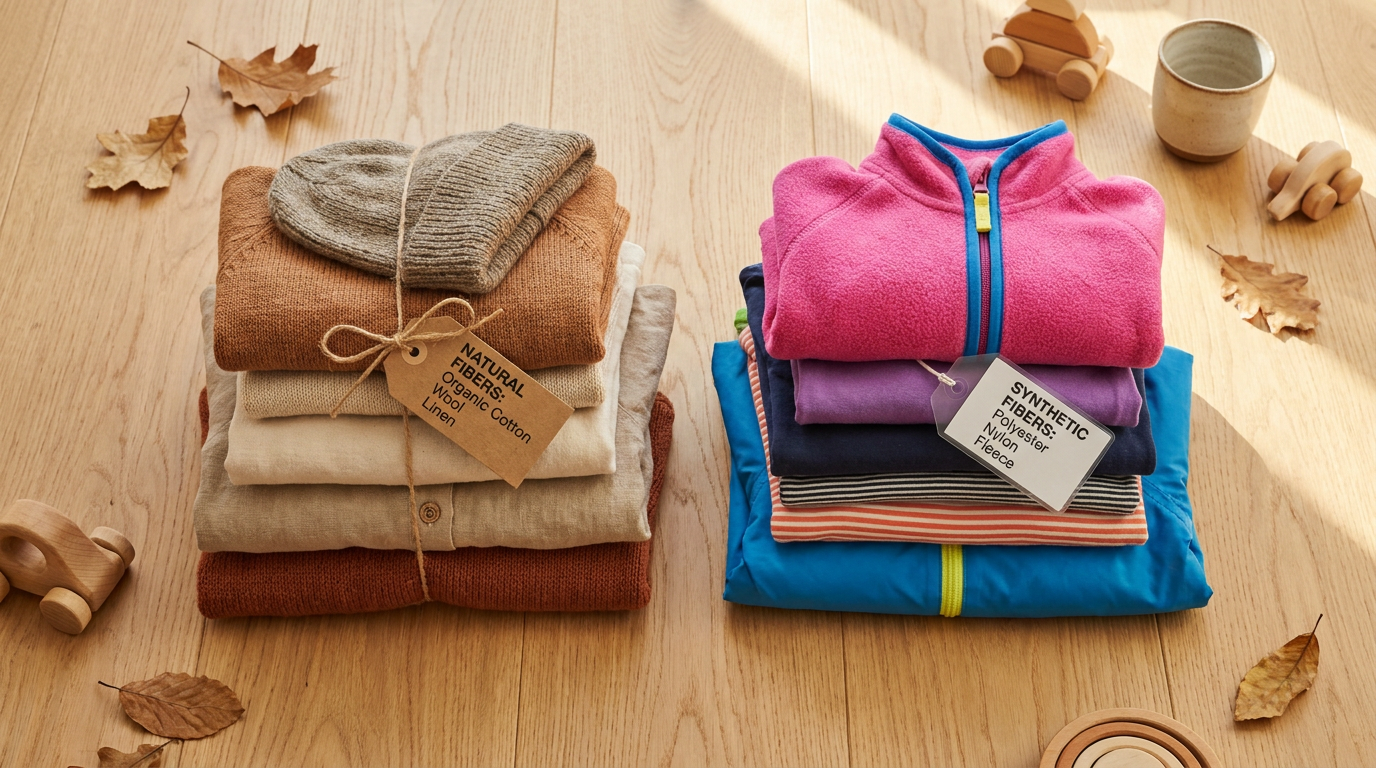
If you want to bring the kids in, this is the moment. Show them the tags. Ask them what they think polyester is made from. Let them help bag up what they’ve outgrown — and let them be part of picking what comes next with the credits they’ve earned. The Plastic Free July challenge is designed to create awareness through action, and there is no better classroom for sustainable values than one that involves choosing your own next favorite hoodie.
For families who want to go deeper into the data, Earth.org has compiled the fast fashion waste statistics that put all of this into broader context. And for readers who want a practical companion guide specifically for Plastic Free July and textiles, Illinois ISTC’s plastic-free textile guide is an excellent next read.
You don’t have to do all of it. You just have to start.
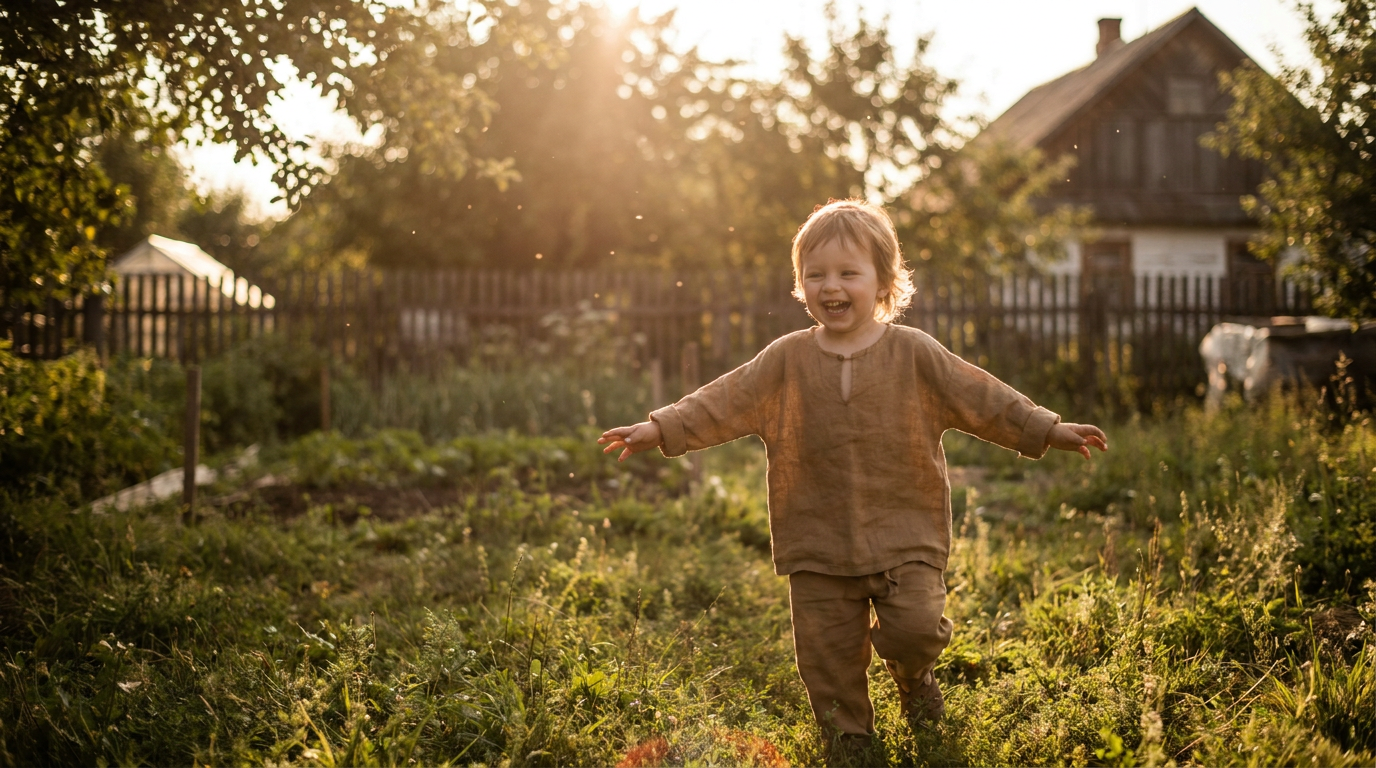
Come back to where we started: the well-intentioned parent doing Plastic Free July. The reusable bag. The stainless steel straw. The compostable packaging. All of it real, all of it meaningful. And now — the dresser, seen differently. The tag on the fleece hoodie, finally read. The bag in the trunk, finally given somewhere to go.
This is what Plastic Free July actually asks of us when we take it seriously: not just to swap out the visible plastic, but to follow the thread into the places we haven’t looked yet. Children’s clothing is one of those places. It is also, for most families, one of the highest-leverage ones — because the volume is high, the churn is constant, and the system to address it now exists.
The closet is where Plastic Free July becomes personal. Not just about the planet in the abstract, but about what’s touching your child’s skin every day, what chemicals are building up in their small bodies over time, what values are quietly being encoded into the rhythm of your household. Circular children’s clothing isn’t a sacrifice. It isn’t a downgrade. It is a system where ease, beauty, and sustainability are the same thing — where the smarter choice is also the simpler one.
Clothing holds memory. It holds the shape of who your child was at two, at four, at seven. It holds the story of a childhood in motion. The best thing that story can do is continue — passed along, worn again, loved again by another child whose parents made the same choice you’re making now.
Clothing is the literal common thread — it holds memory, identity, and the story of a child’s growth. We built a system that honors that.
Plastic Free July is the perfect moment to start — but Prelove You is built for the whole year. Send in what your kids have outgrown (everything — no sorting required), earn credits, and shop for quality preloved pieces that the next kid will love just as much as the last one did.
Whether you’re just getting started or ready to go all in, there’s a membership that fits your family:
Start Your Membership — or Learn How It Works if you’d like to see the system before you commit.
The bag in the trunk has been waiting long enough. Send it in.

