



 Sustainability Scoop
How to Get Your Kids Ready for Back-to-School Without Buying Everything New
The smarter, more intentional approach to building a back-to-school wardrobe — using preloved pieces, earned credits, and a circular system that works season after season.
It starts the same way every year. It is July, the sun is still high, and somehow — impossibly — the back-to-school emails are already arriving. The supply lists. The uniform reminders. The “last chance summer sale” notifications that feel like a countdown clock ticking in your inbox. And underneath all of it, that familiar weight settling in: the knowledge that an entire child needs to be outfitted for a new school year, and the clock is already running.
Back-to-school clothing shopping is one of the most expensive, time-consuming, and emotionally loaded annual rituals in modern family life. It carries the pressure of deadlines, the uncertainty of sizing, the opinions of a child who knows exactly what they want and doesn’t care what it costs, and the nagging sense that whatever you buy now will be outgrown before the first frost. According to NRF’s 2025 back-to-school survey, K-12 families plan to spend an average of $858.07 this season — with $249.36 of that earmarked specifically for clothing and accessories. That is real money. And for many families, it is money spent reactively, under pressure, without a system.
But what if this year felt genuinely different? What if, instead of opening a browser tab and starting from zero, you already had a framework — one that began with what your kids outgrew this summer, converted it into credits, and gave your family a curated, intentional starting point before you spent a single dollar on anything new? That is what the Prelove You system is designed for. Not as a shopping hack. Not as a compromise. As a smarter way to move through the season — one that starts with what you already have and builds forward from there.
This post will give you the complete framework. By the time you finish reading, you will have a practical, season-ready approach to building back-to-school kids clothes that are thoughtfully sourced, genuinely beautiful, and part of a system that works not just this year — but every year after it.
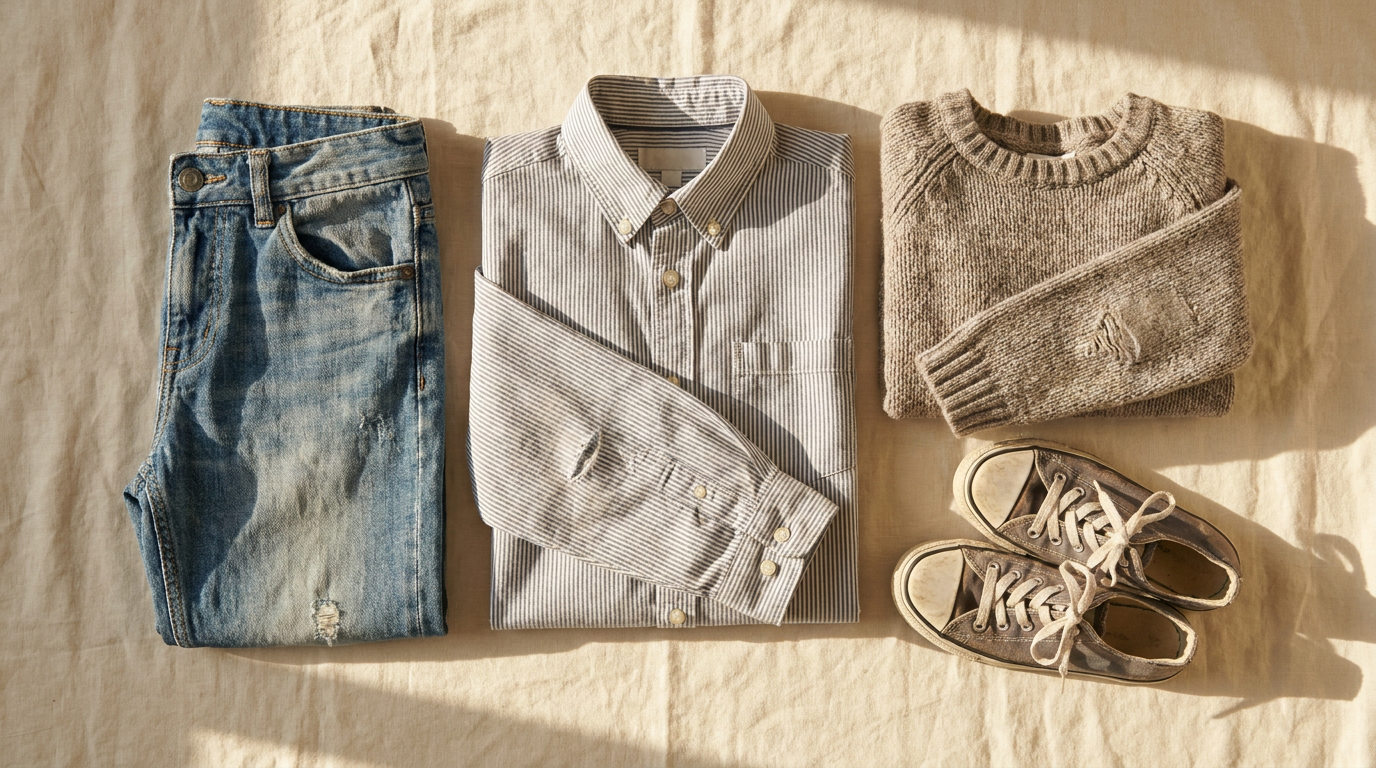
Here is something worth sitting with: the pressure to buy back-to-school clothes early is not just a feeling. It is a measurable, documented phenomenon — and it is accelerating. According to the NRF’s 2025 back-to-school survey, 67% of back-to-school shoppers had already begun purchasing as of early July 2025 — the highest early-start rate since NRF began tracking the metric in 2018. The year prior, only 55% had started that early. That is a significant jump, and it did not happen by accident.
Driving the rush is something that feels very present to every family right now: economic anxiety. Specifically, tariff anxiety. 51% of back-to-school families reported shopping earlier than last year specifically because they fear prices will rise. The logic is understandable — buy now before it gets more expensive. But that logic, however rational it feels in the moment, is exactly what leads to the problem that plays out in closets across the country every November. Because buying fast means buying without a clear picture. And buying without a clear picture means buying the wrong things, in the wrong sizes, in quantities the child never actually needed.
The NRF data makes this tension visible in an almost ironic way: the same survey that shows 67% of families have already started shopping also reports that 84% still have at least half of their purchases left to complete. They are in the store, cart in hand, before they even know what they need. The top reasons families still have shopping left to do? Forty-seven percent are waiting for better deals. Thirty-nine percent simply do not yet know what items are needed. The rush and the uncertainty are happening simultaneously — which is a recipe for reactive, imprecise spending.
“The problem is not the shopping. It is that the whole system starts at the wrong place.”
The default back-to-school approach asks parents to begin at the end: open the cart, start filling it. But the smarter system starts somewhere else entirely. It starts with a clear-eyed audit of what already exists in the home, what has been outgrown, and what is genuinely needed for the coming year. It accounts for the invisible labor of back-to-school prep — the mental load of sizing, tracking, remembering, deciding — and builds a system that absorbs that labor rather than multiplying it. And it takes the very real concern about rising prices driven by tariffs seriously, by offering a smarter economic model rather than just a faster one.
The first step in that smarter system is not a shopping trip. It is a closet edit. And it changes everything that comes after.
Before a single new item enters the conversation, before a browser tab is opened or a cart is filled, the most valuable thing a parent can do in July is go through what already exists. Not as a chore. Not as a decluttering project. As an act of clarity — because clarity is the thing that makes everything else easier.
The closet edit is not about minimalism for its own sake. It is about building an honest, accurate picture of what your child actually needs heading into the school year — which almost always differs from what you assume. Most families operate on assumption: the assumption that everything from last year probably still fits, or that there are probably enough tops, or that the sneakers are probably fine for another few months. “Probably” is expensive. A few hours in July spent actually pulling things out, trying things on, and sorting with clear eyes will save the family money, time, and the particular frustration of mid-October when the child announces that nothing in their closet fits anymore — and they are right.
The household clothing cycle breaks in predictable places, and one of the most common is the gap between what a parent thinks a child owns and what the child can actually wear. Kids grow fast — faster than the calendar suggests. A pair of jeans that fit comfortably in March can be genuinely unwearable by August. A hoodie that was perfect last fall may now end at the wrist. The only way to know is to look.
Here is how the edit works:
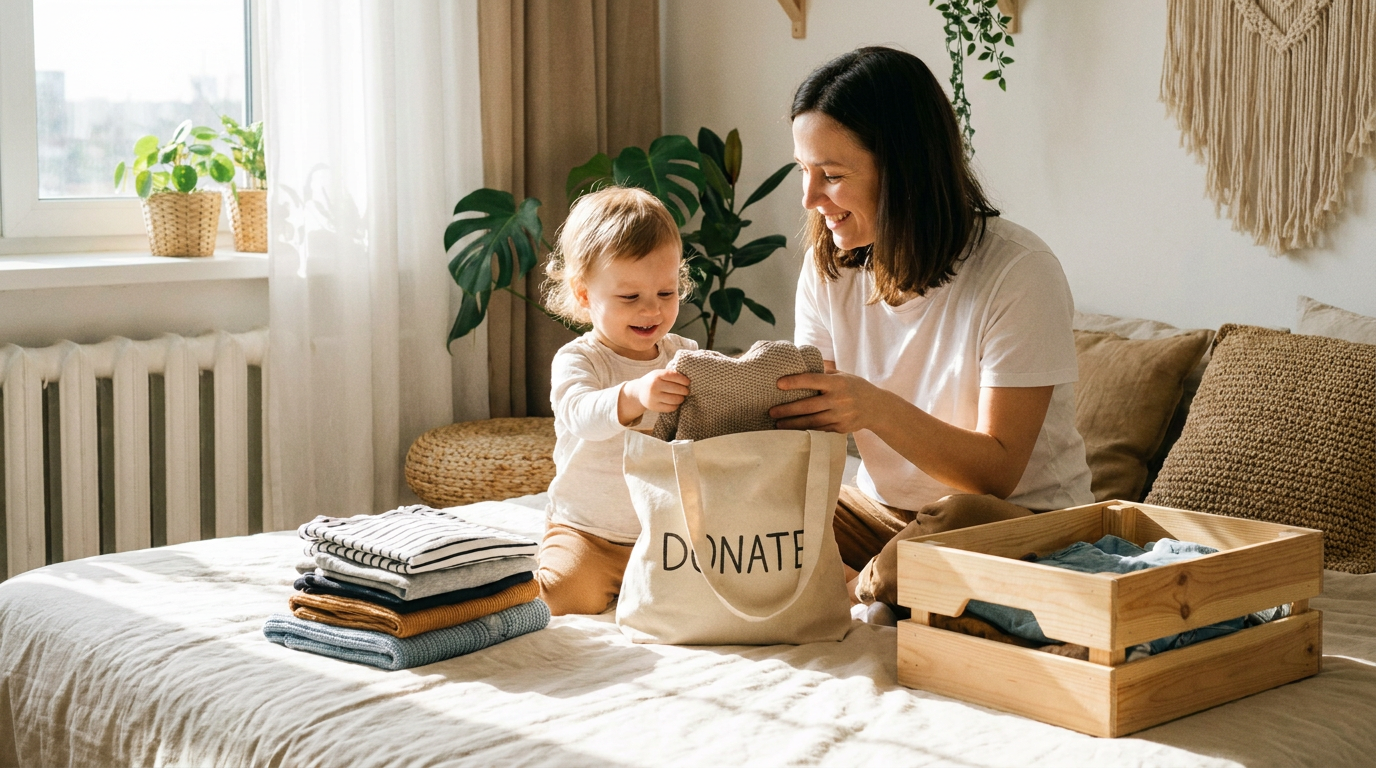
Once the edit is complete, something important has happened: the family now has an honest list. Not a guessed list, not an assumed list — an actual list of what is needed. Three pairs of bottoms. Five tops. A transitional layer. New sneakers. This is the list that drives everything that comes next. And crucially, for families who want to go deeper on what to do with everything leaving the closet, there is a clear path forward for every category of item.
The other thing that has happened, quietly, is the beginning of a budget. The outgrown summer wardrobe — the shorts that no longer close, the swim shirts that are suddenly crop tops, the sandals the child’s toes are hanging off the edge of — is not a problem to be dealt with. It is currency. It is the starting point of the school year wardrobe. And that reframe, simple as it sounds, changes the emotional experience of the entire season.
Once the edit is done and the bags are on their way to PLY, the credits start arriving. Now the real question becomes: what does the back-to-school wardrobe actually need to look like?
One of the great myths of back-to-school season is that a child needs a completely new wardrobe in September. They do not. What they need is a handful of reliable, versatile pieces that actually get worn — pieces that can carry them from the first day to the last in a combination of comfort, style, and durability. The difference between a wardrobe that works and a closet that overflows is not quantity. It is curation.
Here is what a functional, stylish back-to-school capsule actually looks like for most kids, framed around the categories available right now in the Prelove You kids’ shop:
Bottoms — 3 to 4 pairs. Durable bottoms that work across the full school day and into after-school activities. Jeans that hold up to the playground. Joggers comfortable enough for gym class. Leggings that work under everything. The focus here is longevity and wearability, not novelty. A child who reaches for the same pair of jeans three times a week has found a keeper. Buy fewer, choose better.
Tops — 5 to 7 pieces. The mix-and-match core of the wardrobe. Two or three graphic tees that reflect the child’s personality. One or two button-downs or blouses for the days that call for something a little more put-together. One knit or sweater for the shoulder season mornings when the classroom is cold before the heater kicks in. A well-chosen button-down can be styled three completely different ways across a week — and preloved, it arrives at a fraction of what it would cost new.
A transitional layer. September is a shoulder month — too warm for a winter coat, too cool to go without anything. One reliable layer solves this entirely: a hoodie, a denim jacket, a lightweight zip-up. This is the piece that goes over the shoulders at drop-off and gets tied around the waist by lunch. It earns its place every single day.
Footwear — 1 to 2 pairs. Sneakers are the workhorse. A quality pair that can handle the school day, the running around at recess, and the walk home. A secondary pair for rainy days or different weather adds flexibility without excess. PLY carries premium preloved footwear from brands like Veja and Adidas — labels with real quality behind them, sourced at a fraction of retail.
A backpack that lasts. Not a novelty bag that falls apart by February. A quality backpack chosen for durability and capacity — one that can carry the load of a full school year without the straps giving out.
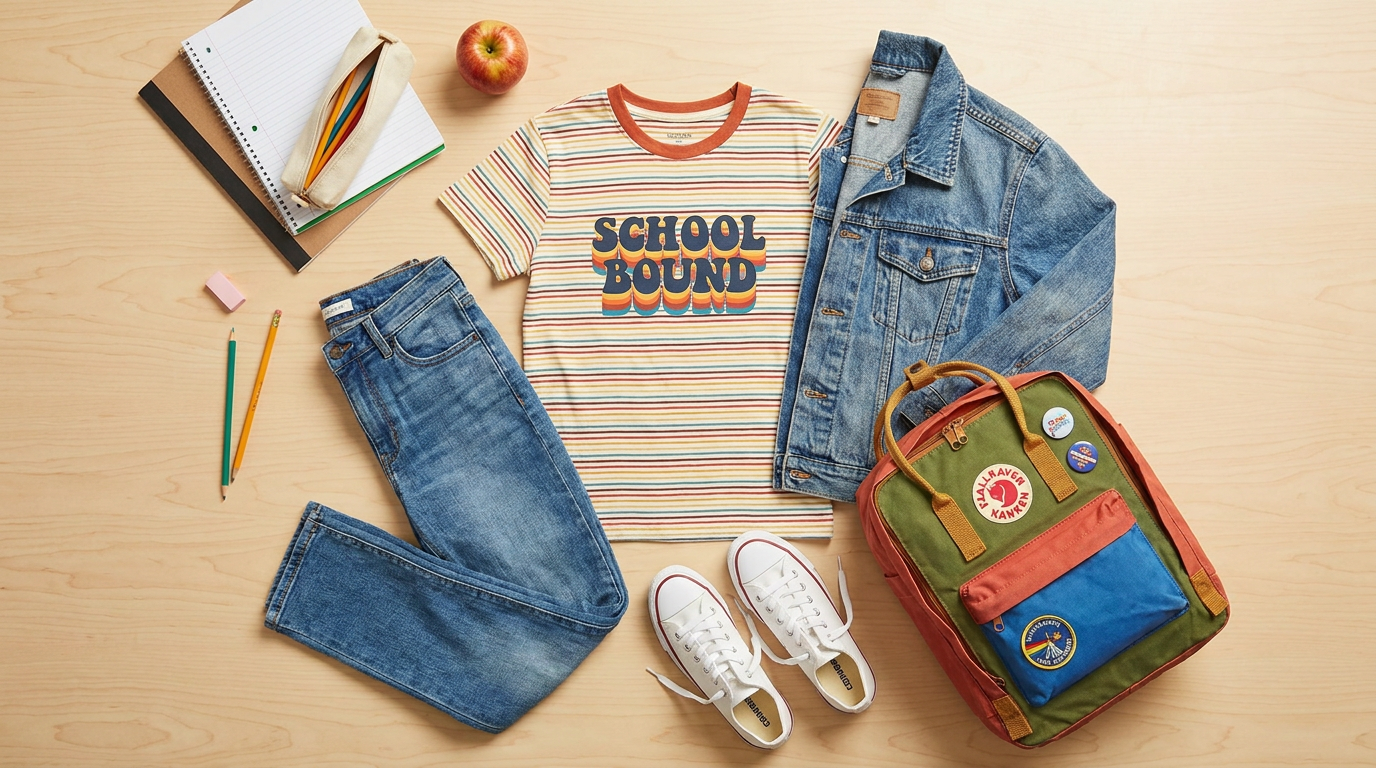
What makes this capsule model genuinely powerful when paired with Prelove You is the inventory behind it. Designer and premium labels — Mini Boden, Ralph Lauren, Stella McCartney Kids, Veja, Adidas — exist on the platform preloved, at prices that make the capsule approach actually affordable. New arrivals are added weekly, meaning the selection is live and rotating, not static. And for families already building their list from the closet edit, shopping with a specific, targeted list against an active inventory is a completely different — and far less overwhelming — experience than walking into a mall with an open budget and no plan.
PLY on the Back-to-School Capsule
“The best back-to-school wardrobe is not a full overhaul. It is five great pieces your kid actually reaches for — and one system that makes finding them feel effortless.”
This is not preloved school clothes as a compromise. It is preloved school clothes as smarter sourcing — particularly for the categories that kids wear hardest and outgrow fastest. Spending credits, not cash, on the pieces that form this capsule is exactly what the PLY system was designed for. With families budgeting an average of $249.36 on back-to-school clothing per the NRF, every credit spent on preloved pieces is a dollar that either stretches further or stays in the family’s pocket entirely. For more on building a smarter children’s wardrobe that repeats season after season, the philosophy here goes well beyond back-to-school — it is a year-round approach to dressing kids with intention.
The capsule gives parents the what. The next step is understanding the how — specifically, how the PLY credit system makes the transition from summer to school year feel seamless rather than stressful.
This is the part of the system that, once a family understands it, tends to make everything click. Because the PLY credit model is not just a loyalty program or a trade-in scheme. It is a genuine household financial mechanism — one that converts the inevitable reality of children outgrowing their clothes into a renewable resource that funds the next season’s wardrobe.
Here is how it works, mapped specifically onto the back-to-school moment:
Step one: The closet edit is done. The bag is full of outgrown summer clothes — the shorts, the swim gear, the sundresses, the sandals. It is already sorted. It is already bagged. The only remaining step is to send it.
Step two: The bag goes to PLY. No sorting by condition required. No photographing items. No listing. No negotiating with strangers on a marketplace app. One bag, one step, done. PLY handles the rest.
Step three: PLY grades and credits. Each item is assessed based on type, brand, condition, material sustainability, and cleanliness. Credits accumulate — and they add up faster than most families expect, particularly when a full summer wardrobe is being sent in at once. End-of-life items — the ones with stains, the ones with worn-through knees, the ones that would have otherwise sat in a bag in the car for three months before heading to a donation bin — earn a minimum of one credit each, and are routed responsibly through PLY’s textile recycling partners. Not landfill. Not someone else’s problem. Handled.
Step four: Credits appear in the member account and are ready to spend. Immediately. On the PLY platform, against an inventory of premium preloved kids’ clothing that is updated every week.
Step five: Shop for back-to-school. With the list from the closet edit, with credits already in hand, with a curated platform rather than a chaotic mall. This is the shopping trip — except it starts with a budget that did not require spending a single dollar to build.
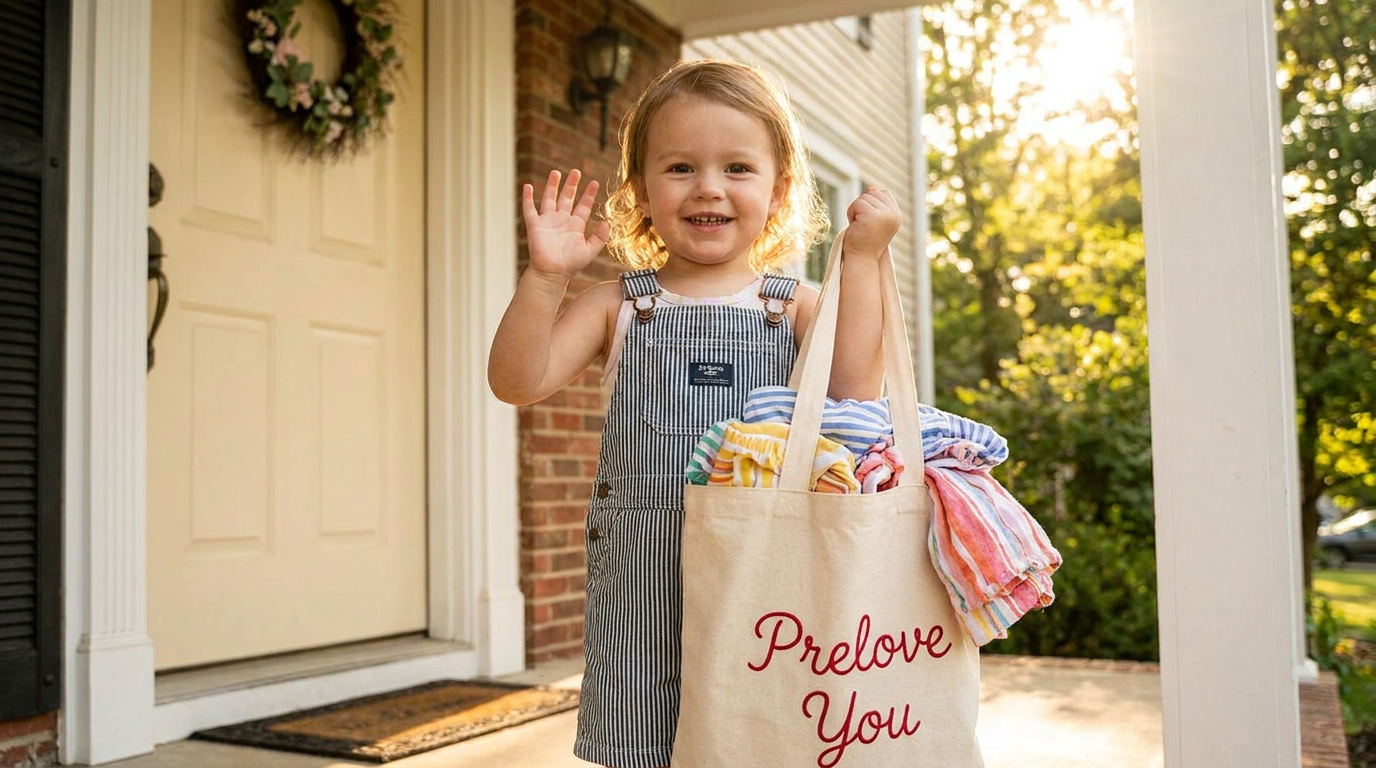
The membership tiers that support this system are designed to fit different household rhythms. Lite ($35/month) for families just getting started. Luxe ($65/month) for families cycling through multiple kids’ wardrobes. Limitless ($95/month) for households where clothing flows through continuously. And a Seasonal membership ($195) for families who want to go all in on the full send-and-shop cycle. Becoming a member is the act that turns a one-time send-in into a repeating household rhythm — and the BTS season is one of the best entry points into that rhythm because the timing is so natural.
What makes this particularly meaningful for the sustainable back-to-school shopping conversation is the end-of-life piece. The single question that keeps bags of outgrown clothes sitting in trunks for months — Is this good enough to send? — disappears entirely. With PLY, the answer is always yes. Everything earns. Nothing goes to waste. And the decision fatigue that is one of the most quietly exhausting parts of the circular clothing journey for kids simply does not exist in this model. As 5 Smart Ways to Make Back to School More Sustainable makes clear, the most sustainable choice is also, in this case, the easiest one.
The system is not just for parents, though. One of the most quietly transformative aspects of the PLY credit model is what it does for children themselves — and back-to-school season is the perfect moment to put some of that agency directly in their hands.
There is something specific and significant that happens for a child in the weeks before school starts. Their sense of identity sharpens. Their social awareness heightens. They start thinking about how they want to show up — to their teacher, to their classmates, to the version of themselves that is about to begin a new chapter. What they wear on the first day is not a small thing to them. It is a declaration. And as a parent, how you navigate that declaration matters more than most back-to-school decisions.
Research on child development consistently supports the idea that giving children age-appropriate autonomy in what they wear builds more than just a wardrobe. It builds confidence, decision-making skills, and a sense of personal agency that extends well beyond the closet. As the PLY Age-by-Age Guide: When Kids Can Start Making Their Own Wardrobe Choices shows, the capacity for meaningful clothing choices emerges earlier than most parents realize — and the developmental benefits of honoring that capacity are real.
The PLY credit system gives children something most approaches to back-to-school shopping do not: skin in the game. When a child’s outgrown clothing has been sent in and their credits are sitting in the account, the conversation about what comes next changes fundamentally. It is no longer a parent presenting a selection and hoping for buy-in. It is a child making genuine choices — within a real framework, with actual limits, and with something they earned.
The conversation might sound like this: “Those shorts you outgrew this summer? We sent them in, and now you have credits. What do you want to pick for school?”
That sentence does something remarkable. It connects the thing the child gave up — the clothes they loved and outgrew — to the thing they get to choose next. It makes the circular system legible to a child, in terms they can feel. And it transforms the back-to-school shopping experience from a parent-driven logistical exercise into a shared moment of genuine participation.

The dynamics that typically make back-to-school shopping stressful — the child demanding things the parent does not want to buy, the parent pushing choices onto a child who resists them, the negotiation that makes everyone tired — dissolve when credits are in the picture. The credits are the framework. They create real limits without requiring a parent to be the limit. They give the child real power without the conversation becoming an open-ended negotiation. And they mean that whatever the child chooses, they have chosen with intention — with the awareness that these credits came from something, and that what they pick matters.
How to Talk “First Day” With Your Kid
“Those clothes you outgrew this summer helped earn the credits for what you’re picking now. You get to choose what comes next — and what you choose is going to feel great to wear.”
A child who walks into the first day of school in an outfit they chose — truly chose, with their own earned credits, from a platform full of pieces they browsed and selected — walks differently. There is a confidence in that ownership that no new-everything shopping trip can manufacture, because it comes from inside the experience rather than from the price tag. For parents who want to deepen this collaborative experience, the Confidence Cart guide on shopping with your kid offers a practical framework for making the shopping moment itself feel as good as the result.
There is a bigger picture here, too — one that goes beyond the individual family’s closet and touches on the broader reality of how most back-to-school shopping actually works, and what it costs beyond the family budget.
This is not an environmental lecture. It is an honest accounting — the kind that changes how a thoughtful family thinks about what it means to shop well.
Every year, the fashion industry generates 92 million tonnes of textile waste globally. To put that in terms that register viscerally: the equivalent of a full rubbish truck of clothing reaches a landfill every second. Every second. And back-to-school season, one of the largest single shopping spikes in children’s apparel globally, contributes meaningfully to that number. Not because families are careless — but because the default system makes waste almost inevitable.
Children’s clothing has one of the shortest average use cycles of any apparel category. Kids outgrow pieces not in years, but in weeks. A pair of jeans bought in September for the school year may not close by January. Sneakers purchased for September can be legitimately too small by December. This is not a failure of parenting — it is biology. But it is also the reason that buying everything new, every season, generates an enormous amount of waste at the household level. The pieces that were purchased with care in August find their way to donation bags by spring — and from there, according to the David Suzuki Foundation, almost 87% of total fibre input used for clothing is either burned or ends up in a landfill. The donation bin is not the end of the story. It is often just a waypoint on the way to landfill.
$11.4 billion. That is what American families spend on back-to-school clothing every year. Most of it is worn for one season.
That number comes directly from the NRF’s 2025 data — $11.4 billion in K-12 clothing and accessories spending, concentrated into a few weeks, largely on items that will be outgrown before the school year ends. This is not a judgment on the families spending it. It is an observation about a system that was not designed with the full picture in mind.
The alternative is not about spending less or doing without. It is about spending smarter. Buying preloved back-to-school clothes means extending the life of pieces that already exist — pieces that were made, worn, loved, and still have years of wear in them. When a family sends their outgrown items through PLY, those pieces do not disappear into a donation bin of uncertain fate. They go into a curated, quality-controlled system and emerge in the hands of a child who will actually wear them. The carbon cost of production has already been paid. The wear cycle continues. Nothing is wasted.
For families who want a more detailed look at the practical and environmental calculus of dressing kids more thoughtfully, 5 Ways to Shrink Your Kids’ Clothing Footprint (Without the Guilt) covers the ground without the lecture. The point is not to make families feel bad about the choices they have made under a system that was never designed to make better choices easy. The point is that Prelove You is a system that finally does make better choices easy — and the result, as a byproduct of simply being smarter about how clothing moves through a household, happens to be better for the planet. That is not an environmental campaign. That is household intelligence.
The bigger picture is now clear. What remains is the most practical question of all: what does the July-to-August back-to-school timeline actually look like when the PLY system is running?
Here is what this all looks like in practice — not as a rigid checklist, but as a seasonal rhythm that actually works. A gentle, realistic sequence that takes the abstract and makes it concrete, week by week, from the heat of early July all the way to the first morning the school door opens.
Now — Early July. This is the closet edit moment. Pull everything out. Try on anything with any question mark. Sort into three piles: keep, outgrow, done. Bag what is leaving. Do not overthink it — end-of-life items go in the bag too. The goal of this week is a clear, honest list of what is actually needed for September. Write it down. Ten minutes of clarity now prevents three weeks of reactive spending later.
Week of July 14. Send the bag. That is the only task. No photographing. No sorting by condition. No weighing up whether the grass-stained shorts are worth including. They are. Drop the bag and move on. Earning credits starts the moment PLY receives the send-in — and the credit value of a full summer wardrobe being sent at once tends to be more satisfying than families expect.
Week of July 21. This is when the PLY shop becomes the starting point, not the backup plan. Credits are processed and ready. The honest list from the closet edit is in hand. New arrivals are live and rotating. This is the back-to-school shopping experience — except it begins with a budget already built, a list already made, and a curated platform rather than a crowded retail floor. Let the kids browse with you. Let them make choices. This is the moment the credit system becomes real for them — and for the family.
August 1 through 10. Fill any genuine gaps. If a specific item from the list was not available preloved in the right size, buy it new. But make that the exception, not the rule — and make it a targeted purchase rather than a reactive haul. One specific item, intentionally chosen, is a completely different thing from an overwhelmed cart filled with guesses.
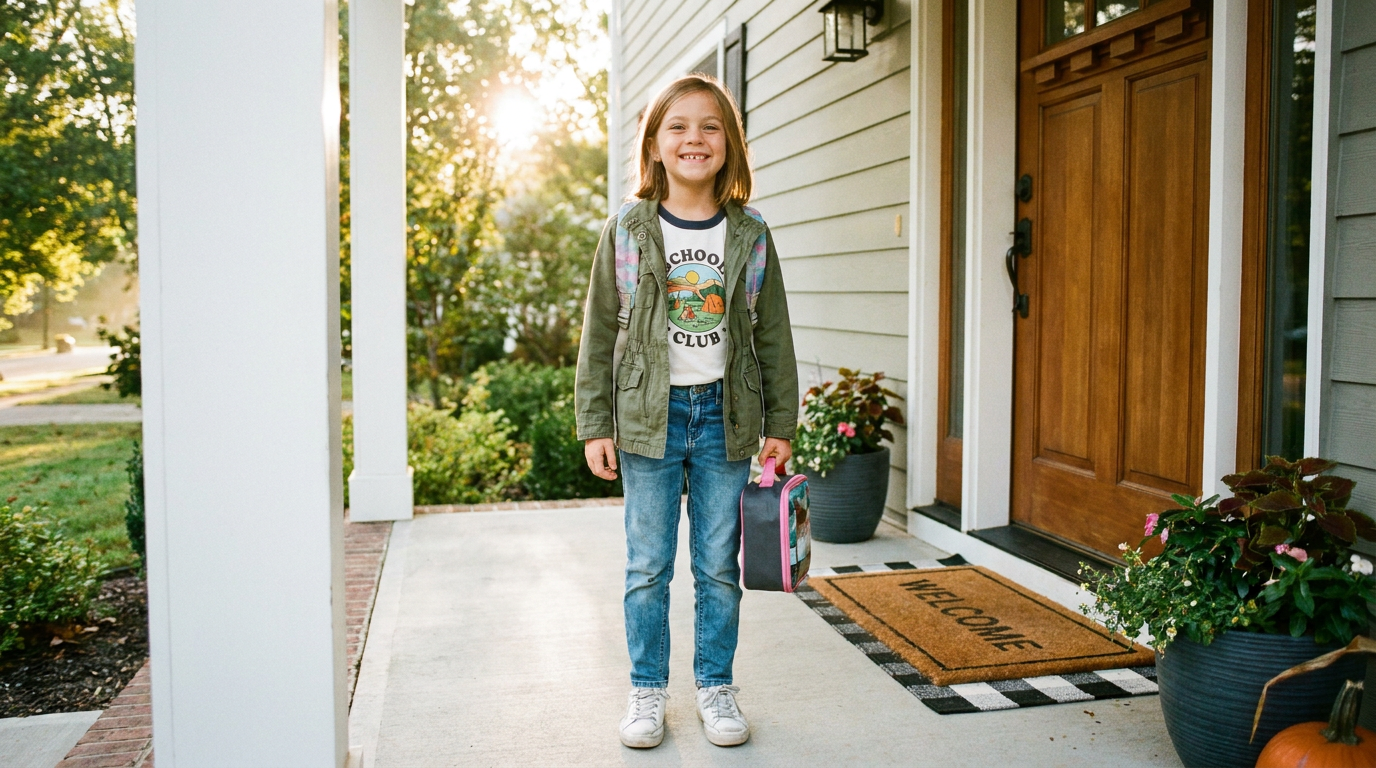
First Day of School. The child walks out the door in a wardrobe that came together with intention. The parent did not blow the family budget. The outgrown summer clothes are already on their way to a new child who will love them. The circle has closed — and it is ready to open again. For more practical inspiration on the season, the Prelove Lab: Back To School Hacks is a companion resource worth bookmarking.
What makes this timeline feel different from a traditional back-to-school approach is not just the sequence — it is the repeatability. This is not a one-time fix. It is a system that resets every season. The BTS send-in leads naturally into the fall wardrobe. The fall send-in funds the winter pieces. The winter send-in sets up spring. The system compounds — meaning that the family that runs through two or three full cycles finds themselves in a genuinely different financial and logistical position than they were at the start. Wardrobes are leaner. Spending is lower. Stress is reduced. And the seasonal wardrobe switch becomes one of the most satisfying rituals of the family year rather than one of the most dreaded.
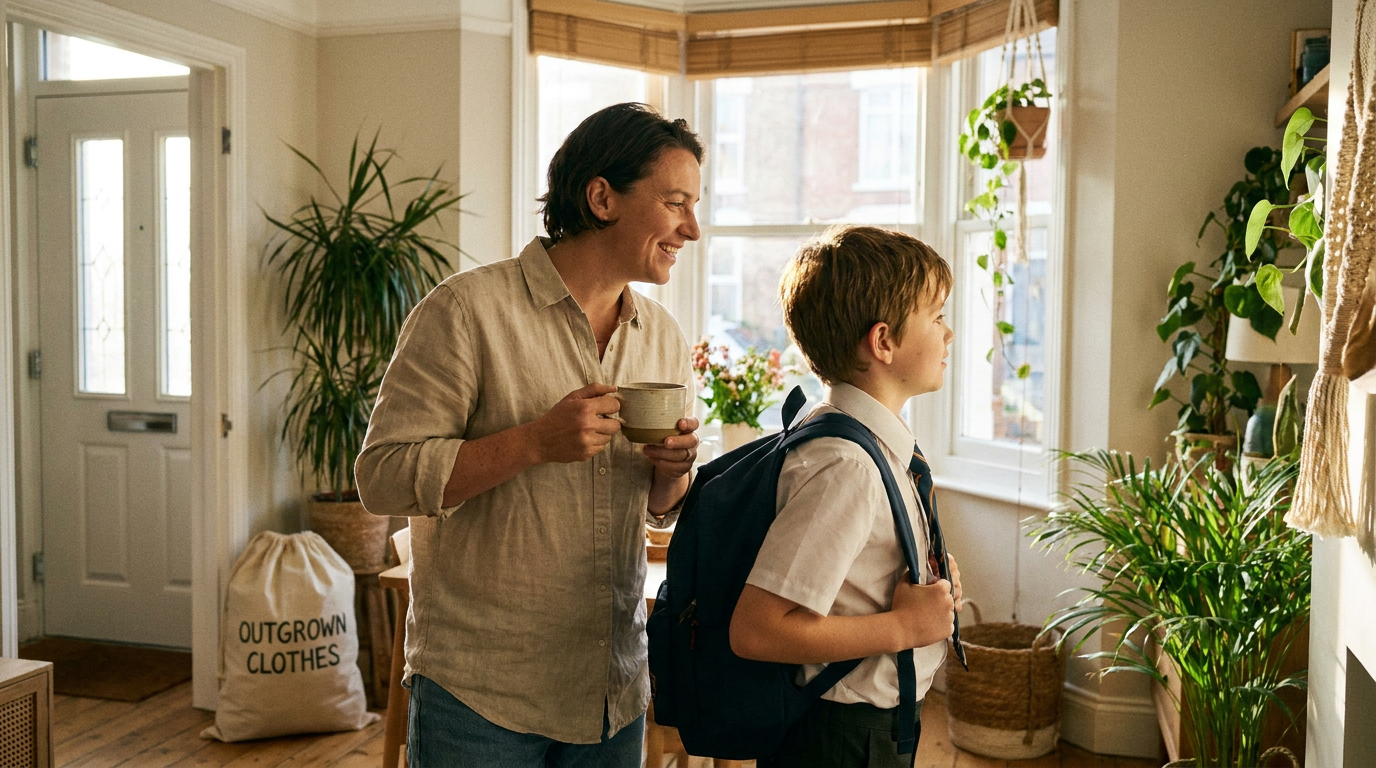
It is back-to-school season. The lists are real, the deadlines are real, and the pressure is real. But so is the other truth: getting a child ready for a new school year is one of the most meaningful things a family does together each year. It is a ritual. It is a transition. And it deserves to feel like one — not like a logistical crisis to be survived with a credit card and an overflowing cart.
What Prelove You offers is a smarter way to move through the season. Less overwhelm, because there is a system. Less waste, because there is a path forward for everything leaving the closet. More intention, because the shopping starts with a list and ends with credits rather than regret. And more meaning, because a child who participates in choosing their own school-year wardrobe — with pieces they helped earn — walks into that first morning differently. Quieter. More certain. Ready.
The preloved school clothes conversation has changed. This is not thrifting as a last resort. This is a curated, credit-backed, family-centered approach to building a back-to-school wardrobe that is both beautiful and intelligent. It is a system that takes the outgrown shorts from August and turns them, genuinely and elegantly, into the first-day outfit of September.
The clothes your child outgrew this summer are not a problem. They are the beginning of the next thing.
Follow the Thread.
Start by sending in what your kids have outgrown. Earn credits. Shop for what comes next — from premium preloved pieces that are ready for the school year.

