



 Sustainability Scoop
The Clothes Your Kid Wore Once: A Story About Guilt, Growth, and Letting Go
On the emotional weight of barely-worn children’s clothing — and how to stop carrying it alone.
There is a specific kind of quiet that lives at the back of a drawer. You know the one. It’s where the little striped onesie ended up — the one you bought before the baby came, in a size you were certain would last at least a few months. It has never been worn. The tags are gone, because you washed it in anticipation, but otherwise it is pristine. Or maybe it’s the floral dress, still folded in a paper bag from the boutique, that your daughter outgrew before the season even arrived. Or the tiny Halloween costume you ordered in October, that arrived two days after Halloween, now living in a bin in the basement alongside four other things you’re not quite sure what to do with. If you have children, you have felt the particular weight of kids outgrown clothes guilt — that low, persistent hum of knowing there is a pile somewhere, a bag somewhere, a drawer somewhere, full of things that meant something and now just sit there, asking a question you haven’t figured out how to answer.
This piece is not a lecture. It is not a sustainability manifesto or a productivity hack. It is, first and foremost, a hand on the shoulder — an acknowledgment that what you’re feeling is real, has a name, and is not your fault. Children’s clothing holds more emotional weight than almost anything else in a household, and the guilt that accumulates around the barely-worn pieces isn’t a character flaw. It’s a design flaw in the systems we’ve been handed for managing it. Let’s talk about that.
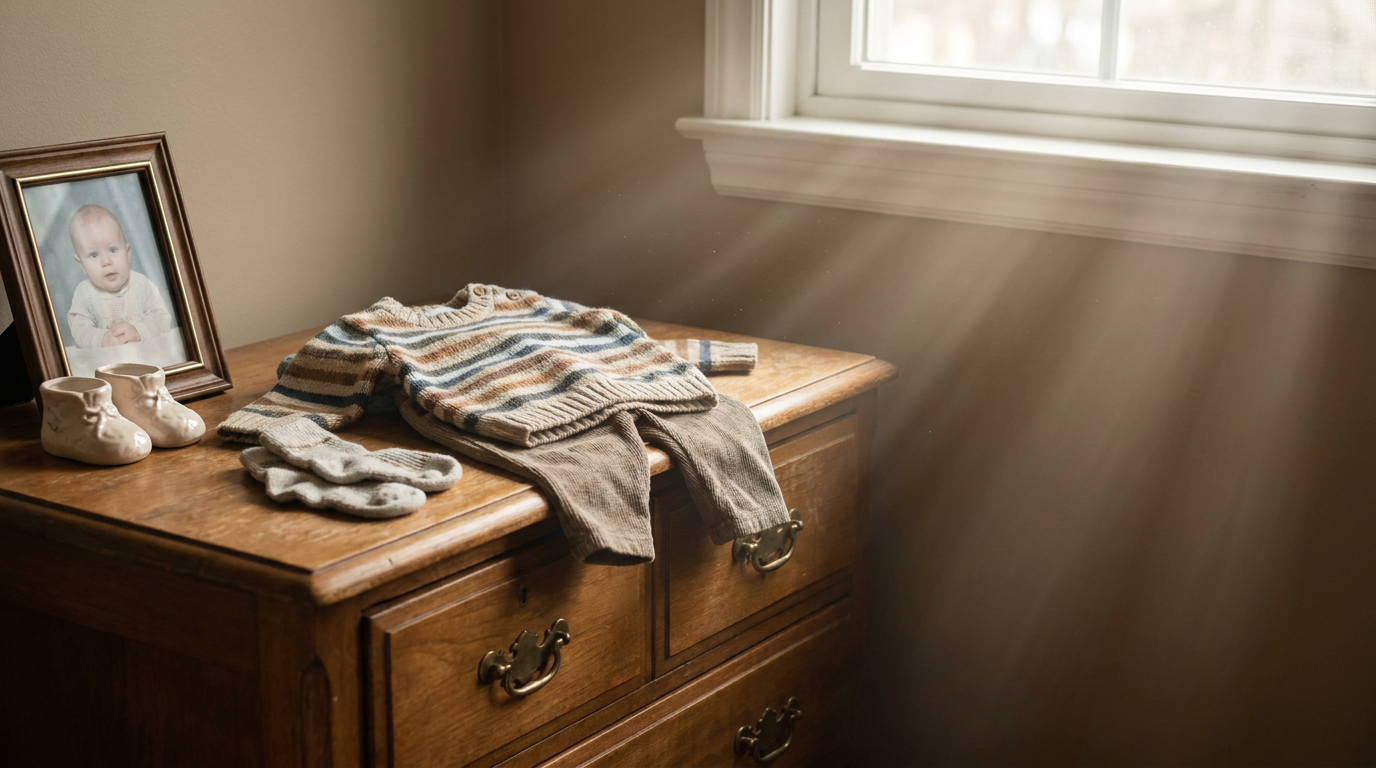
You might expect the guilt to be sharpest around big things — the expensive furniture you barely used, the stroller you upgraded after three months. But it isn’t. For most parents, the emotional sting of barely-worn kids’ clothes is disproportionate to the size of the item. A small, unworn dress can carry more weight than a piece of furniture three times its value. That’s not irrational. It’s entirely human — and it’s worth understanding why.
Children’s clothing is not just fabric. It is a physical archive of memory, identity, and developmental milestones. The first onesie brought home from the hospital. The outfit chosen specifically for the first meeting with grandparents. The dress picked out for a birthday party. Each of these pieces was selected with intention — often with love, sometimes with excitement, occasionally with a kind of anxious hope about who your child was becoming. When these items sit unworn, they don’t simply represent a purchase that didn’t pan out. They represent a version of a moment that never happened, a chapter in the story of your child’s life that was skipped before it could be written.
Psychologists describe childhood mementos — including clothing — as “autobiographical memory triggers”: objects that reconstruct specific emotional moments, scents, and stages of life with a precision that photographs sometimes can’t match. A garment carries texture, scale, and a kind of physical intimacy that images don’t. When you hold up a tiny jacket or a pair of shoes your child once wore, you’re not just looking at clothing. You’re holding a coordinate in time. You’re holding a version of your child that no longer exists, and the grief of that — even when it’s a gentle, ordinary grief — is entirely real.
The barely-worn item compounds this in a specific and painful way. There is grief not just for the memory attached to the piece, but for the version of the child who never got to wear it — a missed moment that can never be recovered. The Halloween costume that arrived late. The swimsuit purchased for a trip that was canceled. The spring dress that fit perfectly in the store in February but was too small by May. These aren’t failures of planning. They are, quite simply, evidence of how fast children grow. But when the clothing lingers, the feeling of a missed moment lingers with it.
And this emotional experience runs in both directions. Children form genuine, often deep attachments to specific clothing items — not only the beloved pieces worn to threads, but sometimes the barely-worn ones too, the shoes that were deemed “too special” to wear outside, the outfit chosen for a party they were looking forward to all month. Clothing, for children, is a surprisingly potent anchor for identity and sensory comfort. Which means the pile in the basement isn’t just carrying your emotional labor — it is woven into the fabric (quite literally) of your child’s experience of growing up.
At Prelove You, the belief is that clothing is the literal common thread — it holds memory, identity, and the story of a child’s growth. That framing isn’t sentimental decoration. It’s an honest description of what’s actually happening in the drawer at the back of the room. This feeling is real. It has a name. And now that we’ve named it, we can start to understand the scale of what we’re actually dealing with.
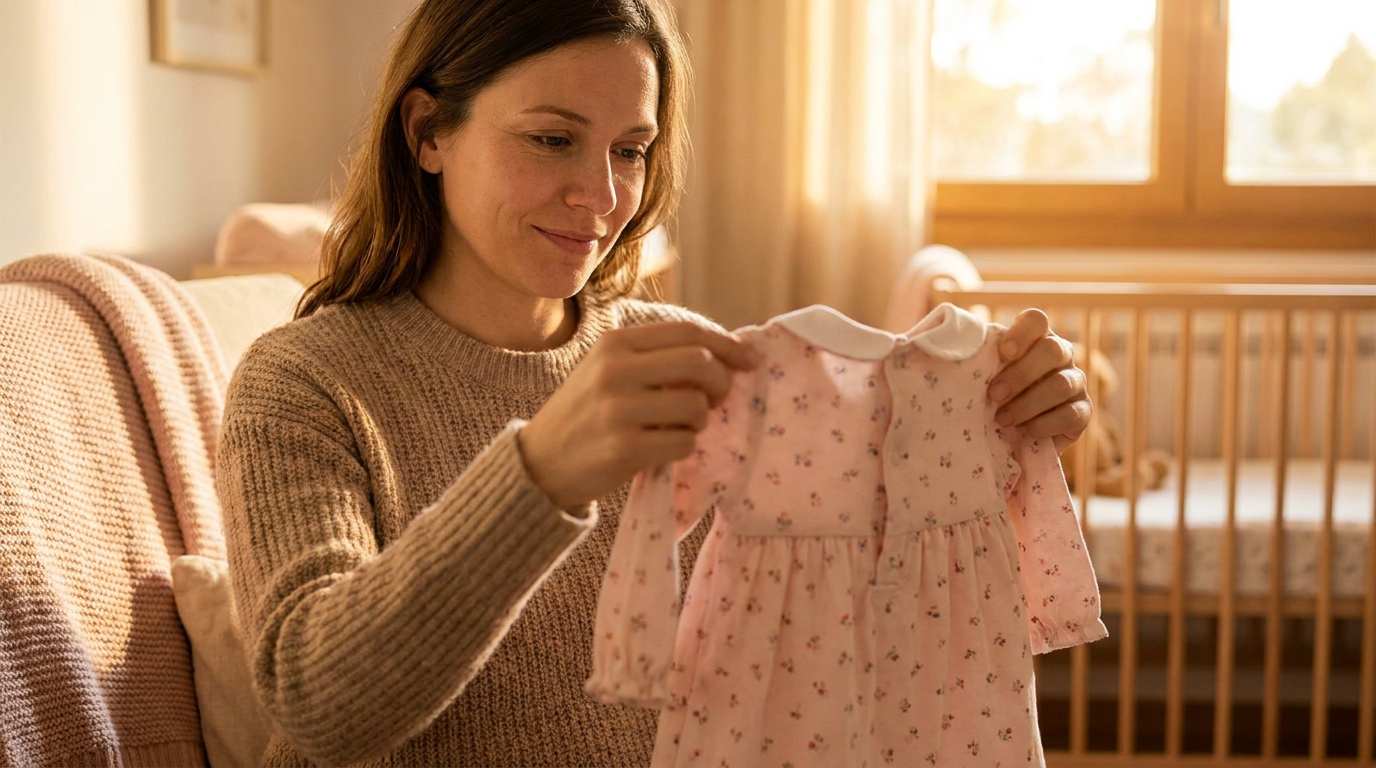
Here is a number that might make you exhale for the first time in a while: 272.6 million. That is the estimated number of children’s and baby clothing items currently sitting unused in American households — representing roughly $13 billion worth of clothing that is idle, outgrown, or forgotten, according to research compiled by Firebird Kids. Approximately 31.4% of all kids’ and baby items owned by U.S. families fall into this category. And in 2021 alone, an estimated 100 million children’s and baby items worth $4.5 billion were simply thrown away.
272 million items. That’s not a number that feels personal — until you remember that some of those are yours. That a portion of that $13 billion is sitting in the bin in your basement right now, waiting for a decision you haven’t been able to make.
Understanding why the pile grows so fast is the first step toward releasing the guilt around it. The answer isn’t that parents are careless or wasteful. The answer is structural: the children’s clothing cycle moves at a pace that no informal household management system was ever built to handle. Babies and toddlers grow at a rate that outpaces almost any logical planning framework. Many newborns outgrow their first sizing category within days. Clothing labeled for three months may only fit during the first few weeks of life. A onesie purchased in a size “6-9 months” may be accurate — or may be wildly off, depending on the brand, the cut, and the particular proportions of your specific child.
This brings us to one of the most overlooked drivers of barely-worn accumulation: sizing inconsistency. According to the same Firebird Kids research, only 20% of parents report that their child’s garments fit as labeled. That figure is worth sitting with for a moment. If four out of five parents are routinely buying clothes that don’t fit as expected, then a significant portion of every household’s clothing accumulation is entirely beyond anyone’s reasonable control. It’s not a failure of budgeting. It’s not a failure of attention. It’s a measurement system that simply doesn’t work reliably — and the result lands, every time, in a pile somewhere in your home. As Prelove You explores in The Household Clothing Cycle: Why It Keeps Breaking (And How to Fix It), this is a recognized, systemic problem — not a personal one.
The cycle compounds further with multiple children, where hand-me-down calculations go wrong, where a second child’s growth trajectory defies every expectation set by the first. It compounds with gift overflow — because newborn and infant clothing is among the most commonly gifted categories, and well-meaning relatives in a single size can arrive in quantities that far exceed what a baby will realistically wear before outgrowing them. It compounds with seasonal mismatch, where a coat purchased at the end of winter is the wrong size by the following autumn, where a swimsuit bought in March doesn’t fit by June. And it compounds with the particular category of the event-driven purchase: the special first-day-of-school outfit, the holiday dress, the party clothes that get worn once — or not at all.
None of this happened because you weren’t paying attention. It happened because you were managing an impossible cycle with inadequate tools. That distinction is everything. And it raises a natural question: if the problem is this universal and this structural, why don’t the standard solutions work? Why is the bag still in the trunk?
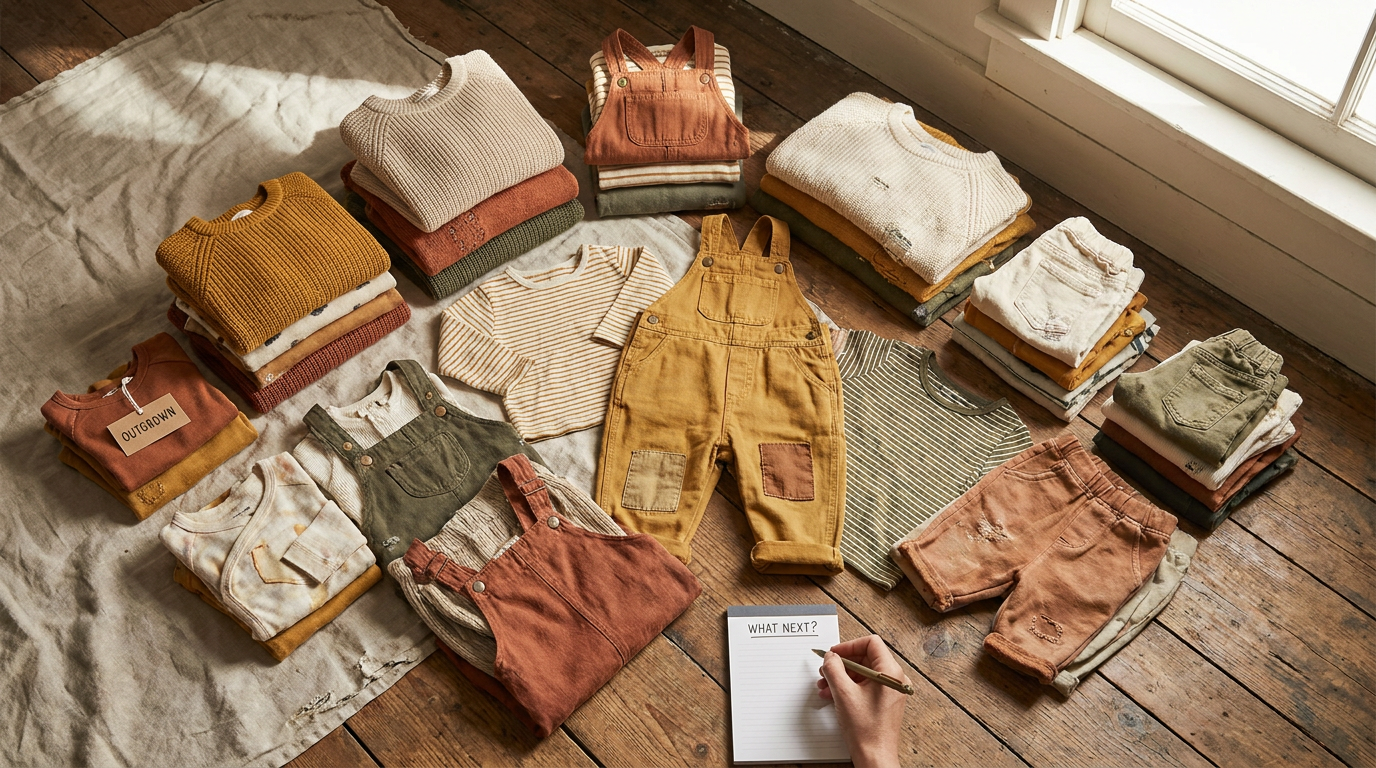
Every parent knows the answers they’re supposed to give when asked what they do with outgrown kids’ clothes. Donate it. Sell it. Store it for the next one. Throw it away. These options are presented as though they are simple, as though the decision is merely logistical. But anyone who has stood in front of a pile of small, outgrown clothing knows that it isn’t simple at all. Each of the standard options carries its own particular friction — and for the barely-worn piece especially, each one fails in a different way.
Donation feels like the morally correct answer. It has the quality of generosity, of things going to someone who needs them. But the barely-worn piece resists donation in a way that’s hard to articulate and easy to recognize. It feels too good to drop anonymously into a bin. It feels wrong to give away something that never got its moment. Parents often feel a quiet embarrassment about donating items that are stained or worn, and an equally quiet discomfort about giving away items that look brand new — as though someone will wonder what kind of household lets a beautiful little dress sit unworn. The result is that the piece stays. It gets put back. The bag doesn’t get dropped off.
Resale platforms seem like an elegant alternative — turn the pile into something, give the items another life, recover some of the cost. But the labor involved is staggering. Sorting. Photographing each item individually. Writing descriptions. Pricing competitively. Responding to messages. Scheduling pickups. Handling no-shows. Managing returns. This is not passive income. This is a part-time job, and it lands disproportionately on one person in the household — most often, a mother. Research from the University of Bath, published in the Journal of Marriage and Family, found that mothers take on 71% of all household mental load tasks — 60% more than fathers. Resale doesn’t reduce the mental load around clothing. It adds to it. It trades one form of accumulation (the pile) for another (the ongoing task list of managing the listings). Most parents start the process and don’t finish it — or finish it once and never do it again.
Storage offers the emotional comfort of keeping everything without having to make a decision. Just in case the next baby arrives. Just in case a niece or nephew needs it. Just in case you can’t let go yet. And for a short time, this is a legitimate strategy. But bins multiply. Closets fill. And eventually, the storage doesn’t solve anything — it just relocates the problem and defers the guilt. The pile doesn’t shrink. It just moves somewhere harder to see.
Throwing it away is the option no one wants to say out loud. The environmental toll of textile waste is enormous — the fashion industry generates over 92 million tonnes of waste annually, according to Nature Reviews Earth & Environment. For eco-conscious parents, dropping a barely-worn garment into a trash bag feels unconscionable. Like choosing the worst possible outcome for something that still had so much life left in it.
So the bag sits in the trunk. It’s been there since February. Maybe since last fall. It gets moved to make room and moved back. It represents the stalemate between options that don’t feel right — and, as Prelove You explores in depth in The Mental Load Map: Everything You’re Managing Around Your Child’s Clothing Without Realizing It, it is far from the only invisible task in this category.
“The bag used to just sit in my trunk for months. I knew I should do something — I just didn’t know what that was supposed to look like.”
— Jill, mom of Quinn + Cameron
That quote could have come from almost any parent reading this. The options fail not because parents are failing to use them correctly. They fail because they treat the clothing as a logistics problem. And as we’ve been seeing throughout this piece — it isn’t a logistics problem. It’s a memory problem. And any path forward has to start there.
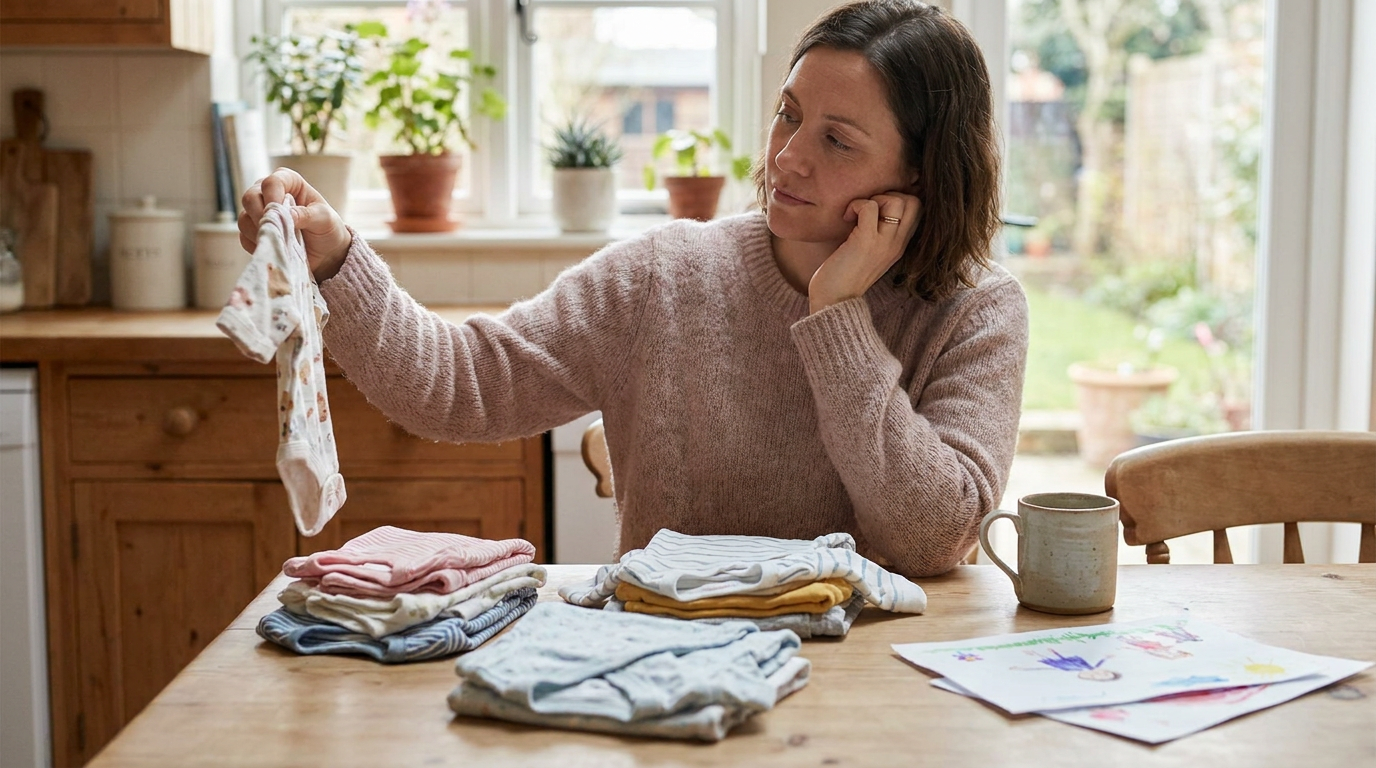
Here is the reframe that changes everything: letting go of a piece of clothing does not mean letting go of the memory. These are two separate things. And the confusion between them is the single biggest reason the pile stays where it is.
The memory of the first birthday dress — the specific morning light, the way your daughter looked when you slipped it over her head, the way she reached for the ribbon at the waist — that memory lives in you. It does not live in the dress. The dress is a trigger, a cue, a piece of fabric that has the power to summon the feeling. But the feeling itself? That is yours. It always was. And sending the dress out into the world — to be worn by another child, to begin a new chapter in a different family’s story — does not diminish the moment it represents by a single degree.
This is a harder truth to sit with than it sounds, because our instinct says otherwise. The object feels like the memory. Losing the object feels like losing the moment. But ask any parent who has meaningfully let go of something — not thrown it away, not donated it blindly, but intentionally released it into a path that felt right — and they will tell you the same thing: the memory was still there the next morning. The milestone didn’t disappear when the clothing did. What disappeared was the low-grade guilt of having a piece that belonged to the past taking up space in the present.
The barely-worn outfit is not evidence of failure. It is, if anything, evidence of love and intention. You bought it because you were trying to prepare for your child, to celebrate who they were going to be, to show up for a moment that mattered. Your child grew faster than the calendar allowed. That is the whole story of parenthood — loving something that is always becoming something new, faster than you can fully take in.
There’s a concept that sits at the heart of how Prelove You thinks about this experience: the idea of clothing as a story that continues, not ends. A jacket your child wore twice still has a story to finish — it’s just not the chapter you were in. And when there is a path for that jacket that is beautiful, intentional, and traceable, the experience of releasing it stops feeling like loss and starts feeling like something closer to grace.
“We don’t think of it as giving something away. We think of it as following the thread. That tiny jacket your child wore twice still has a story to finish — it’s just not the chapter you were in.”
— Prelove You
The language of “following the thread” matters here. It shifts the frame from abandonment to continuity. From ending to becoming. The parent who wonders why they can’t simply throw away that tiny first-day-of-school outfit isn’t being irrational. They are correctly sensing that the item has more life in it — and that a path which honors that life feels fundamentally different from one that ignores it.
Letting go of kids’ clothes — really letting go, without guilt, without that sinking feeling of unfinished business — requires a path that is worthy of what the clothing represents. Not a bin drop. Not a listing on an app. Something with intention, continuity, and care. And there is one more dimension to this that most conversations about outgrown children’s clothing miss almost entirely.
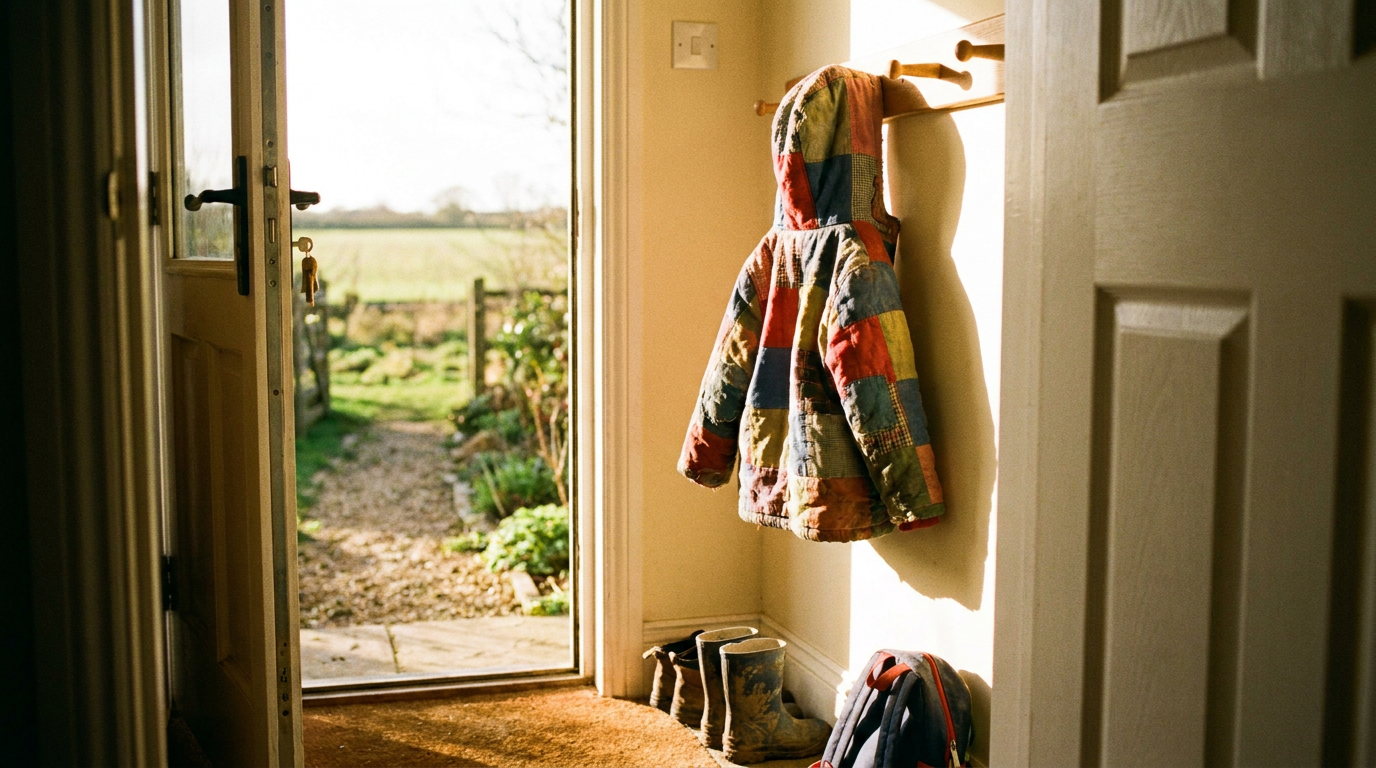
We tend to talk about outgrown children’s clothing as a parent’s problem to solve. And in practical terms, yes — the decisions belong to the adults in the room. But children are not passive in this story. They are participants. And when they’re invited into the process of letting go, something shifts in the experience for everyone.
Children form genuine, often surprisingly strong attachments to specific clothing items — and not always the ones you’d predict. The emotional attachment kids have to their favorite clothes is well documented: a beloved item provides sensory comfort and a sense of identity that has nothing to do with the garment’s monetary value or objective appeal. But occasionally, this attachment extends to the barely-worn pieces too. The dress chosen for a party she was excited about for weeks. The shoes that were deemed too beautiful and kept for a special occasion that never quite arrived. The sweater that was a gift from someone she loves. These items carry their own weight in a child’s inner world — smaller, perhaps, but real.
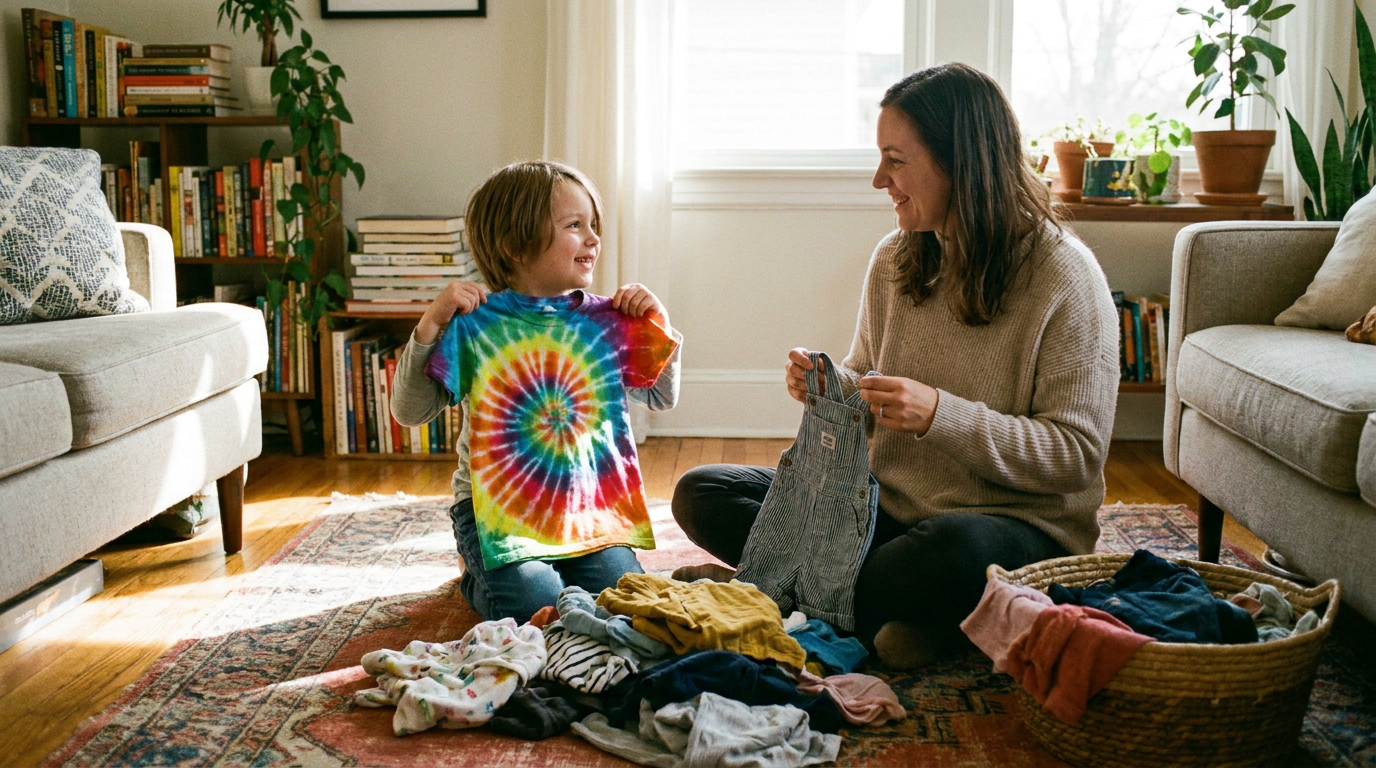
When children are included in the decision to pass something on, rather than waking up to find their clothes simply gone, the emotional experience changes entirely. There is agency in participation. There is a kind of dignity in being asked: Do you think this could go to another kid who would love it? Children — even young ones — are often more capable of that generosity than we expect. And when they experience the act of releasing something as a choice they were part of, rather than a loss that happened to them, it lands differently.
Prelove You’s credit system is designed precisely around this reality. When a family sends in outgrown clothing, children participate in choosing what comes next — using the credits earned from what they’ve given up to shop for what they’re growing into. This is not incidental. It gives children real, tangible agency in the clothing cycle: they see that the things they’ve outgrown have value, that passing them on generates something new, that the story of their wardrobe is one they have a hand in writing.
This creates something rarer and more valuable than a clean closet: a family ritual. A repeatable household moment that becomes part of how the family understands growth, change, and the relationship between what we hold onto and what we let move forward. The seasonal sort becomes something you do together, not something that gets deferred indefinitely because no one has the energy for the decision.
There is a developmental dimension here worth naming. Children who understand that things can have more than one chapter — that a jacket they loved can go love someone else, and that this is not a loss but a kind of generosity — are building a genuinely sophisticated relationship with consumption, with value, and with care. This is the kind of understanding that doesn’t come from a lecture. It comes from living it, season after season, as a family practice. And if you want a practical starting point for thinking about which kids are developmentally ready for which kinds of involvement, this age-by-age guide on wardrobe choices is a useful companion read.
“The clothes you loved? They’re ready for their next chapter. And so are you.”
— Prelove You
Understanding this — the emotion, the scale, the failure of old solutions, the reframe around letting go, and the children’s own role in all of it — brings us to the only question that still needs answering. What does the actual system look like? And what makes it different from everything that has failed before?
The solution to barely-worn children’s clothing guilt is not a better donation app. It’s not a smarter way to organize the closet. It is not a tighter budget or a more disciplined approach to gift registries. It is a repeatable household system that accounts for the emotional weight of the pile, removes the decision fatigue that keeps the bag in the trunk, and provides a clear, dignified path forward for every item — in every condition — season after season.
That is an unusually high bar. And most of what exists doesn’t clear it.
What to do with barely-worn children’s clothing, in practice, requires a solution that solves several problems simultaneously: it has to remove the judgment call about whether something is “good enough” to donate; it has to eliminate the labor of listing, photographing, and selling; it has to offer something in return that closes the loop rather than simply emptying the drawer; and it has to handle the full range of what accumulates — the beautiful, the barely-used, and the stained, worn-out pieces that don’t fit neatly into any of the existing categories.
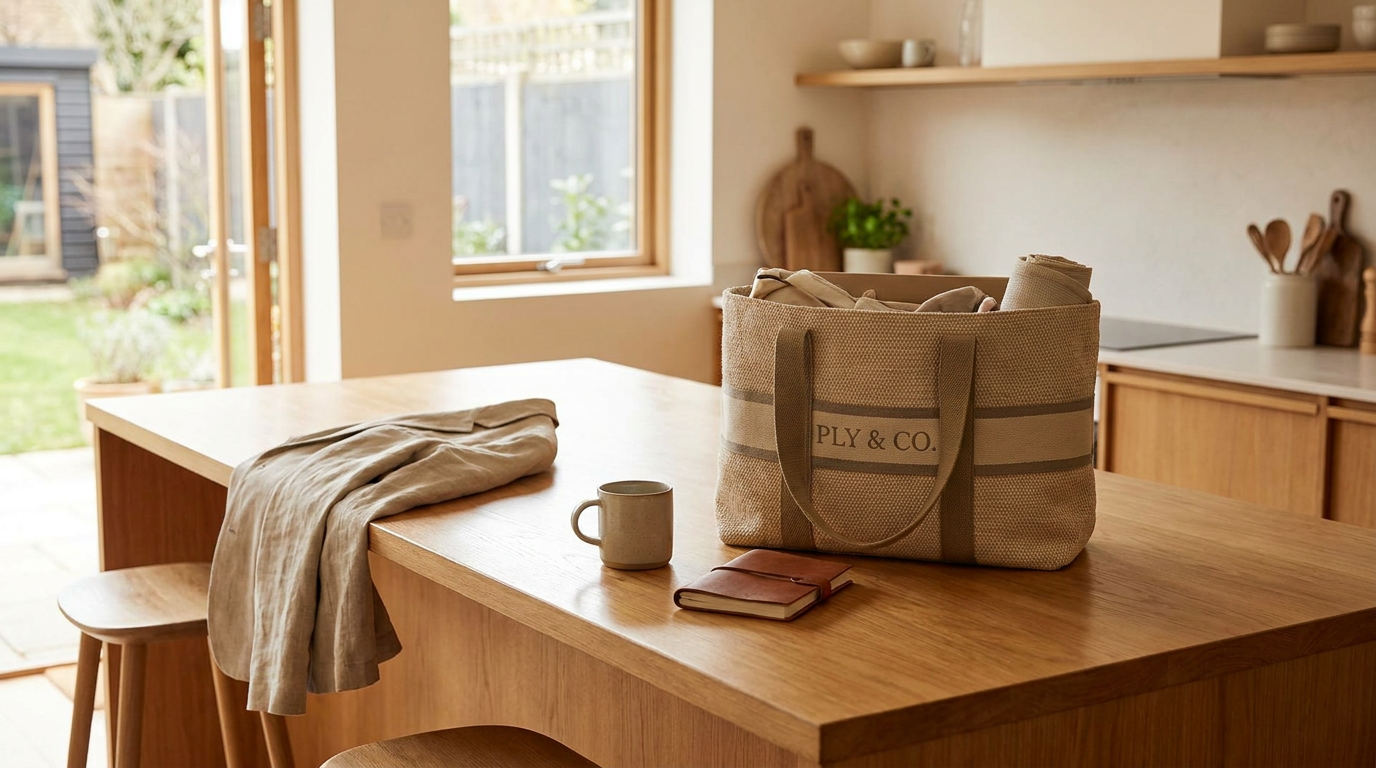
Prelove You is built around exactly that understanding. The system works like this: families send in what their children have outgrown. Everything. The stunning birthday dress that was worn once. The onesies that barely saw the outside of a drawer. The winter coat that’s been through two seasons and shows it. Prelove You accepts all of it — and each item earns credits based on its type, brand, condition, and sustainability credentials. Those credits go directly back to the family, to be spent on beautiful preloved pieces for whatever comes next: the next size, the next season, the next child.
And for items that can’t continue as wearable inventory — the truly end-of-life pieces, the ones that nothing can save — they are routed through textile recycling partners, ensuring they never end up in a landfill. Every piece has a next chapter. Not just the beautiful ones. Every one. As the full breakdown of how PLY works makes clear, no parent should be stuck making one more exhausting judgment call about whether something is worth sending. The answer is always yes. The system handles the rest.
The experience is designed to feel elevated, not transactional. Not a thrift drop. Not a guilt drop. A household ritual that works — and that gets easier and more natural each time you do it. The credits close the loop in a way that matters emotionally as well as practically. You are not simply offloading the past. You are converting it into something that belongs to the future. That distinction — subtle as it sounds — changes the entire emotional texture of the experience.
Kristen, a Prelove You member, put it simply:
“I used to feel guilty every time I saw that pile of outgrown clothes. Now I just bag it and send it in. My daughter picks out what comes next with her credits. The whole thing actually works.”
— Kristen, mom of Mikayla
That last sentence matters: the whole thing actually works. Not just the logistics. The feeling. For parents who have been managing the kids clothing mental load on their own — carrying the weight of decisions that never quite resolve — that shift is not a small thing. It’s the difference between a problem that lives in the back of your mind and a system that runs in the background of your life. For a complete resource on all your options, What to Do With Children’s Outgrown Clothes: The Complete Guide offers a thorough companion read. And when you’re ready to understand the full mechanics of the system, How PLY Works is the natural next step.
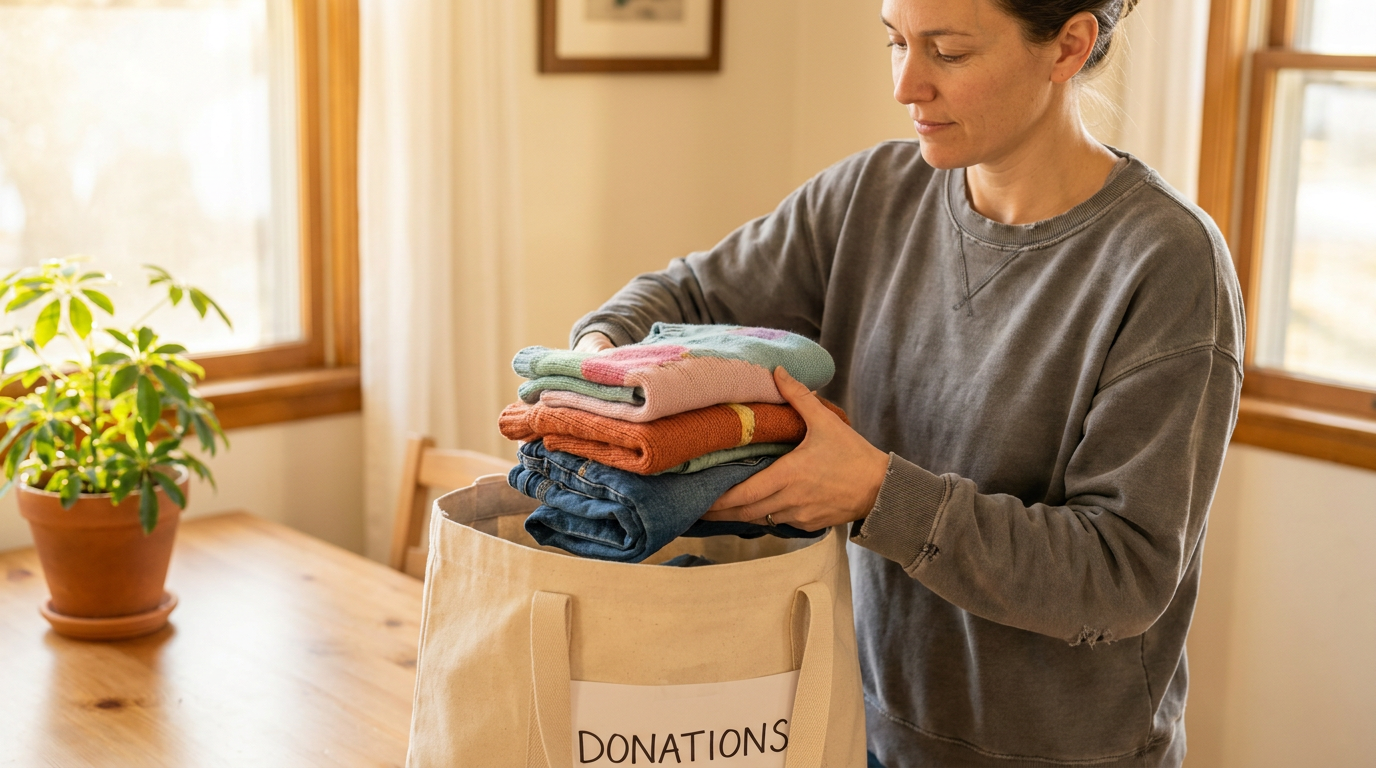
Come back to the drawer. The tiny outfit at the back of it. The one that was purchased with intention, washed in anticipation, and never worn.
Here is what that item actually represents: not failure. Not waste. Not carelessness. It represents the fact that you tried to prepare for who your child would be, and your child grew faster than you expected. It represents a moment of love and readiness that the calendar simply didn’t cooperate with. It represents the fundamental, irreducible truth of parenthood: that you are always dressing for a version of your child that is already, even now, becoming someone new.
The kids outgrown clothes guilt that accumulates around that drawer — around that bag, that bin, that pile — was never a character flaw. It was a design flaw. A flaw in systems that were never built to hold the emotional complexity of what children’s clothing actually is, or to keep pace with how fast the cycle actually moves. When the only options are imperfect ones, you don’t make the decision. The bag sits. The guilt grows. And the items that once carried so much meaning end up making you feel bad simply by existing.
A new system changes the emotional math. Not through willpower or discipline or a better organizational scheme — through design. When there is a path for everything, when the decision is no longer what do I do with each individual item but simply it’s time to send the bag, the guilt dissolves. Not because the memories become less precious. Not because the barely-worn dress mattered less than you thought. But because the dress now has somewhere to go that honors what it is — and you are no longer the bottleneck between it and its next chapter.
That, at its core, is what letting go of kids’ clothes actually looks like when it works. Not a moment of forced release. Not a willpower exercise. A quiet morning, a bag by the door, a child helping to decide what comes next. The thread doesn’t break. It just continues somewhere you can follow.
When you’re ready for a system that actually makes the seasonal switch manageable — one that repeats and gets easier every time — The Seasonal Wardrobe Switch: A System That Actually Sticks is a practical place to begin.
And the pile in the trunk? It has somewhere to go now.
Prelove You is a premium membership for families who are done managing the outgrown clothing cycle on their own. Send in what your kids have grown out of — even the stained ones, even the barely-worn ones, even the things you’ve been unsure about for two seasons. Earn credits. Shop beautiful preloved pieces for whatever comes next. No sorting required. No guilt required. Just a system that actually works, season after season.

